

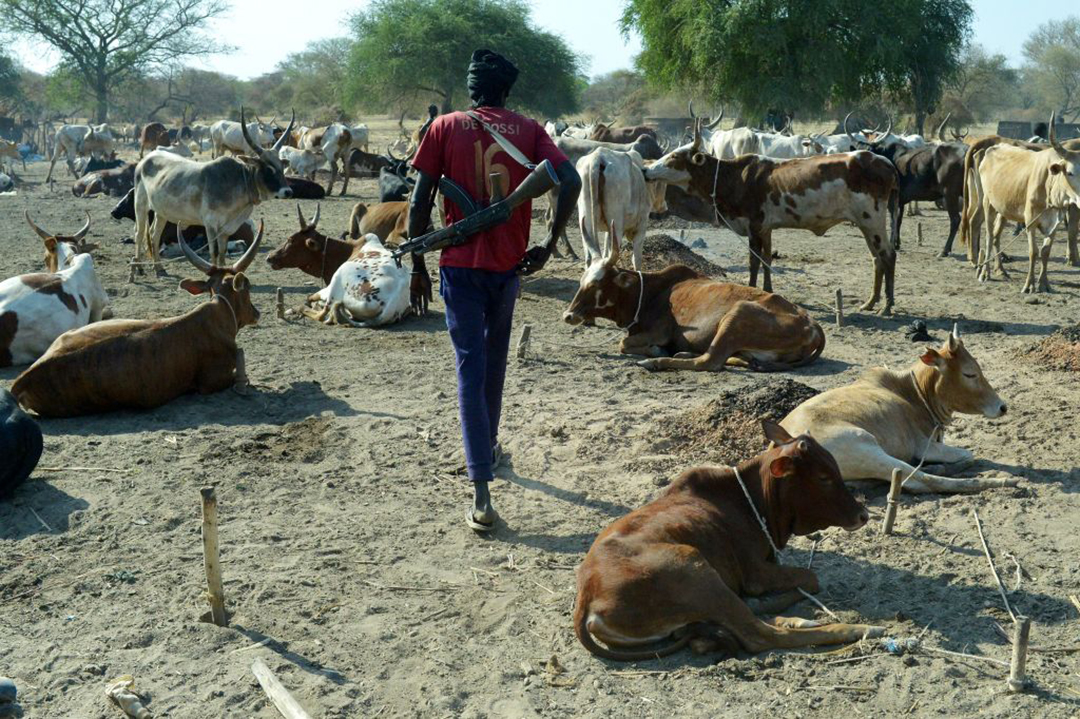
The Global Initiative Against Transnational Organized Crime has sounded the alarm on the concerning trend of cattle rustling wreaking havoc across West Africa, particularly in the Sahel region where Burkina Faso is reeling from the brunt of this illicit activity.
The surge in illegal mining activities, fueled by foreign actors notably from Burkina Faso, poses a grave danger to Ghana as reports indicate concerning levels of associated risks.
Furthermore, the ongoing Boko Haram conflict exacerbates the volatility in regions of Upper East and West Ghana, amplifying security concerns.
A report released by the organization highlighted that extremist groups such as Jama’at Nusrat al-Islam wal-Muslimin (JNIM) and Islamic State Sahel Province (IS Sahel) have strategically turned to stolen cattle as a key source of funding for their operations.
The proceeds from this nefarious trade are funneled into acquiring weapons, fuel, and other resources, all the while embedding themselves within the livestock economy by providing protection to herders in exchange for unwavering loyalty.
JNIM’s reach has extended southward, establishing cross-border networks through the tri-border area connecting Burkina Faso, Ghana, and Côte d’Ivoire. Stolen cattle from conflict zones in the Sahel are discreetly transported through this corridor, eventually being laundered in Ghana and Côte d’Ivoire before being sold for substantial profit.
Not limited to insurgents alone, even state-backed Volunteer Defense Forces (VDP) in Burkina Faso have been implicated in cattle theft during counterterrorism efforts, targeting communities suspected of aiding militant groups.
These actions have sown deep distrust among civilians towards the government, blurring the line between security measures and predatory behavior.
This dangerous trade in stolen cattle is restructuring the regional livestock markets, with Ghanaian and Ivorian traders purchasing stolen animals at discounted rates and reselling them at full market value, reaping exorbitant profits in the process.
This unholy alliance between economic actors and armed groups not only bolsters the illicit economy but also undermines efforts for peacebuilding in the region.
The impact of cattle rustling goes beyond economic losses, as it leaves herders destitute and vulnerable, pushing them deeper into poverty and creating fertile ground for extremist recruitment.
As the trade thrives due to porous borders, corruption, and lack of cross-border cooperation, urgent interventions such as stringent regulation of livestock markets, enhanced coordination between neighboring countries, and holding state-sponsored militias accountable are imperative to prevent further deterioration of stability in the tri-border vicinity.
In the absence of swift action, the report warns that the unchecked illicit trade will continue to line the pockets of the few at the expense of innocent herders and rural communities, perpetuating a cycle of devastation and insecurity.
By Prince Ahenkorah