

… Amid Soaring Youth Unemployment
By Gifty Boateng Faced with a ballooning youth unemployment crisis and mounting pressure from frustrated graduates, the Mahama administration has inked three separate Memoranda of Understanding (MoUs) with foreign governments to export Ghanaian nurses and teachers for permanent employment abroad.
The agreements signed with Grenada, The Bahamas, and Serbia are part of a broader strategy to offload thousands of trained professionals who remain jobless due to years of bureaucratic gridlock and lack of financial clearance from the Finance Ministry.
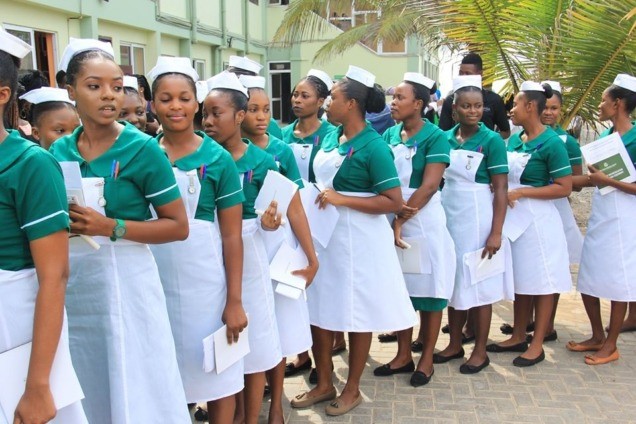
Health Minister Kwabena Mintah Akandoh revealed that over 70,000 trained health professionals are currently unemployed, far exceeding the previously quoted figure of 30,000. Of that number, 48,878 nurses from the 2021, 2022, and 2023 graduating cohorts are still waiting for postings. Another 21,570 allied health workers and 1,621 pharmacists remain in limbo.
In the education sector, the situation is equally dire. More than 15,000 trained teachers are sitting idle, prompting repeated protests from the Coalition of Unemployed Trained Teachers (CUTT).
The government’s export plan, led by Foreign Minister Samuel Okudzeto Ablakwa and Special Initiatives Minister Emmanuel Agyekum, is being touted as a win-win solution: easing domestic unemployment while boosting foreign remittances.
In late October, Ghana and The Bahamas signed a landmark labour mobility agreement during a brief ceremony in Accra. The deal, hailed as a milestone in bilateral relations, will see experienced Ghanaian nurses and teachers deployed to The Bahamas to fill critical gaps in their public sectors.
“This initiative proves the trust our international partners have in the quality of Ghanaian professionals,” said Agyekum. “It’s a win-win for both countries.”
The agreement also lays the groundwork for future cooperation in commerce, tourism, and cultural exchange. Officials assured stakeholders that recruitment processes would be transparent and that the welfare of Ghanaian workers would be protected.
A similar MoU was signed with Grenada during a luncheon hosted by President John Mahama in honor of visiting Prime Minister Dickon Mitchell. The agreement focuses on deploying nurses and allied health professionals to the Caribbean island nation.
Mahama praised the deal as a model of South-South cooperation, emphasizing the global reputation of Ghanaian health workers for professionalism and compassion. He also floated ideas for future collaboration in education, agriculture, and climate-resilient farming.
In July, Ghana and Serbia finalized an agreement aimed at deploying segments of Ghana’s youthful workforce to support Serbia’s aging population. The MoU includes provisions for a streamlined work permit system and expanded scholarship opportunities for Ghanaian students.
During an official visit, Ablakwa commended Serbia’s longstanding support and expressed optimism about deepening ties. The partnership is expected to create legal pathways for Ghanaian job seekers while addressing Serbia’s labour shortages.
The export strategy comes amid growing public frustration over the government’s inability to absorb thousands of trained professionals into the system. Despite assurances from the Health Ministry, many remain skeptical.
Akandoh told Parliament that although 15,000 nurses were granted financial clearance in December 2024, many are still waiting to be placed on payroll. “The numbers are staggering,” he admitted.
With youth unemployment threatening to destabilize the labour front, the Mahama government is betting on diplomacy to ease domestic tensions and reposition Ghana as a global supplier of skilled labour.