

By Nelson Ayivor
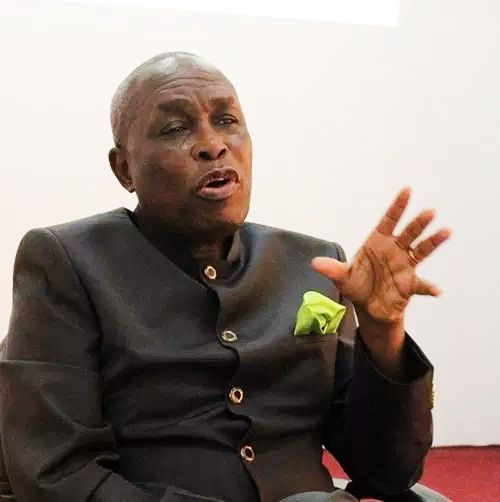
Labour Consultant, Austin Gamey has urged Ghana to abandon its long-standing inflation-based salary adjustment system and transition to a productivity-oriented pay model that rewards performance rather than uniform increases.
His call follows the signing of a 9 percent base pay agreement between the government and organised labour for the 2026 fiscal year. The Public Services Joint Standing Negotiating Committee (PSJSNC) concluded discussions on the Single Spine Salary Structure (SSSS) for 2026 on 9th October.
Gamey argued that the country’s salary structure, which ties public sector pay increases to inflation and cost-of-living indicators, is outdated and detrimental to productivity. According to him, Ghana’s economic management must evolve to reflect broader priorities such as education, health, and national security, rather than relying solely on inflationary benchmarks.
“Across-the-board is the old method,” he said, explaining that the existing wage determination model has failed to incentivise performance or drive efficiency in the public sector.
“The reform is long overdue. Aside from being legal, it is the most sensible thing to do. It shows how you reward people for the intelligent work that they do. It is uncivilized to be paying people across the board. It’s not proper. It’s a disgrace. It’s a very bad practice. It doesn’t speak well of the people who are either hard-working, the average worker and the lazy worker.”
While some labour unions have rejected the 9 percent increment, insisting on a minimum 20 percent increase, Gamey described the increment as reasonable but insisted on the need for structural reform in how Ghana determines wages.
For him, the same percentage increase should not be applied to all categories of workers, regardless of their effort or contribution to productivity, insisting that Ghana must implement productivity-based evaluations to determine wage adjustments that reflect measurable performance outcomes immediately.
“There are (lazy) people like that across the world, and that’s why you pay people based on productivity – that’s the truth of what our labour law represents – but unfortunately, for well over 20 years, since the labour law came into effect, we haven’t been doing what we are talking about now. We’ve refused to do it.”
Gamey referred to recent indications from the government that plans are underway to pilot a productivity-based system by 2026. “We will have to do it. We all know that we shouldn’t pay people across the board. It’s an unfair reflection of the nation,” he explained.
Balancing Inflation and Economic Stability:
While supporting the idea of reform, the labour consultant maintained that the current 9 percent pay rise falls within a fair economic threshold. He, however, noted that given the prevailing inflation rate of around 8 percent, a slightly lower adjustment might have been ideal to sustain macroeconomic stability.
“Traditionally we use inflation, the general cost of living, and once in a while, we talk about forex too, when it comes to determining wage increments. So if that is still the method that is being used, very clearly, a 9% adjustment overall on the pay is proper, given the current conditions.
“I was expecting an 8.5% or so increase, so rounding it up to 9% is a fair reflection of the realities.”
Gamey warned that excessive salary increases could reignite inflationary pressures, defeating the purpose of the wage adjustments. He stressed that Ghana’s goal should be a stable and performance-driven pay framework that motivates productivity without undermining fiscal discipline.
The push for reform comes amid growing debate within Ghana’s labour community about fairness, sustainability, and efficiency in wage determination.
Proponents argue that productivity-based pay could bridge the gap between public sector performance and compensation, while critics caution that such systems must be implemented carefully to avoid subjective assessments.
As Ghana prepares to pilot the new model in 2026, Gamey believes the shift is not only necessary but long overdue. “It’s legal, it’s fair, and it’s the right way to reward intelligent work,” he emphasised.
Austin Gamey’s views add to the ongoing national conversation about the future of Ghana’s wage policy, which many analysts see as crucial to achieving both equity and economic resilience under the administration of President John Dramani Mahama.