

By Prince Ahenkorah
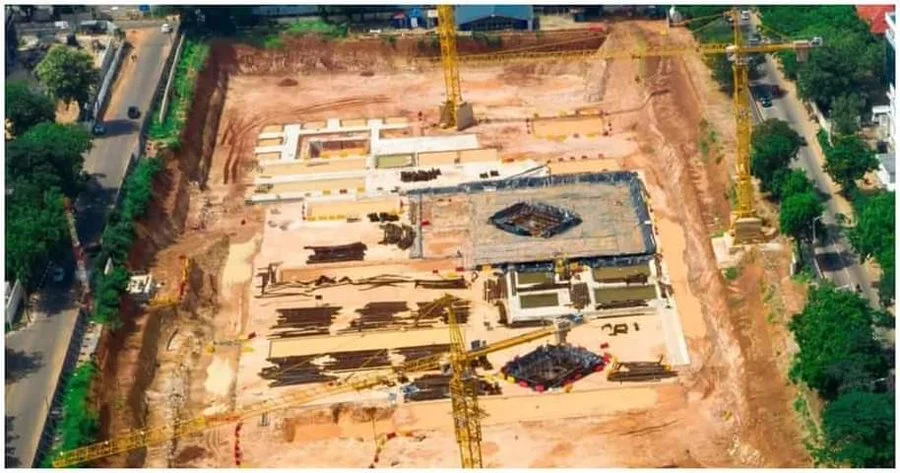
The Attorney-General’s Department has mounted a robust defence of the government’s controversial financing of the National Cathedral, as legal scrutiny intensifies over alleged constitutional breaches tied to the project and pandemic-era borrowing.
The case, now before the Supreme Court, was initiated by private citizen Jonathan Amable, whose petition challenges the legality of withdrawals from the Consolidated Fund for the Cathedral’s construction. Amable argues that the executive bypassed constitutional safeguards notably Article 179(11) by failing to secure prior approval from the Speaker of Parliament and the Council of State.
The suit also targets a broader set of transactions, including a $10 billion COVID-19 Relief Bond negotiated between the Ministry of Finance and the Bank of Ghana. Amable contends that a $5 billion tranche of that bond was diverted to Cathedral-related expenses, in violation of Article 181(4) governing public borrowing.
The Attorney-General, Dr. Dominic Ayine, has dismissed the claims as legally unfounded.
In a detailed rebuttal, Ayine insists that all payments were made under the Contingency Vote a budgetary line item for “Other Government Obligations” not the Contingency Fund, as alleged.
He further asserts that the National Cathedral is a state-owned entity, registered as a company limited by guarantee under the Ghana Museums and Monuments Board.
Ayine’s office points to annual budget statements since 2018 as evidence of transparency, arguing that Parliament debated and approved the project’s financing. The government’s position hinges on the interpretation of budgetary classifications and the scope of executive discretion in fiscal emergencies.
The controversy has reignited tensions between the ruling administration and the minority caucus, led by Cassiel Ato Forson and Mahama Ayariga, who previously flagged the lack of parliamentary oversight in the Bank of Ghana transactions. Critics say the government’s reliance on off-budget instruments and opaque accounting practices undermines democratic accountability.
Former Finance Minister Ken Ofori-Atta had pitched the Cathedral as a public-private partnership, with state support limited to land, a secretariat, and seed funding. But the scale of public expenditure and the absence of clear donor commitments has raised questions about the project’s sustainability and political motivations.
With the Supreme Court now weighing the constitutional merits of the case, the outcome could set a precedent for executive spending and the limits of fiscal discretion in Ghana’s hybrid democracy.