

By Philip Antoh
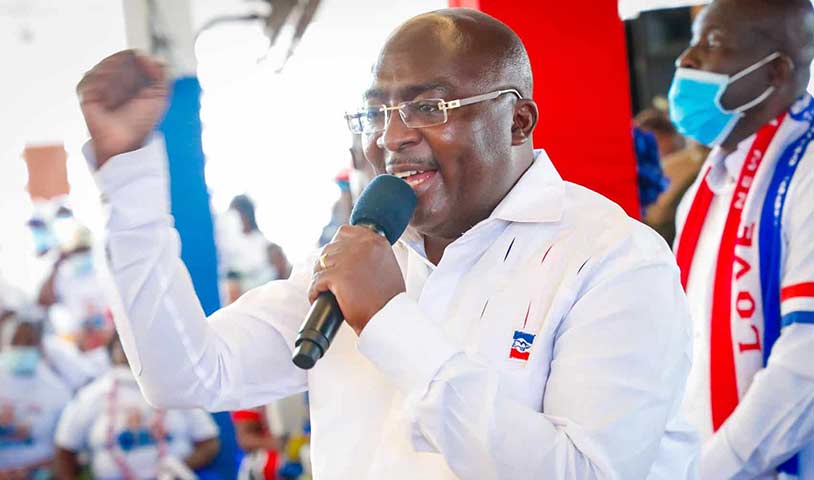
The fallout from Ghana’s 2024 presidential election continues to reverberate within the ruling New Patriotic Party (NPP), with fresh scrutiny falling on Dr Mahamudu Bawumia’s electoral performance in the country’s Zongo communities.
Despite being the first Muslim to lead a major political party into a presidential contest, Bawumia failed to galvanize support in the very constituencies many assumed would be his natural base.
Eric Kwesi Taylor, Chief Executive of the Pennyman Foundation and a political analyst with ties to grassroots networks, told The New Republic that Bawumia’s campaign suffered from a “fundamental disconnect” with Zongo voters.
“Apart from a modest showing in Winneba, he was roundly rejected across the Zongos,” Taylor said, citing polling stations where the former Vice-President registered negligible support.
The reasons, Taylor argues, are both symbolic and structural. While Bawumia’s candidacy was historic, his liberal Islamic identity and perceived technocratic detachment failed to resonate with traditional Zongo sensibilities.
“He was seen as distant, overly scripted, and lacking the emotive appeal of figures like John Mahama or even Kennedy Agyapong,” Taylor noted.
The campaign’s messaging also came under fire. The “It Is Possible” slogan, initially intended to inspire optimism, reportedly lost traction as it failed to translate into a coherent policy framework. “It became a mantra without a map,” said one NPP insider.
Compounding the problem was Bawumia’s alignment with unpopular party elites. His proximity to figures associated with the Akufo-Addo administration’s economic missteps particularly during the debt restructuring crisis undermined his reformist credentials.
His post-election attribution of the NPP’s loss to the “arrogance of power” under President Akufo-Addo was interpreted by some as an attempt to deflect blame, despite his own central role in the government’s economic management team.
Taylor also pointed to the absence of regional balancing in Bawumia’s ticket. Unlike Mahama, whose wife’s Bono-Akan heritage offered a symbolic bridge to southern constituencies, Bawumia’s spouse seen by some as lacking local political capital did not provide a comparable advantage.
The internal contradictions within the NPP campaign were evident, Taylor said, in the divergent messaging between Bawumia and his former mentor, President Akufo-Addo. “They were no longer speaking from the same script,” he observed.
As the NPP begins its post-mortem, the question of whether Bawumia can rebuild trust within the Zongo electorate and the party at large remains open. For now, the 2024 election has exposed deep fractures in the coalition that once propelled him to the top of Ghana’s political hierarchy.