

By Gideon Amuah | Email – gideon.amuah@gmail.com
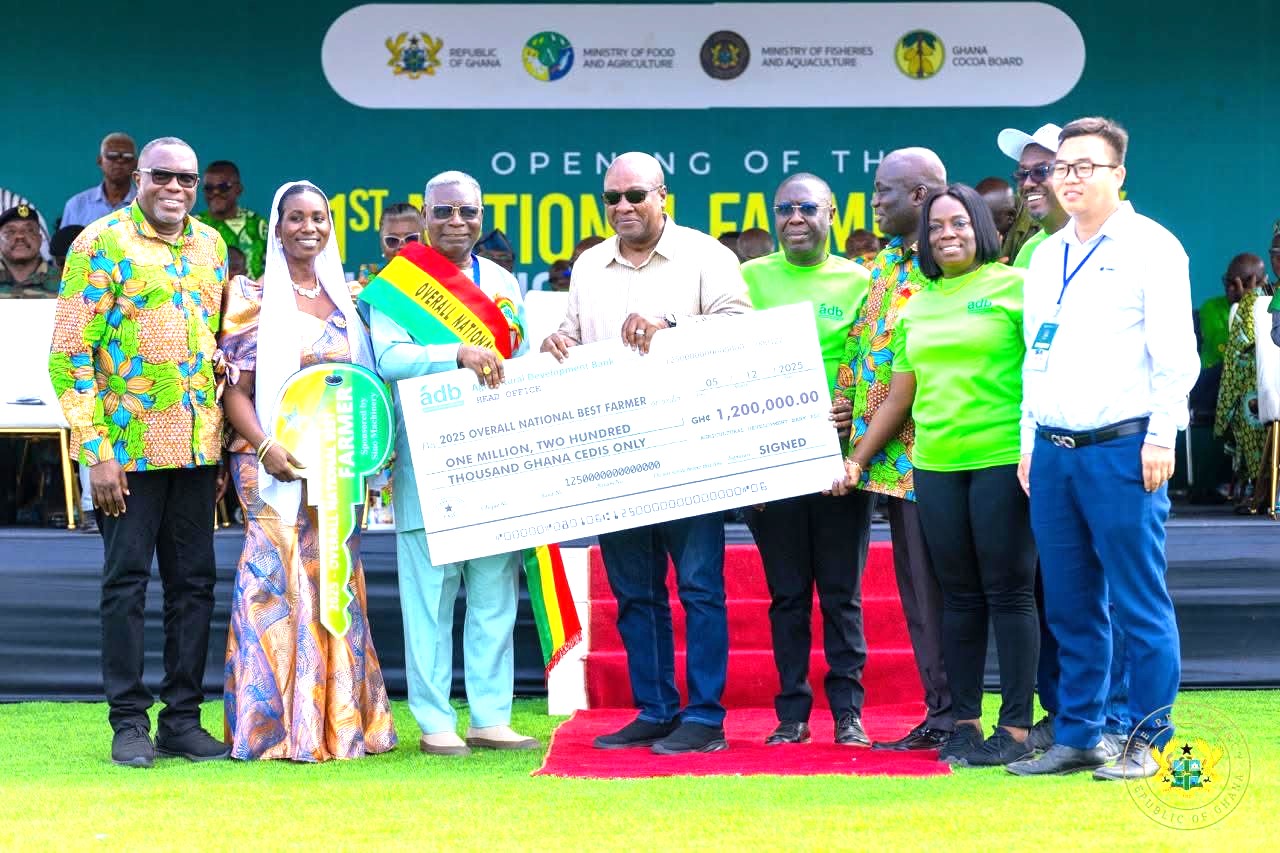
Farmers’ Day remains one of Ghana’s most symbolic national events — a day when the country pauses to acknowledge the men and women whose labor sustains the nation. Each December, as award winners mount the stage and receive their tractors, certificates, applause, we are reminded that agriculture is not merely an occupation; it is the backbone of our economy, the soul of our rural communities, and the heart of our food security. But the question that matters most is not who won, what — it is what next?
For too long, Farmers’ Day has been treated as a ceremonial highpoint rather than a catalyst for deeper transformation. Once the speeches end and dignitaries disperse, we often return to the same cycle of underfunding, delayed inputs, market failures, and the absence of data-driven planning. If Ghana is serious about food security, then the real work must begin after Farmers’ Day. Celebration without continuity only flatters the sector; what farmers need is sustained action, not seasonal appreciation.
The first step after Farmers’ Day should be clear follow-through on policy commitments. Every year, ministers announce programs, incentives, and reforms meant to uplift farmers. In many cases, these plans never move beyond the podium. The post-Farmers’ Day window is when the state must publish concrete timelines for input distribution, farm mechanization support, irrigation projects, and extension services. A public tracker indicating what has been promised and what has been delivered would strengthen accountability and renew trust between government and farmers.
Another critical area requiring immediate action is the digitization and mapping of Ghana’s agricultural landscape. Ghana still does not have a complete, integrated database that allows policymakers to identify who is farming, what they are producing, how much they harvest, and where the production gaps exist. Farmers’ Day brings visibility to outstanding individuals, but Ghana must build visibility for the entire agricultural ecosystem. Modern food systems rely on real-time data, not estimates. With satellite mapping, drone imagery, mobile registration, and district-level digital surveys, Ghana could generate a national agricultural dashboard that informs everything from subsidy targeting to national reserve planning.
Knowing exactly where crops are grown helps planners anticipate shortages, direct investment to underperforming regions, and prioritize irrigation or extension services. Farmers cannot benefit from what policymakers cannot see. Data transforms agriculture from a guessing game into a coordinated system — and that transformation must begin now.
Equally important is the urgent need to expand storage and processing capacity across the country. Many of the very farmers who are celebrated on Farmers’ Day experience severe losses during the harvest season simply because they cannot preserve or process their produce. Tomatoes rot in open bowls, maize molds in poorly ventilated sheds, and cassava deteriorates within 48 hours of harvest. Without storage, abundance becomes waste.
Post-Farmers’ Day action should therefore include accelerated construction and rehabilitation of silos, cold rooms, and community processing centers. These facilities should be strategically distributed across food belts such as Techiman, Ejura, Sissala, Hohoe, and Jasikan. When properly funded and efficiently managed under public–private partnerships, storage centers can stabilize prices, reduce post-harvest losses, and guarantee farmers better returns for their labor.
Closely linked to storage is the need to create reliable markets through institutional procurement. This is where Ghana’s school feeding program, hospitals, prisons, military barracks, and local governments become essential players. If just half of the food consumed by public institutions were sourced directly from Ghanaian farmers, agriculture would shift from subsistence to stability. Every farmer needs a buyer; every public institution needs food. Connecting the two is common sense.
Farmers’ Day therefore should trigger a national institutional procurement strategy — one that creates consistent demand for staples such as rice, maize, beans, cassava, vegetables, and poultry. When farmers know they have guaranteed markets, they plan better, borrow with confidence, invest in quality inputs, and expand production. This is how celebrations turn into livelihoods.
At the same time, Ghana must strengthen the extension service system, which remains understaffed and under-resourced. Many farmers still rely on outdated methods because they do not receive timely guidance on seeds, fertilizer application, irrigation techniques, pest control, or climate adaptation. After Farmers’ Day, the stories of excellence shared by award-winning farmers should be converted into training modules and replicated nationwide. Their innovation should not end on stage; it should be documented, studied, and shared as best-practice models.
Another essential post-celebration step is fostering youth participation in agriculture. Each year, Farmers’ Day speeches highlight the aging farmer population, but little is done to attract young people into the sector. This is the moment to expand youth-focused financing, allocate dedicated land banks for young agripreneurs, and deepen agricultural education through TVET centers, universities, and regional demonstration farms. Young people must see agriculture not as a fallback option but as a viable, profitable, and technologically rich industry.
Finally, Farmers’ Day must inspire a national shift in mindset. Agriculture should not be celebrated only when the cameras are rolling; it should be recognized daily as the foundation of Ghana’s economic independence. The country must elevate the dignity of farming by promoting local consumption, celebrating agro-processing entrepreneurs, and strengthening public campaigns that encourage citizens to prioritize Ghana-grown produce. After all, a nation that celebrates its farmers but eats imported food undermines its own future.
Farmers’ Day is a beautiful tradition, but it must evolve from ceremony into system. The applause should mark a beginning, not an end. What farmers need most is not annual recognition — it is year-round support, modern infrastructure, reliable data, accessible markets, and policies that match their ambition.
Ghana has the land, the people, and the potential to feed itself and even feed West Africa. What remains is the discipline to transform celebrations into strategy. The next chapter after Farmers’ Day must be one of action, accountability, and agricultural renewal. When we celebrate farmers and support them consistently, we secure our nation’s future.