

By Nelson Ayivor
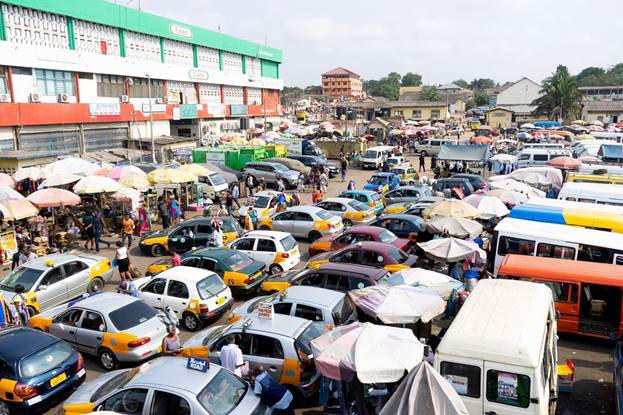
Millions of Ghanaian workers lose more than two full workdays every month, not because of a slow internet or bad management, but because of the daily chaos, delays, and risk embedded in the trotro system. A World Bank policy note shows that on average, formal-sector workers lose 0.88 hours per day due to congestion and inefficient transport, amounting to 9% of productive hours daily. Scale that across just 1 million workers earning GH₵ 200/day, and you’re looking at GH₵ 400 million lost in productivity monthly, or over GH₵ 4.8 billion per year. That’s value bleeding out of the economy, straight out of business potential.
Data, including a recent report by the Accra Metropolitan Assembly, shows that traffic injuries are still a “serious public health, social and economic problem,” especially given that many of those killed or injured are economically active. Independent analysts also argue that Ghana “wastes” an estimated 1.6 % of its GDP each year on road‑traffic injuries, covering medical costs, emergency response, and lost labour. CUTS International’s campaigners have even called for road safety to be declared a “public health emergency,” warning that the cost to the economy is no longer acceptable.
Meanwhile, the Railway Master Plan estimates that a nationwide standard-gauge rail network covering 4,008 km would require US$21.5 billion, promising long-term savings in transport costs, reduced road maintenance, and fewer accidents. The economic cost of stalled or mismanaged projects is high: billions of cedis in potential productivity gains are lost, commuter stress remains, and the trotro system continues to absorb private and public resources inefficiently.
Why Businesses Are Paying the Price:
Inefficient and unsafe public transport in Ghana imposes a heavy burden on businesses. The World Bank notes that “transport services are unreliable, inefficient and unsafe —largely because of the absence of an effective regulatory environment.”
Supply Chains are Directly Affected:
A study of Kumasi-based manufacturing firms found that road traffic congestion increases transportation costs, delays delivery of raw materials, and reduces service quality, raising final product prices. Workers also face rising commuting expenses; some middle-income employees in Accra spend up to 22 %of their monthly salary on transport alone.
Limited transport options, especially at night, restrict business operations. Many night-shift workers, including factory employees and traders, cannot reliably move across cities, constraining economic activity, a limitation to the development of a 24-hour economy.
The Call for a New Transport Paradigm:
Experts consistently argue for a fundamental overhaul of intra-city transport in Ghana. The OECD, in its Redesign Accra’s Streets report, emphasizes that “Reallocating road space to people and sustainable transport modes can fill existing accessibility gaps, alleviate congestion and mitigate rising pollution and emissions.”
According to transport analysts, the ideal system would combine safety, reliability, affordability, transparency, and sustainability, leveraging high-capacity, low-emission modes such as Bus Rapid Transit (BRT) or light rail. Such infrastructure would connect residential areas to business districts efficiently, reduce road fatalities, limit congestion-related economic losses, and provide predictable commuting times, thereby boosting productivity and investor confidence.