

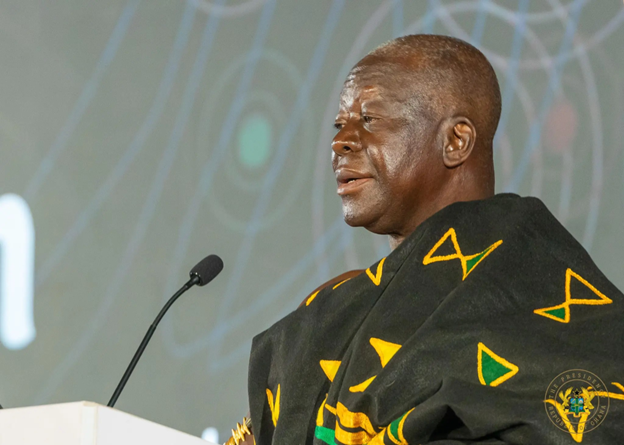
‘No More Bullets, Bring the Businesses’
Front Desk Report
The submission of Asantehene Otumfuo Osei Tutu II’s mediation report to President John Mahama has injected cautious optimism into efforts to end the long-running conflict in Bawku, but the path to durable peace remains strewn with political tripwires.
The monarch’s work explicitly framed as mediation, not binding arbitration is being treated in Accra as a political and security roadmap.
It offers a structured process for de-escalation rather than an immediate settlement of the underlying chieftaincy and land disputes that have periodically paralysed the town since the 1940s.
Officials close to the presidency say Mahama has pledged to begin implementing aspects within 24 hours, a timetable intended as much for political signalling ahead of 2026 as for operational effect.
Roots of the Dispute
Bawku’s turmoil stems from a bitter contest over the chieftaincy between the Mamprusi and Kusasi ethnic groups, rooted in colonial-era manipulations and post-independence power plays.
The British recognised a Mamprusi overlordship in the early 20th century, but post-1957 Nkrumah-era reforms elevated Kusasi claims, installing a Kusasi chief in 1958. This sparked cycles of violence, with Mamprusi boycotting state institutions and mounting revolts.
Tensions boiled over in the 1990s and 2000s under the Kufuor and Mills-Mahama administrations, killing hundreds and displacing thousands.
The 2008 clashes coinciding with NPP-NDC election fever saw markets torched and security forces stretched thin.
Subsequent interventions, including a 2018 judicial arbitration under Nana Akufo-Addo favouring the Mamprusi Paramount Chief (Zugraan Naba Asigri Abugrago), were rejected by Kusasi factions, reigniting gunfire in 2022-23 amid jihadist spillover fears from Burkina Faso.
Accra’s piecemeal approach military deployments, curfews, and ad hoc committees – contained but never resolved the core impasse: rival claims to the Bawku Naba skin, entwined with land control, voter mobilisation, and cross-border smuggling routes for arms, fuel, and migrants.
The Asantehene’s High-Stakes Role
Enter Otumfuo Osei Tutu II, whose intervention carries unique weight. As Asantehene and a political heavyweight with ties to both NPP and NDC elites, he was appointed mediator in mid-2024 by Akufo-Addo at the behest of northern elders, bridging divides that lesser figures could not.
His Kumasi palace hosted parallel delegations from Mamprusi and Kusasi factions over 18 months, extracting concessions on land use, market access, and youth disarmament without forcing a zero-sum chieftaincy verdict.
Insiders describe the report as a “masterclass in Ashanti realpolitik”: it sidesteps legal finality which courts have repeatedly failed to enforce in favour of phased confidence-building, including joint market committees and revenue-sharing from border posts.
Otumfuo’s leverage stems from his role as a “kingmaker” in national politics; his 2020 endorsement of Mahama helped swing the Ashanti vote, and Bawku’s resolution burnishes his stature as Ghana’s de facto peacemaker.
Yet risks linger. Mamprusi hardliners, backed by some NPP northern MPs, view the process as overly conciliatory to Kusasi demands. Kusasi youth groups, emboldened by NDC local influence, fear Mamprusi dominance if concessions falter.
Diplomatic sources note jihadist recruiters from Sahel networks have exploited the vacuum, making external buy-in from ECOWAS and Burkina Faso critical.
Economic Stakes
Before the latest violence, Bawku thrived as northern Ghana’s commercial hub, its markets drawing Upper East traders and cross-border flows from Burkina Faso and Togo. Livestock, shea butter, grains, and smuggled petrol sustained micro-traders and transporters. Conflict emptied stalls, rerouted trucks, and collapsed night markets under curfews.
Reviving cross-border trade is now the litmus test. Bawku’s gateway status could position Ghana as a stable sub-regional corridor, but only with fortified borders and investor confidence.
Transport, Services, and Human Capital
Transport unions report slashed routes since 2022; banks have curtailed lending. Micro-enterprises – vendors, mechanics, mobile money limp on. Skilled workers fled: teachers shun postings, nurses rotate out, and National Service was suspended.
Recovery hinges on returns, but professionals will demand months of calm.
Beyond Symbolism
Bawku’s geography on northern routes near two borders offers rebound potential with state upgrades to markets and roads. Yet spoilers abound: electoral politicking could derail timelines as 2026 nears.
The real gauge is prosaic: lorries honking, stalls bargaining, engines humming past dusk. If Otumfuo’s roadmap holds, Bawku reclaims its trade role. If not, it joins Ghana’s ledger of northern frustrations a stark reminder that royal mediation, however adroit, bows to raw politics on the ground.