

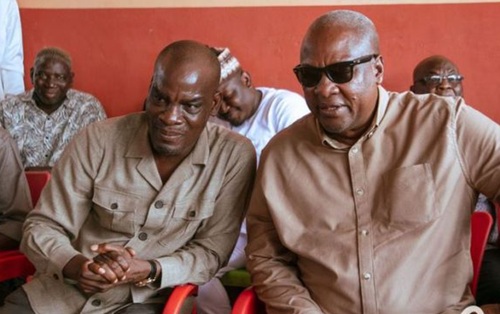
The year 2025 has been described as a defining turning point for Ghana’s education sector, as President John Dramani Mahama and the Ministry of Education embarked on a comprehensive reset aimed at stabilizing the system and restoring quality across all levels.
According to the Press Secretary to the Minister for Education, Hashmin Mohammed, the 2025 year under review confirms that Ghana’s education sector is on a deliberate path of recovery and transformation.
In a release on December 31, he mentioned several key advancements in the education sector of Ghana in the year 2025.
He noted that the new administration inherited an education sector burdened by accumulated debt, stalled infrastructure projects, unpaid statutory obligations, unresolved teacher welfare issues and declining investment in basic education, all of which had constrained service delivery nationwide.
He said that challenges were inherited from the Free Senior High School programme to the special needs education, teacher recruitment and promotions, struggling public universities, unpaid obligations to the West African Examinations Council, and allowances owed to teachers.
“The year 2025 will be remembered as a defining period for Ghana’s education sector—a year marked by difficult choices, honest national reflection, and the beginning of a deliberate reset under President John Dramani Mahama.”
He cited President Mahama convening a National Education Forum in Ho in the Volta Region, which brought together teachers, unions, parents, academics, students, civil society groups and policymakers to chart a new path for education reform.
The recommendations from the forum now form the backbone of ongoing reforms, aligned with the National Democratic Congress government’s broader human capital development agenda.
Education was also prioritised in government spending, with the 2025 Budget Statement allocating one of the highest sectoral budgets to education to stabilise the system and lay the foundation for long-term reform.
According to Hashmin Mohammed, for the first time in over 50 years, basic education received a historic allocation of GH₵9.1 billion, the highest in five decades, aimed at strengthening foundational learning through improved infrastructure, learning materials, sanitation and teacher support.
On the Free Senior High School programme, the government maintained the policy while initiating reforms to improve quality and sustainability, addressing overcrowding and infrastructure deficits inherited under the previous administration.
In 2025, Free SHS received GH₵3.5 billion under GETFund, the highest allocation since the programme began, leading to improvements in feeding, logistics and learning conditions.
Additionally, about 100 double-track schools were converted to single-track, with a firm commitment to abolish the system entirely.
Teacher welfare featured prominently in the reforms, with government paying GH₵52 million in teacher training allowances, restoring promotion eligibility up to director rank, cancelling the teacher licensure exam requirement, and placing more than 30,000 upgraded diploma teachers onto the appropriate salary scale.
Infrastructure development also resumed, with stalled E-Blocks being revisited, while tertiary education benefited from the No Fees Stress Initiative, which reimbursed academic facility user fees for first-year students in public tertiary institutions.
Out of 178,745 enrolment records submitted, 152,698 students were validated and reimbursed, easing financial pressure on families and students.
Reflecting on the broader impact of the reforms, the statement noted that “through honest diagnosis, historic investment, and people-centred reforms, President John Dramani Mahama and the Ministry of Education have begun rebuilding confidence in the system—laying a strong foundation for quality, equity, and sustainable human capital development in the years ahead.”
The 2026 Budget has further allocated GH₵33.3 billion to education, with priorities including new school construction, completion of abandoned projects, provision of teachers’ bungalows, and large-scale textbook distribution, as government seeks to consolidate the gains made in 2025.