

By Nelson Ayivor
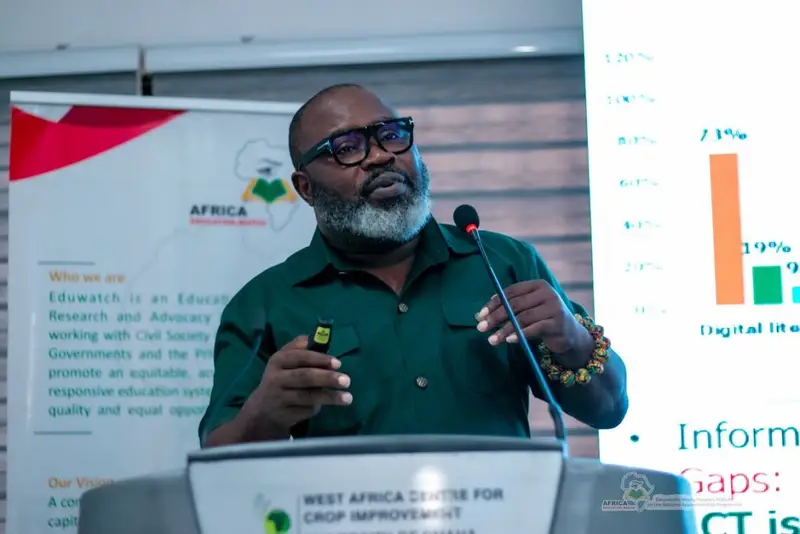
The Executive Director of Africa Education Watch (Eduwatch), Kofi Asare, has criticised the Ministry of Finance and the Ghana Education Service over what he described as the poor handling of the ongoing salary crisis involving more than 6,000 teachers across the country.
The issue, which has lingered for over a year, has reignited threats of protests and classroom boycotts, raising concerns about its impact on public education as schools reopen in 2026.
The controversy dated back to October 16, 2025, when the Ghana Education Service announced that financial clearance had been granted for 6,249 teachers who were recruited in 2024 and had been teaching without prior clearance.
The announcement followed months of protests by affected teachers, many of whom had been working without pay since their appointment.
At the time, the GES assured the teachers that processing would be completed and salary payments would begin in November 2025. However, nearly three months later, the same group of teachers is threatening fresh protests, citing salary arrears of up to 15 months.
According to Asare, the delay reflects a systemic failure involving both the Ministry of Finance and the Ghana Education Service.
He questioned how a process of financial clearance could take ten months to conclude, describing the timeline as unacceptable in the context of public sector employment.
“The disturbing part is not just the delay itself, but the broken assurances that followed. Teachers were told their salaries would begin in November, yet here we are in January 2026 with renewed threats of protest because nothing has changed.”
Shortage of Teachers
Asare warned that the situation risks worsening an already strained education system. Ghana currently faces a shortage of over 30,000 classrooms without teachers. Asare noted that a boycott by 6,000 teachers would deepen learning gaps nationwide.
In his view, the crisis extends beyond labour relations and should concern parents, Parent Teacher Associations, district assemblies and traditional authorities in communities where the affected teachers are posted.
He questioned the expectation that teachers could continue delivering quality instruction under such circumstances. “Which serious employer expects productivity from workers who have been denied salaries for 15 months?” he asked.
He added that it is unrealistic for education authorities to expect effective teaching and learning while teachers struggle with prolonged financial hardship.
Describing the episode as one of the lowest points of the education sector in 2025, Asare said the handling of the issue has been both demoralising and damaging to morale within the profession.
He stressed that the Ghana Education Service owes the public an explanation for why teachers who were assured of salary processing from November 2025 are now preparing to protest again in January 2026 over the same unresolved issues.
“The credibility of the system is at stake. When promises are made and repeatedly broken, trust erodes, and the consequences are felt directly in the classroom.”
Quality of Teaching to Suffer
The Eduwatch boss underscored the broader implications of the crisis by invoking a Larteh proverb that captures the stakes involved., explaining that when teachers are pushed to breaking point, the quality of lessons delivered to students inevitably suffers, undermining the purpose of education itself.
While making his comments, Asare clarified that Africa Education Watch typically refrains from intervening in teacher salary matters, which are usually handled by teacher unions.
He stated that his remarks were personal and driven by concern for the integrity of the education system and the welfare of learners affected by the impasse.
The renewed agitation by teachers comes at a critical time, as schools resume academic activities for the new year. Education stakeholders fear that any disruption could reverse modest gains made in school attendance and learning recovery following previous challenges.
As pressure mounts, several well-meaning Ghanaians are calling on the Ministry of Finance and the Ghana Education Service to provide clear timelines and transparent communication to resolve the issue swiftly.
For many parents and communities, the outcome of the 6,000 teacher saga is seen as a test of government’s commitment to both educators and the future of public education in Ghana.