

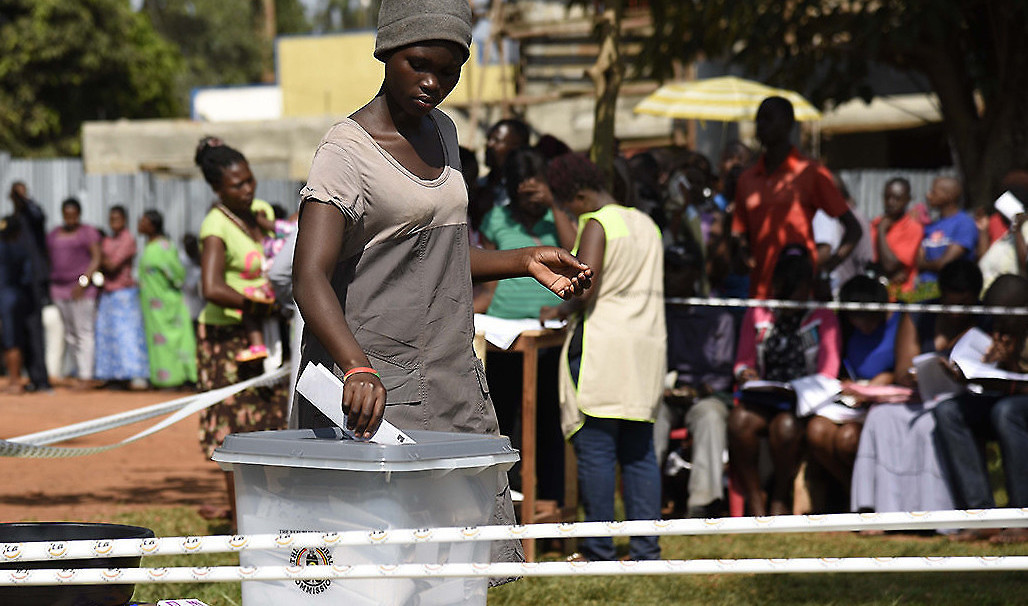
Voting has began in Uganda’s Presidential elections. Ugandans headed to the polls despite a days-long internet shutdown that has been criticized as an anti-democratic tactic in a country where the President has held office since 1986.
The country is on edge as polls opened, with President Yoweri Museveni expected to extend his four-decade rule amid a police crackdown on the opposition, fears of violence and an internet shutdown.
President Yoweri Museveni, 81, faces seven other candidates, including Robert Kyagulanyi, a musician-turned-politician best known as Bobi Wine, who is calling for political change.
The East African country of roughly 45 million people has 21.6 million registered voters. Polls are expected to close at 4 p.m. today, according to the electoral commission. Results are constitutionally required to be announced in 48 hours.
Crowds gathered and long lines formed in some areas as polling station openings were delayed and voting materials were seen being delivered after the scheduled 7 a.m. opening time.
Museveni urged voters to come out in large numbers during his final rally on Tuesday.
“You go and vote, anybody who tries to interfere with your freedom will be crushed. I am telling you this. We are ready to put an end to this indiscipline.”
The government of Museveni, 81, has been accused of overseeing a years-long crackdown on its critics, arresting political opposition leaders and their supporters.
There have been concerns about transparency, the possibility of hereditary rule, military interference and opposition strategies to prevent vote tampering at polling stations.
There has been heavy security leading up to voting, including military units deployed on the streets this week.
Amnesty International said security forces are engaging in a “brutal campaign of repression,” citing a November 28 opposition rally in eastern Uganda where the military blocked exits and opened fire on supporters, killing one person.
Authorities also suspended the activities of several civic groups during the campaign season. That Group, a prominent media watchdog, closed its office yesterday after the interior ministry alleged in a letter that the group was involved in activities “prejudicial to the security and laws of Uganda.”
The National Electoral Commission Chairperson, Simon Byabakama, urged tolerance among Ugandans as they vote. “Let us keep the peace that we have,” Byabakama said late Wednesday.
“Let us be civil. Let us be courteous. Let’s be tolerant. Even if you know that this person does not support (your) candidate, please give him or her room or opportunity to go and exercise his or her constitutional right.”
The East African nation is holding a contentious general election after a Ugandan government regulatory body instructed mobile network operators to block public internet access, starting on Tuesday evening.
Uganda’s internet was shut down on Tuesday by the government communications agency, which cited misinformation, electoral fraud and incitement of violence. The shutdown has affected the public and disrupted critical sectors such as banking.
The United Nations Human Rights Office stressed on Wednesday that “open access to communication & information is key to free & genuine elections”. “All Ugandans must be able to take part in shaping their future & the future of their country,” it said.
Last week, the UN Human Rights Office warned that Ugandans would be heading to the polls amid “widespread repression and intimidation against the political opposition, human rights defenders, journalists and those with dissenting views.”
Meanwhile, the Uganda Communications Commission defended the internet shutdown as necessary to curb “misinformation, disinformation, electoral fraud and related risks.”