

Shocking Stats Reveal Ghana’s North still suffering
By Prince Ahenkorah
The Ghana Statistical Service (GSS) has reported a significant statistical decline in multidimensional poverty, with close to one million Ghanaians exiting poverty between the third quarter of 2024 and the third quarter of 2025.
While the government will seize on the figures as validation of its economic policies, a deeper analysis reveals a picture of uneven progress, with the core drivers of deprivation remaining stubbornly unchanged and stark geographical disparities deepening.
Government Statistician Dr. Alhassan Iddrisu presented data showing the national poverty rate falling from 24.9% in Q4 2024 to 21.9% in Q3 2025, a consistent quarterly decline. He described this as a “sustained downward trajectory.”
However, he immediately tempered the optimism with a crucial caveat, noting that “the fundamental factors driving poverty have not significantly changed.”
Despite the headline numbers, the GSS report confirms that the foundational pillars of poverty remain unshaken. Health and living conditions continue to be the largest sources of deprivation nationwide. Critical issues like health insurance coverage, nutrition, overcrowding, and sanitation showed little improvement between 2024 and 2025.
This indicates that while incomes or access to some services may have improved for nearly a million people, the underlying vulnerabilities poor healthcare, inadequate housing, and lack of clean water persist, leaving households susceptible to falling back into poverty with a single shock.
The most politically sensitive revelation in the data is the entrenched and growing inequality between Ghana’s north and south, and between rural and urban areas.
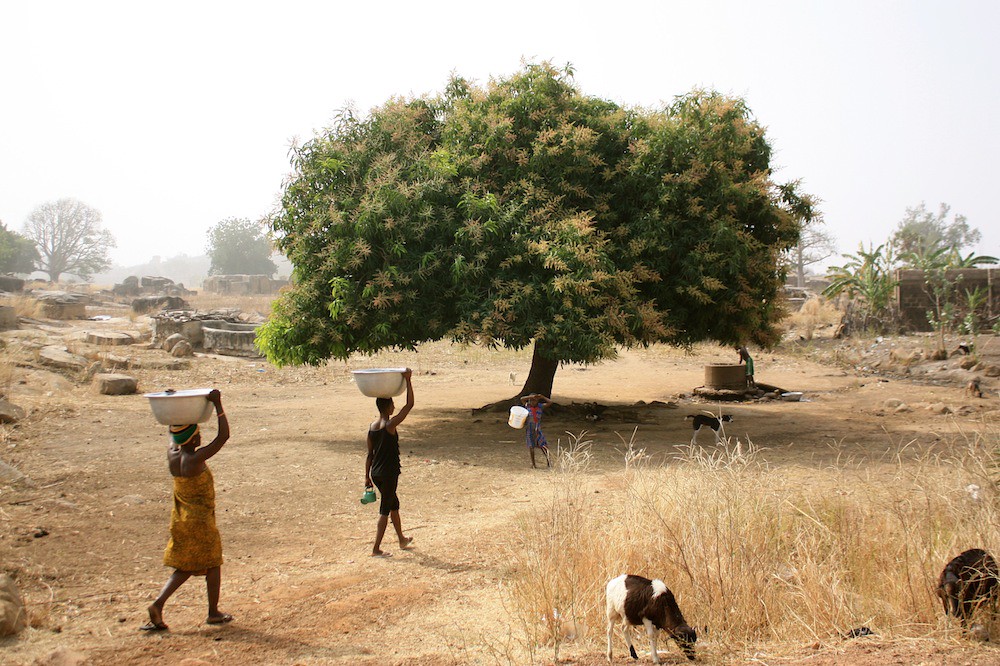
· The North-South Chasm: While Greater Accra and the Western Region recorded poverty rates below 20%, the North East and Savannah Regions registered rates exceeding 50% more than double the national average.
This extreme divergence underscores the failure of national policies to bridge a decades-old developmental gap.
The Rural-Urban Gap: The disparity is equally stark between countryside and city. As of Q3 2025, multidimensional poverty affected about 32% of the rural population, compared to roughly 14% in urban centres an 18-percentage-point gulf.
Dr. Iddrisu’s conclusion is a tacit critique of blanket national programmes. He stressed that “achieving inclusive growth will require targeted, location-specific policies rather than a one-size-fits-all national strategy.”
The data presents a dual challenge for the Mahama administration. On one hand, it provides a positive macro-indicator to showcase domestically and to international financiers like the IMF. On the other, it exposes the ineffectiveness of broad-based approaches in tackling the specific, structural deprivations in the north and rural hinterlands.
The figures will fuel debates about resource allocation and the design of flagship initiatives like the “Resetting Ghana Agenda.” Critics will argue that without a radical, geographically targeted intervention focused on health infrastructure, rural sanitation, and agricultural value chains in the poorest regions, the impressive national headline will remain just that, a headline, masking two very different Ghana. The government’s next budget and its flagship poverty programmes will be scrutinised for evidence of this necessary strategic pivot.