

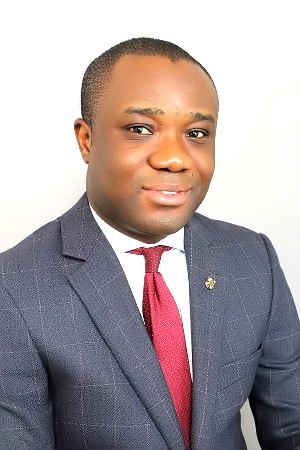
In a carefully calibrated address to the nation’s leading private newspaper publishers, Information Minister Felix Ofosu-Kwakye offered a mixture of commiseration, caution, and promises of future support, revealing the government’s acute awareness of the media sector’s existential crisis while stopping short of committing immediate concrete aid.
Speaking at a capacity-building workshop organized by the Private Newspaper and Online Publishers Association (PRINPAG) in partnership with the Bank of Ghana, Ofosu-Kwakye acknowledged the severe pressures facing the industry, from physical assaults on journalists to the existential threat posed by social media and artificial intelligence.
The Minister expressed the government’s “strong exception” to recent attacks on journalists, attributing them to state security personnel who view media scrutiny as a “nuisance.” His proposed solution, however, leaned more on persuasion than prosecution. He revealed that President Mahama had tasked him with organizing fora between media leadership and security chiefs to “reorient” officers and “shift behavior,” suggesting that “punishment alone does not do the trick.”
This soft approach will likely frustrate media advocates who have long demanded swift legal action against perpetrators as a more credible deterrent. It signals the government’s preference for managing the symptom poor inter-institutional relations over a root-and-branch reform of police and military attitudes towards press freedom.
The core of the Minister’s speech was a stark, almost elegiac assessment of the print media’s future. He described the migration to digital platforms as a “mathematical certainty” and “inevitable,” noting that even state-owned print entities are struggling. His advice was blunt: “Migrate… save yourself the difficulty of having to go under the crossfires of change.”
In lieu of immediate financial intervention, Ofosu-Kwakye dangled the prospect of reviving the long-dormant Media Development Fund (MDF). He admitted its earlier iteration “ran into difficulties” a tacit reference to mismanagement and allegations of it being used as a tool for government influence but stated the President had ordered stakeholder engagements to “fine-tune” its re-establishment with “transparency and accountability.”
The promise is politically convenient, offering hope of future relief while postponing any expenditure. Critics will note that similar promises have been made by successive administrations with little result, and a “fine-tuned” MDF could still become a mechanism for patronage.
Other pledges remained equally non-committal. The Minister acknowledged the government’s unfulfilled commitment to help PRINPAG acquire modern office space, citing “a backlog of problems” in land administration. He offered no timeline, only an assurance that “in due course, you will hear from government.”
Beneath the conciliatory tone lay a clear strategic calculus. The government views a functional, but financially dependent, private press as a useful partner. Ofosu-Kwakye praised PRINPAG for holding “government after government after government to account,” but his overarching message was one of managed transition. The state appears willing to offer a lifeline to help key players survive their digital migration, but on a timeline and through mechanisms that keep them engaged with and potentially beholden to the administration’s agenda.