

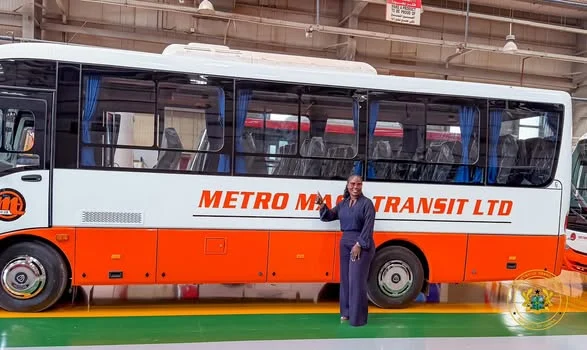
The state-owned Metro Mass Transit Limited (MMTL) has commissioned an in-house, ultra-modern restaurant at its Accra head office, a move management touts as a landmark investment in staff welfare.
The facility, branded MJ Catering Services, is intended to provide affordable, hygienic meals for employees and serve the surrounding communities of Abossey Okai and Awudome Estate.
Commissioning the facility on 2 February, Managing Director Cezario Kale, Esq., declared the occasion “historic” and positioned it as part of a broader welfare agenda, promising periodic subsidies on meal costs. He stated the restaurant would “not only nourish our staff but also serve our passengers,” suggesting a dual commercial and social purpose.
The rationale for the project, as presented by management, is pragmatic. Staff at the head office have historically struggled to access affordable, quality meals locally, often resorting to expensive deliveries from other parts of the capital. The new PPP-operated restaurant, run by CEO Shirley Naana Osei Ampem, aims to solve this with meals reportedly available from GHS 30.00.
The launch of a modern catering service arrives at a critical juncture for the publicly-funded transit company. MMTL has perennially grappled with operational inefficiencies, an aging fleet, financial sustainability concerns, and intense competition from private transport operators.
Its core mandate providing reliable, affordable mass transit across Ghana remains a significant challenge, with service coverage and frequency often falling short of public need.
The restaurant initiative, therefore, presents a dual narrative. Internally, it is a tangible concession to staff, potentially boosting morale. Externally, however, it risks being perceived as a diversion of focus and resources however marginal towards head office amenities rather than the pressing need to rejuvenate the company’s primary bus services.
The choice of a Public-Private Partnership (PPP) model for the restaurant is notable. It allows MMTL to provide the amenity without a significant direct capital outlay or assuming day-to-day operational risk. This model could be a pilot for other non-core services.
Management’s message is clear: this is “just the beginning of greater things.” It signals an intent to improve the corporate environment and employee conditions. However,
stakeholders, including the government, passengers, and taxpayers, will be watching closely to see if this focus on internal welfare translates into measurable improvements in MMTL’s core transportation services, fleet renewal, and financial health.
The ultimate success of the initiative will be judged not by the quality of the meals served, but by whether it forms part of a coherent, financially sustainable turnaround strategy for a vital but struggling national asset. The restaurant opens for business as the broader questions about MMTL’s route to long-term viability remain unanswered.