

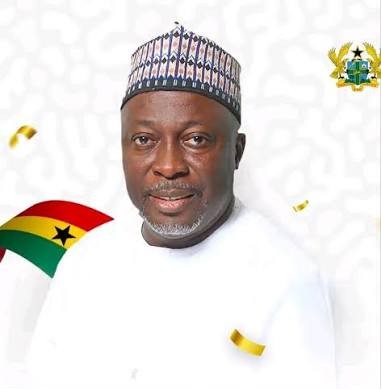
As “Ayawaso East Model” Tests Party Reform Pledge
By Gifty Boateng and Prince Ahenkorah
The National Democratic Congress (NDC) leadership is poised to receive a landmark investigative report today that could redefine internal party discipline and set a precarious precedent for Ghana’s political financing.
The three-member committee chaired by veteran security capo Kofi Totobi Quakyi will deliver its findings on the brazen vote-buying that marred the Ayawaso East parliamentary primary, a case that has unexpectedly drawn praise from governance experts for the swift response from both party and government.
The scandal erupted after viral videos showed delegates receiving 32-inch plasma televisions, motorbikes, wax prints, and even boiled eggs—a crude spectacle that forced the NDC’s hand. In a rapid sequence, the party condemned the acts, established the investigative committee, and saw the government recall the primary’s winner, Baba Jamal Mohammed Ahmed, from his post as High Commissioner to Nigeria.
This swift reaction has generated rare acclaim from typically critical observers. Professor Baffour Agyeman-Duah, former UN senior governance advisor, told The New Republic he was “encouraged” by the decisive stance, particularly suggestions to annul the election and ban perpetrators.
“I like very much what his own party, the NDC, have been saying about this,” he noted, framing the incident as a symptom of a three-decade degeneration where inducements have escalated from “bentua, salt, and lamps” to high-value electronics.
The praise extends across the civil society spectrum. Investigative journalist Manasseh Azure Awuni urged the NDC to proceed with the probe despite accusations of hypocrisy. “Yes, it has been happening, but it must end at some point…
The NDC can begin from Ayawaso East.” Franklin Cudjoe of IMANI-Africa commended the Majority Caucus’s call for annulment as “decisive, dignified, forward looking,” while US-based Professor Kwaku Asare expressed stunned approval at the recall of Baba Jamal: “Wow wow wow!! President recalls High Commissioner… Da yie [Well done].”
Beneath the applause lies a profound anxiety about a political economy saturated by illicit cash. Prof. Agyeman-Duah pinpointed the core dilemma: “Should money be the deciding factor?” He called for legislation criminalising electoral giving, warning that Ghana must not slide towards a US-style system “dominated and controlled… by billionaires.”
Manasseh Azure highlighted the vicious cycle this creates: “When people pay money to get into parliament, they will find ways, fair or foul, to recoup that money.” He questioned the sources of such lavish campaign spending, implying corruption fuels the very democracy meant to curb it.
The NDC’s response has been conspicuously firm. Within hours of the primary, General Secretary Fifi Kwetey issued a statement condemning the acts as “an affront to the values and principles of the party and the reset agenda.” The party pledged “more drastic sanctions… including possibly cancelling elections” in future.
The composition of the Quakyi committee signals serious intent. Its mandate extends beyond fact-finding to proposing long-term reforms to “eliminate inducement and vote-buying” in internal processes. Notably, Majority Leader Mahama Ayariga recused himself to avoid conflict with his caucus’s stated position, a move underscoring the sensitivity of the probe.
The government’s decision to recall Baba Jamal the only serving state official among the accused was framed as necessary to “protect the integrity of public office.”
This coordinated action between party and government reveals a strategic attempt to control the narrative and project an image of ethical governance, particularly after years of reciprocal accusations of corruption with the opposition NPP.
The Ayawaso East scandal presents the NDC with both a crisis and an opportunity. The unanimous expert praise provides rare moral capital, but it sets a high bar for genuine reform.
The committee’s recommendations will be scrutinised for their courage: will they demand the annulment and disqualification of a high-profile winner and former deputy general secretary?
This case exposes the open secret of Ghana’s political financing. While the NPP has been accused of institutionalising the menace, the NDC now faces its own “moment of truth.” Effective sanctions could position the party as a champion of internal democracy, ahead of the 2028 elections.
A weak or compromised response, however, would validate critics who see such probes as mere theatre.
The broader question remains whether this episode can catalyse a cross-party legislative framework to criminalise electoral bribery, as experts demand. For now, the NDC has won the first round of public opinion.
Today’s report will determine whether this becomes a turning point or merely another footnote in Ghana’s long history of political monetisation. The party’s “reset agenda” awaits its first real test.