

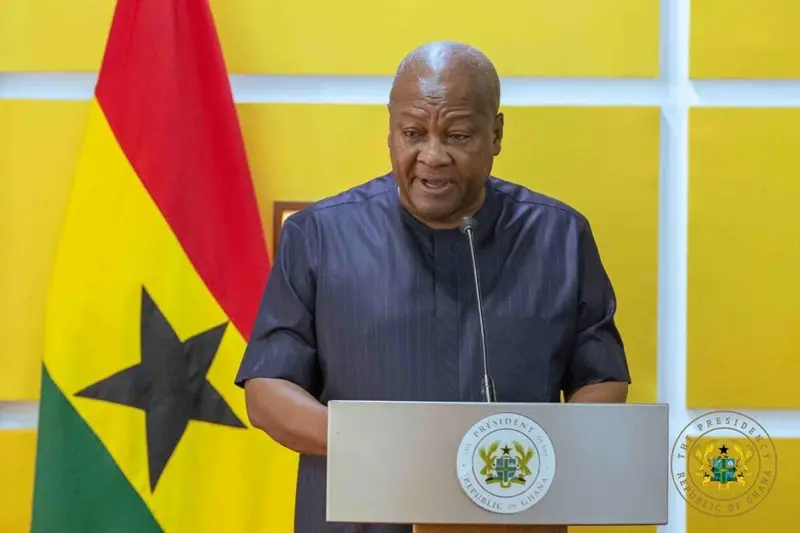
President John Dramani Mahama has inaugurated the Presidential Advisory Group on the Economy, marking a renewed effort to strengthen economic governance and restore long term stability.
Speaking at the Jubilee House during the group’s inaugural meeting, the President described the moment as both consequential and demanding, urging members to approach their task with honesty, independence, and a deep sense of national responsibility.
He thanked the appointees for accepting the call to serve, noting that their collective experience and expertise come at a time when Ghana faces complex economic challenges that require careful judgment rather than easy solutions.
According to the President, the establishment of the advisory body reflects the need for clear thinking and disciplined policy choices as the country works to consolidate recent gains and address lingering vulnerabilities.
He stressed that the group’s work would be central to shaping decisions that affect livelihoods, investor confidence, and Ghana’s standing in the global economy.“The mandate of PAGE, as outlined in your letters of appointment and accompanying public release, is both clear and consequential. You are expected to provide strategic counsel on macroeconomic management, fiscal consolidation, debt sustainability, and the coherence between fiscal and monetary policy.”
Their remit also includes advising on structural transformation, industrial development, competitiveness, and export led growth strategies that can reposition the economy for sustainable expansion.
Beyond macroeconomic issues, the group will offer counsel on sectoral development, private sector growth, policy guidance, investment mobilisation, and job creation.
President Mahama said PAGE would also support the design and implementation of flagship initiatives such as the 24 hour economy and the Accelerated Export Development Programme, alongside other productivity-enhancing reforms.
In addition, the group will periodically assess economic performance, propose policy adjustments where necessary, and contribute expert input to Ghana’s engagements with bilateral and multilateral partners, international financial institutions, and investors.
Reporting Structure and Institutional Coordination
PAGE will report directly to the President, submitting advisory memoranda, briefs, and strategic reviews as required. President Mahama emphasised that this direct reporting line underscores the importance of frank and evidence based advice grounded in the long term national interest.
“PAGE is not new to our governance architecture. It existed under the late President, Professor John Evans Atta Mills, and also during my earlier tenure in office. And it returns today expanded and strengthened to reflect the evolving complexity of our economy.”
The current configuration, however, has been expanded and strengthened to reflect the evolving complexity of the economy. The President explained that the structure allows for streamlined economic governance by eliminating overlapping bodies, including the former economic management team.
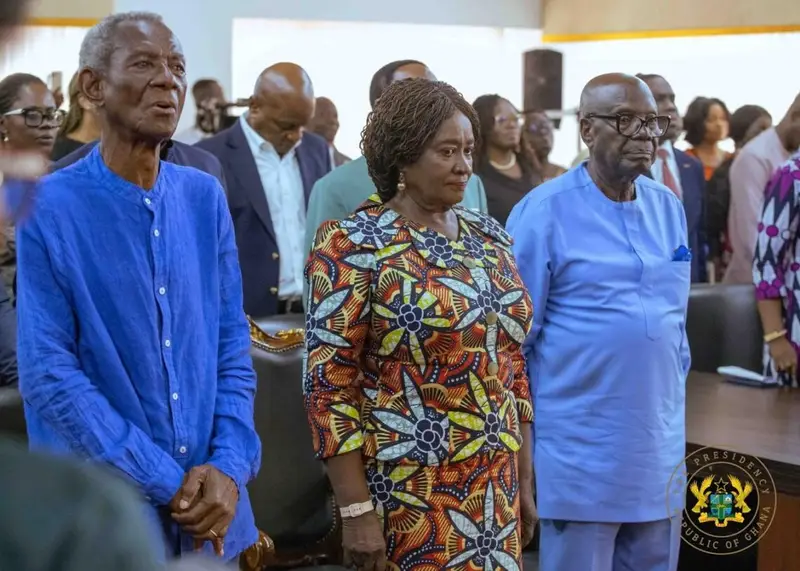
The Vice President, Professor Naana Jane Opoku Agyemang, who is a member of PAGE, will chair meetings in the President’s absence in line with constitutional responsibilities.
PAGE will operate alongside the Economic Policy Coordinating Committee, jointly chaired by the Minister for Finance and the Governor of the Bank of Ghana. President Mahama encouraged close coordination among these bodies to promote efficiency, coherence, and cost effective governance.
Principles Guiding the Composition of PAGE
In constituting the advisory group, the President said he was guided by three key principles. The first is experience and institutional memory. Some members have served across different administrations, including during his earlier tenure, providing continuity that allows the country to build on what has worked while avoiding past mistakes.
The second principle is diversity of expertise and sectoral balance. The group brings together professionals with backgrounds in fiscal policy, monetary management, capital markets, private enterprise, academia, and the real economy.
The third principle is gender and generational balance. President Mahama stressed that economic policy must reflect the full breadth of national talent, noting that the group includes women, young professionals, seasoned practitioners, and respected elders whose perspectives will enrich deliberations.
“This breadth is not symbolic; it is strategic. I do not want this committee to misunderstand my optimism in the advice you will offer as an endorsement of an easy task ahead. We are all qualified and experienced enough to know that we face a tough road ahead, regardless of the progress we may have chalked up to date.”
Confronting Hard Economic Truth
While expressing confidence in the group’s capacity, President Mahama cautioned against any assumption that the task ahead would be easy. He acknowledged that Ghana has once again found itself in debt distress after previously exiting the Highly Indebted Poor Countries initiative with a commitment never to return.
He said that experience should have permanently reshaped the country’s fiscal culture, yet buffers and stabilisers were allowed to dissipate, leaving citizens exposed to painful domestic debt restructuring.
The President also pointed to policy inconsistency and investor uncertainty in the petroleum sector, which contributed to declining crude oil output despite earlier investments and ambitions to consolidate gains before the energy transition.
He cited uneven management of state owned enterprises, where weak governance frameworks and political interference undermined institutions that once provided stability and credibility.
In the cocoa sector, he noted that the failure to secure sustainable funding for Cocobod weakened its long standing capacity to syndicate financing effectively. President Mahama said these observations were not meant to assign blame but to draw lessons in responsibility and humility from Ghana’s economic history.
Correction Without Amnesia
At the heart of the President’s message was the call for what he described as correction without amnesia. He urged members of PAGE to learn from both successes and failures, using that knowledge to rebuild credibility, restore fiscal discipline, attract investment, and re anchor expectations.
The goal, he said, is to re establish Ghana as a serious, predictable, and competitive economy. He emphasised that the task goes beyond short term recovery. It requires institutional reform, structural transformation, and a permanent reset of the culture of economic governance.
PAGE’s advice will be sought on major milestones including the national budget, mid year reviews, monetary policy developments, and medium term plans. The group will meet at least once every quarter and will also convene in emergencies when circumstances demand swift action.
Composition and Expectations
The Presidential Advisory Group on the Economy is chaired by President Mahama and comprises twelve experts drawn from diverse fields. In addition to the Vice President, notable members include economist Kwame Pianim, industrialist Sir Samuel Esson Jonah, business leader Togbe Afede, and former Finance Minister Dr Kwabena Duffuor.
Technical support will be provided by the Minister for Finance, Dr. Cassiel Ato Forson, the Governor of the Bank of Ghana, Dr Johnson Asiama, the Special Advisor to the President on the Economy, Seth Tekper, and Dr Nii Moi Thompson, the Chair of the National Development Planning Commission.
In formally inaugurating the group, President Mahama called for rigorous analysis, constructive debate, and solutions that place Ghana firmly on a path of recovery, resilience, and inclusive growth.