

-Challenges Africa to Seeks New Mining Model
Ghana’s Minerals Income Investment Fund used this year’s Indaba Ministerial Symposium to deliver a blunt diagnosis of African mining’s perennial ailment: plenty of global capital, precious few investable projects.
Speaking on a CEO roundtable examining financing for a new project wave, MIIF Chief Executive Justina Nelson told policymakers and institutional investors that sovereign funds must shed their passive postures and assume early-stage risk if the continent is to move beyond exploration rhetoric.
“There is no shortage of capital globally. What Africa needs are de-risked, feasibility-ready projects that investors can confidently support,” Nelson said.
Her intervention, delivered alongside MIIF board member Hon. Yakubu Mohammed and Chief Technical Officer Kwabena Barning, signalled Accra’s growing confidence in positioning its mining investment vehicle as a template for state participation without state capture.
Nelson ticked through the familiar litany of headwinds – geopolitical noise, regulatory flip-flops, pit-to-port infrastructure deficits – but reserved sharpest criticism for the project pipeline itself. Too many prospects remain stuck at JORC resource stage, she argued, lacking the feasibility work and governance scaffolding required to trigger institutional chequebooks.
The remedy, she proposed, is for African sovereign wealth and pension funds to act as catalytic first movers – taking cornerstone positions that signal credibility to skittish international partners. Not dominant equity, Nelson stressed, but strategic co-investment that brings governance discipline and patient tenor.
“We are not here to crowd out private capital. We are here to crowd it in,” she said.
MIIF’s own evolution from royalty collector to streaming negotiator featured as implicit case study. Nelson pointed to Ghana’s removal of VAT on exploration inputs and ongoing digitalisation of cadastral systems as proof that regulatory clarity can shift risk calculations.
On the AfCFTA front, she urged harmonised standards and shared processing infrastructure, noting that individual national markets remain too small to support integrated mineral value chains. Regional hubs, not national champions, she suggested.
The roundtable’s subtext was unmistakable: the old extractive compact – concessions in exchange for cheques – is no longer sufficient. What Nelson termed a “pragmatic risk-sharing framework” would see governments absorb infrastructure and regulatory uncertainty while private operators focus on geology and metallurgy.
Whether institutional investors, African or otherwise, possess the risk appetite for early-stage positioning remains unproven. But Nelson’s diagnosis shifts the burden of proof back towards project sponsors and their government hosts.
Bankability, she reminded delegates, is not discovered. It is constructed.
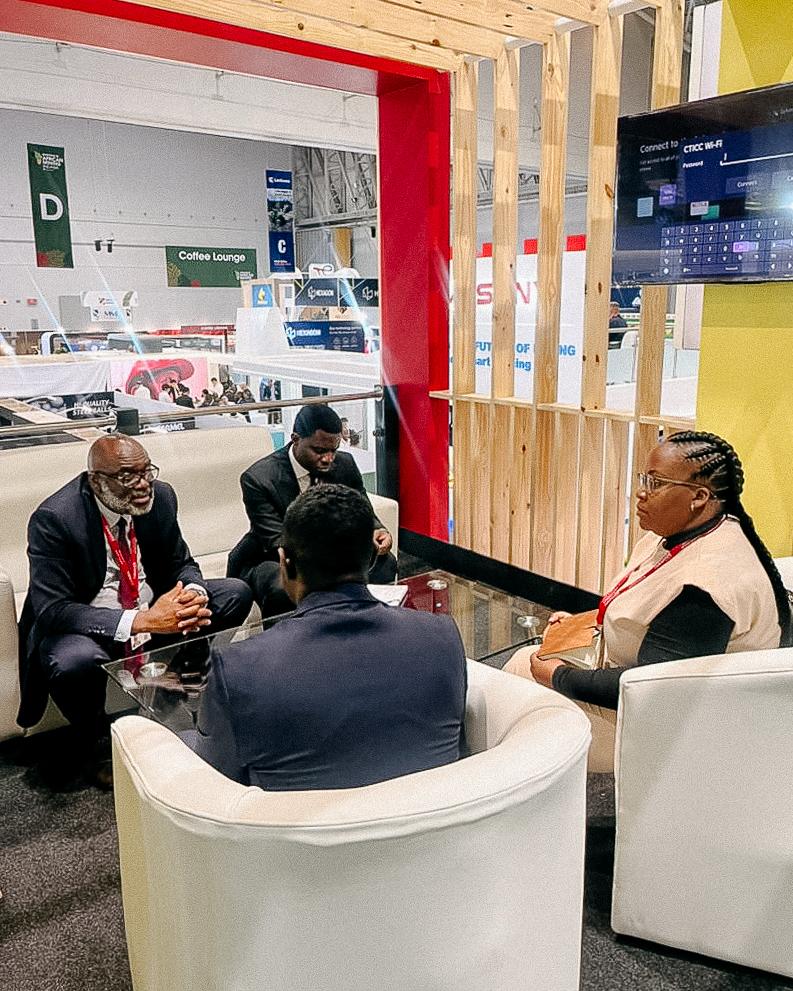
MIIF Chief Urge Sovereign Funds to Take Investment Risk
0Related Posts
Add A Comment
© 2026 THE NEW REPUBLIC GH.
About | Contact | Privacy Policy