

…Pivots From Collector to Investor, Seeks Value-Chain Foothold
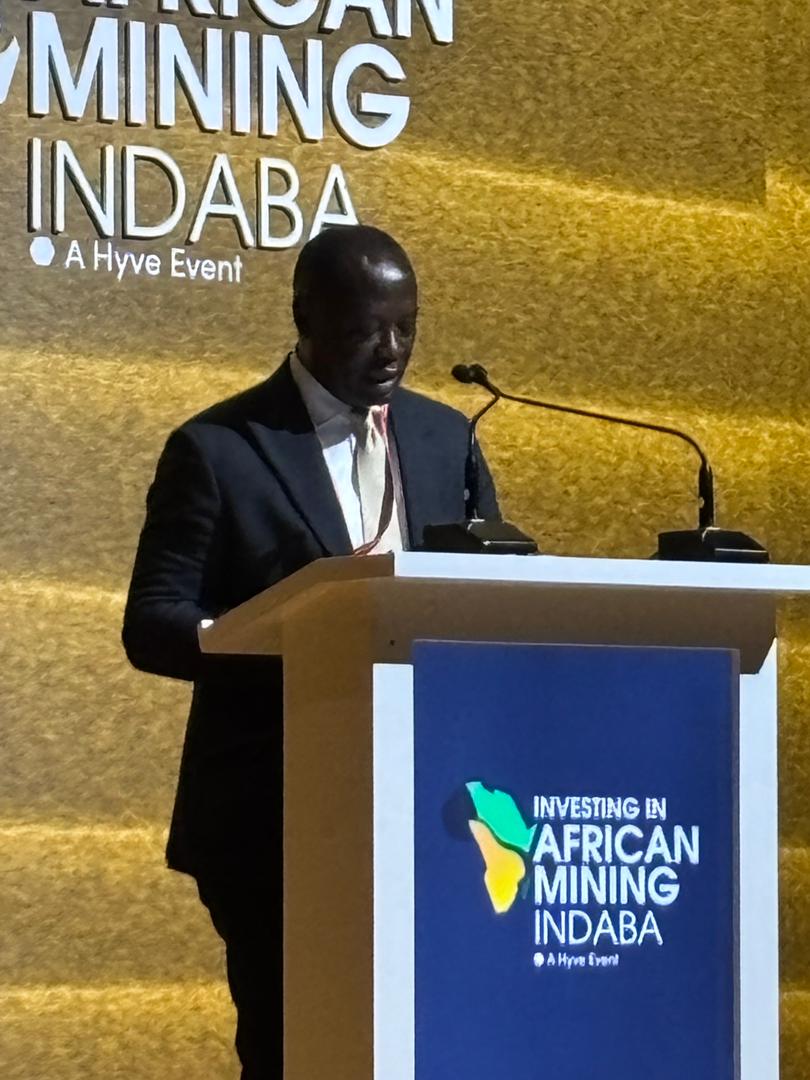
Ghana is repositioning its minerals revenue architecture away from passive royalty collection towards active equity participation, Lands Minister Emmanuel Armah Kofi Buah told the Africa Mining Indaba on Tuesday, signalling a strategic shift in how the state captures value from its resource endowment.
Speaking on a continental integration panel, Buah framed the Minerals Income Investment Fund not as a treasury buffer but as a developmental investment vehicle – one designed to take direct stakes in mining assets, infrastructure and downstream ventures. The objective, he said, is to crowd in private capital while weaning the state off over-reliance on taxes and royalties.
“Investors want predictability and seriousness of purpose,” Buah said. “An institution like MIIF demonstrates that Ghana is not only regulating the sector, but also investing alongside partners for mutual benefit.”
The message marks a deliberate departure from West Africa’s historical extractive playbook. Rather than channelling mineral receipts into consolidated funds for recurrent expenditure, Accra is now eyeing portfolio diversification – using mineral revenues to acquire yield-generating assets that can outlast individual mining cycles.
Buah pointed to potential cross-border applications under ECOWAS, where MIIF-style vehicles could anchor regional infrastructure projects too capital-intensive for single markets. The sub-region has long talked of shared mineral value chains; the Minister’s remarks suggest Accra sees investment funds as the mechanism to move from communiqué to concrete.
But the shift to state equity participation brings its own disciplines. Buah acknowledged that patient capital requires regulatory predictability, reliable geological data and enforceable environmental standards – all areas where Ghana has faced investor scrutiny. His emphasis on governance was calibrated to reassure an audience still scarred by past resource nationalism cycles.
On galamsey, the Minister struck a familiar balancing act: enforcement without economic exclusion, formalisation without amnesty. The sector’s illegal miners remain a political headache for Accra, but Buah framed the challenge as one of community integration rather than outright confrontation.
MIIF’s presence at Indaba has grown conspicuously since 2023. What began as a royalty manager is now pitching term sheets alongside private equity desks. Whether this pivot from collector to co-investor delivers the intergenerational returns Buah promises will depend on the Fund’s ability to pick winners and withstand the political pressure that tends to follow when the state holds equity.
MIIF Takes Equity Stake In Its Own Future
0
Add A Comment