By Nelson Ayivor
Experts from various disciplines in Ghana and Germany have expressed concern about the increasing impact of climate change on communities, particularly those in flood-prone areas.
Drawing lessons from the experiences of communities such as Mepe in the North Tongu District and Agbozume and Agavedzi both in the Ketu South Municipality, that have previously suffered severe flooding, the experts have developed a knowledge-based framework aimed at building resilient communities and improving flood risk management.
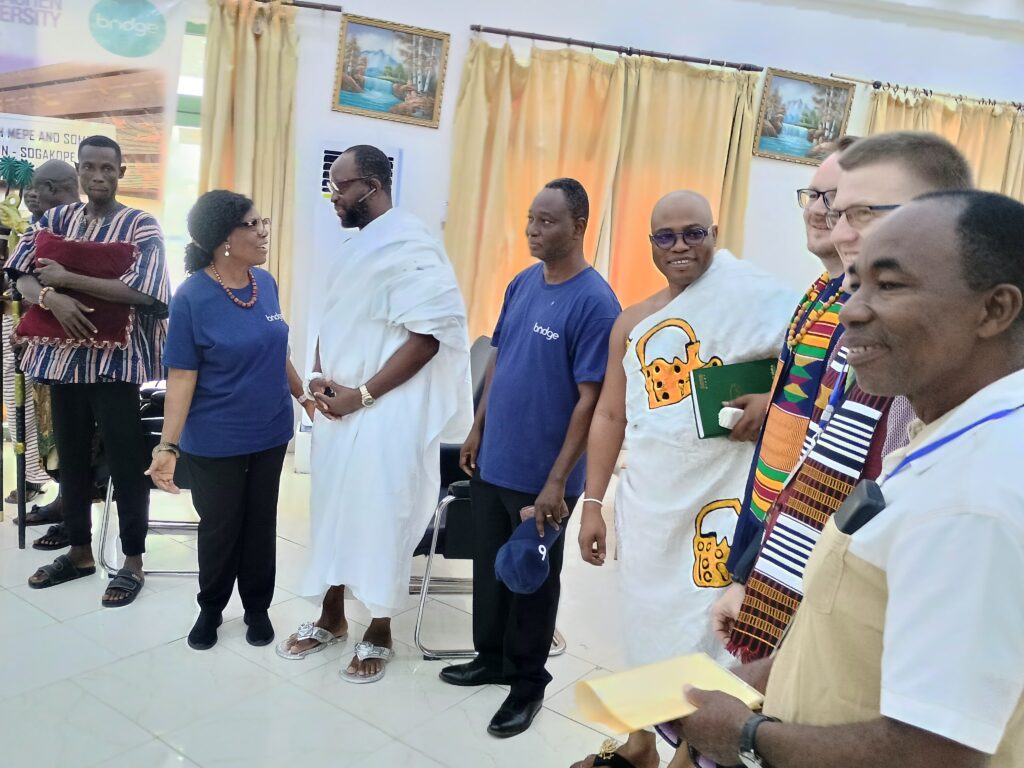
The initiative, dubbed “Building Resilient Communities through the Integration of Climate Adaptation with the Sustainable Development Goals for University Education and Research (BRIDGE),” seeks to strengthen climate change education, research and community engagement in Ghana.
Through the project, 16 academic staff and 10 PhD students from the Kwame Nkrumah University of Science and Technology (KNUST) have received training in water resources management and open educational resources at the Department of Engineering Hydrology of RWTH Aachen University in Germany.
In addition, seven PhD students undertook a three-month research exchange in Germany, gaining international research exposure and working with interdisciplinary climate scientists.
Several flood-affected communities in the Volta Region have also been engaged, with their experiences studied and documented. By integrating local knowledge with international best practices, the project has developed flood management strategies and solutions to serve as a framework to help Ghanaian communities respond more effectively to flooding.
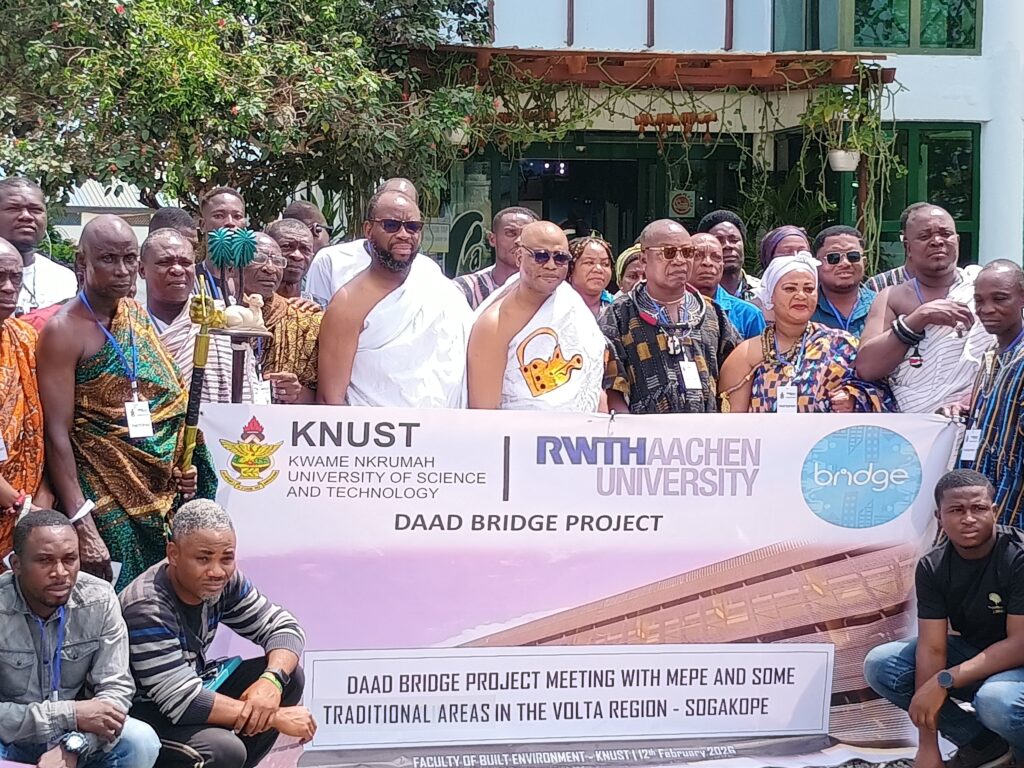
The three-year partnership between KNUST, through the Centre for Settlements Studies, and RWTH Aachen University, with funding support from the German Academic Exchange Service (DAAD) and Germany’s Federal Ministry for Economic Cooperation and Development, aims to bridge academic research with community-led climate adaptation strategies.
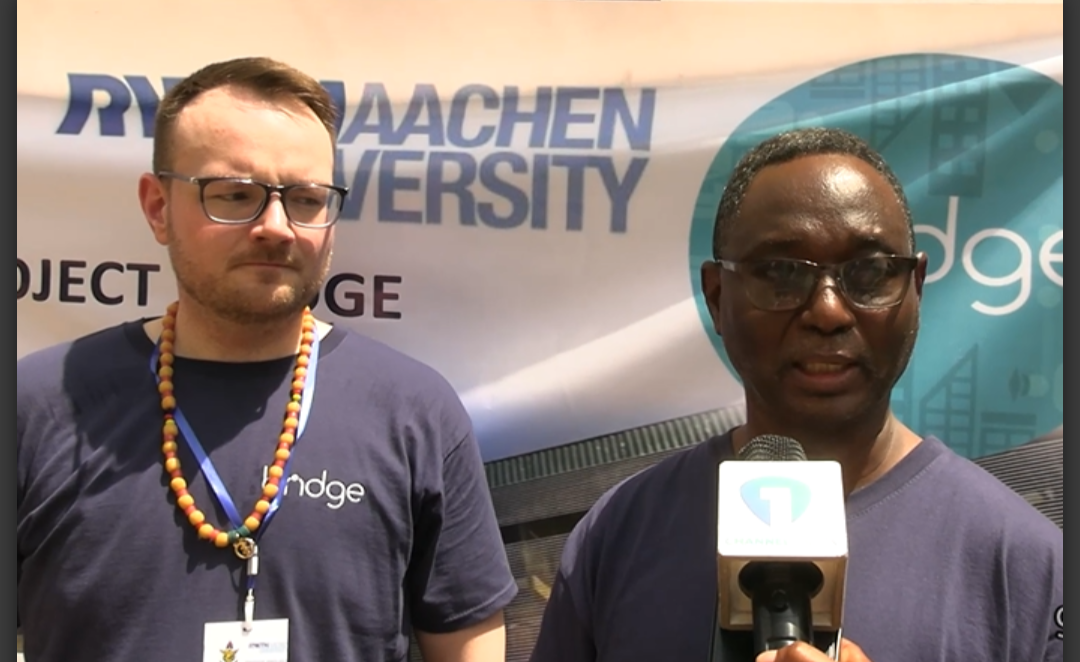
Project Coordinator for BRIDGE, Florian Balmes, in an interview, expressed satisfaction with the collaboration between KNUST and the local communities, commending their strong cooperation and valuable contributions to the project’s success. He noted that the project’s findings will be integrated into various academic curricula and made available online to ensure wider access.
“It is a very interdisciplinary project bringing different perspectives together. We are doing this because we want to enhance education on one hand. The title BRIDGE includes building resilient communities,” he said.
On his part, the Ghana Project Coordinator, Prof. Divine Ahadzie, a development and settlements planner and former Head of the Centre for Settlements Studies at KNUST, expressed concern over what he described as the inadequate recognition of the role of traditional leaders in flood risk management by government institutions and political appointees.
He explained that traditional authorities play a critical role in managing flood risks.
“Chiefs, Assemblymen and MPs should be more active in terms of promoting flood risk management initiatives in their communities,” he said.
He urged government agencies to actively collaborate with traditional leaders in addressing flood-related challenges.
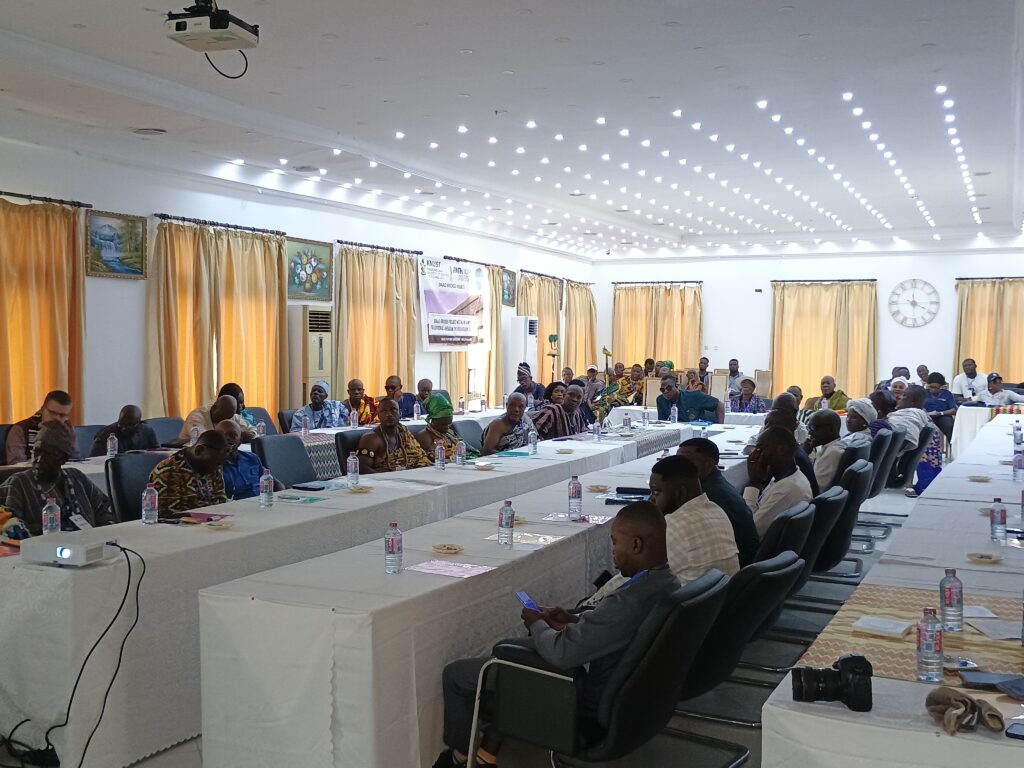
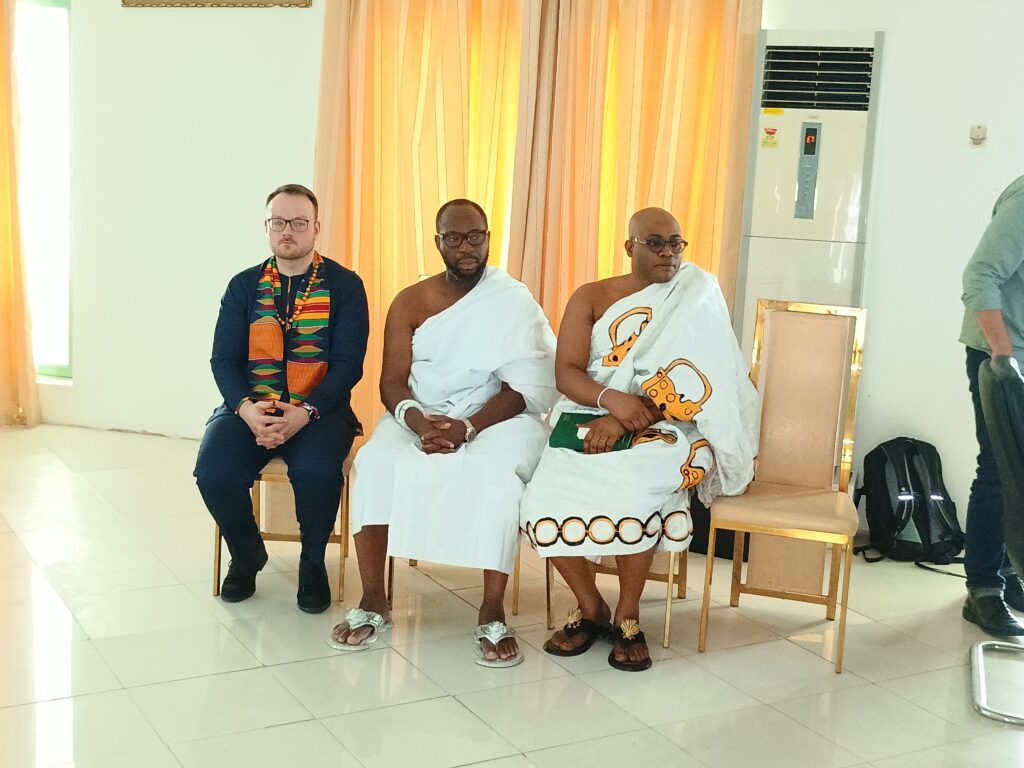
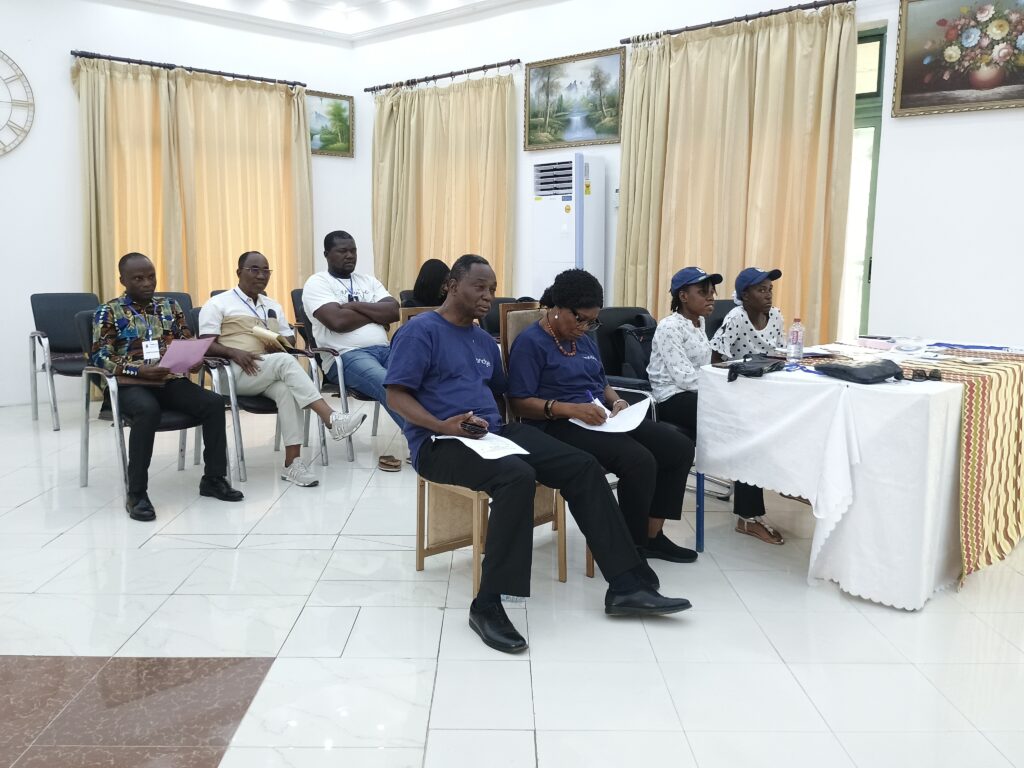
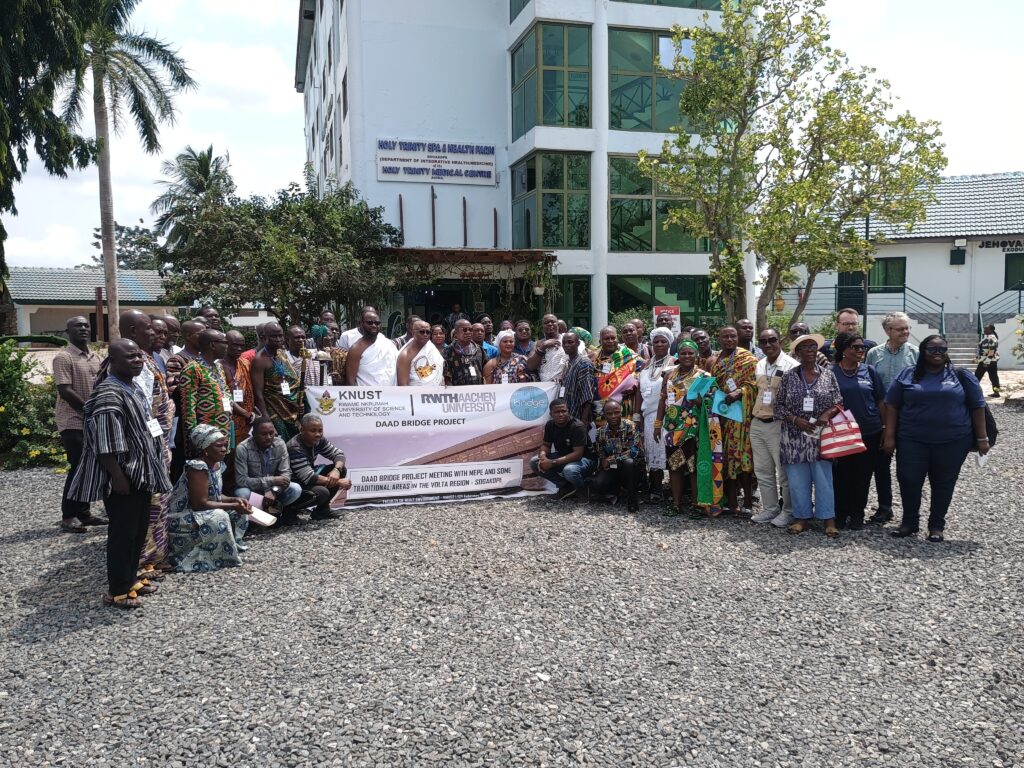
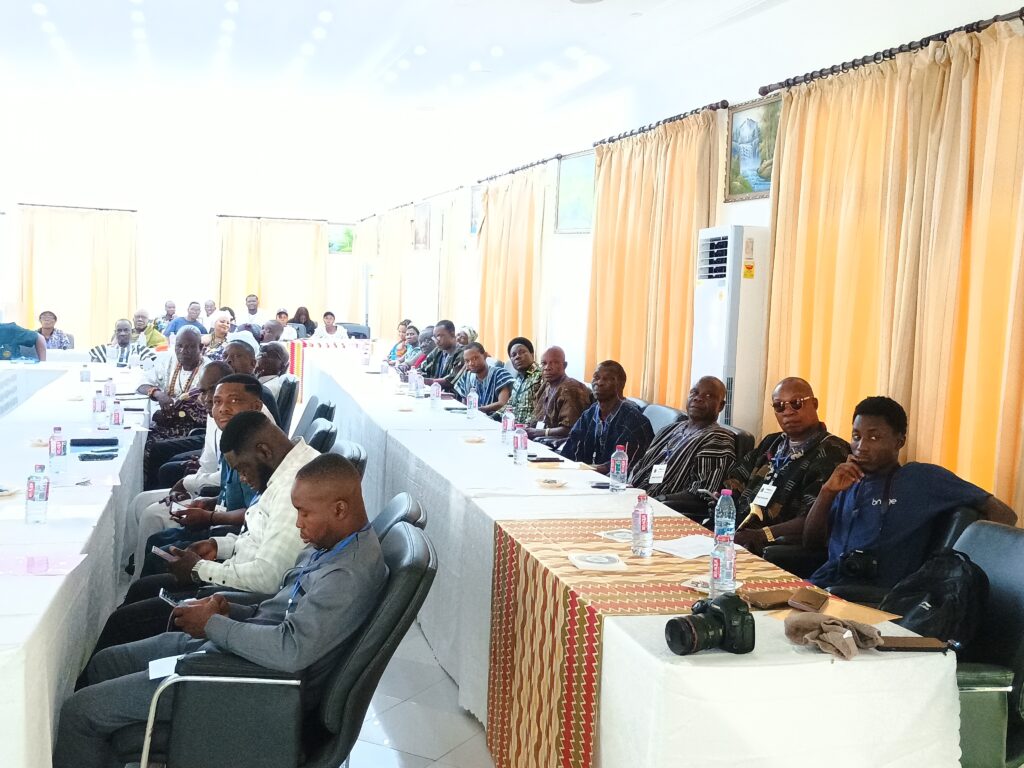
During a DAAD Bridge Meeting with the Mepe and Somé Traditional Councils, the two most flood prone areas in the Volta region and other stakeholders on February 12, 2026 at Sogakope, Torgbiga Adamah III Paramount Chief and President of Somé Traditional Council, whose community largely featured in the project, expressed gratitude to the research team and all who contributed to the success of the project, calling for collaboration between traditional authorities and government in finding lasting solutions to challenges like flooding etc, facing local communities.