

By Dr. John Osae-Kwapong
My soon-to-be 88-year-old mother is a cocoa farmer. She has devoted at least the last fifty years of her life to cocoa farming. Her life as a cocoa farmer meant many things.
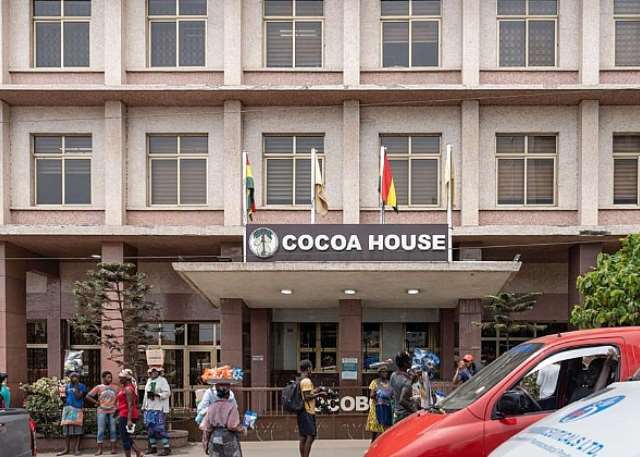
For example, being able to afford private catholic school education for her children, including me, was always closely tied to how well COCOBOD – the responsible state agency for marketing and export of cocoa, managed its affairs.
Even at her current age, cocoa contributes to her livelihood, even as she enjoys the blessings of having children. You can therefore imagine the many phone calls from my mother and her worry about developments in the cocoa sector. I have no answers to her questions, but they tell me that what she and other cocoa farmers are experiencing is problematic.
The CEO’s interview and matters arising
The CEO of COCOBOD granted an interview (Feb 9, 2026) on Bernard Avle’s show The Point of View. He pointed to several issues bedeviling his agency: a) debt portfolio; b) rollover contracts; c) irregular procurement of jute sacks; d) inability to fall on the syndicated loan; and e) the financial burden of cocoa roads.
Fair enough because when there is a crisis, those directly responsible for resolving it must be given an opportunity to do three things: a) tell us why there is a crisis; b) what will be done about the crisis; and c) when the crisis will be resolved.
To the technical mind, answers to these questions, as the CEO of COCOBOD tried to provide, enable us to get a complete understanding of the crisis. But to my 88year old mother, her bottom-line question remains – “When will COCOBOD buy and most importantly pay for my cocoa?”
Even as cocoa farmers wait for relief, we have also introduced the usual suspect – partisan politics – into the discourse. The accusations and counter accusations of which party’s government created the problem, paid or did not pay COCOBOD’s debt, inherited or did not inherit contract rollovers, offered or did not offer better producer price of cocoa to the farmer, engaged or did not engage in improper procurement continues daily.
I understand the political economy of cocoa. Beyond the economic realities of cocoa, it has the element of politics. I recall how the National Democratic Congress (NDC) in opposition, gave the Akufo-Addo government “headaches” over cocoa sector matters like the producer price for farmers.
And I can also recall as an opposition party before winning the 2016 elections, the New Patriotic Party (NPP) giving the NDC government similar “headaches” as well. Also, remember that the farmer is a voter, which means satisfaction or otherwise with a government in power can have political consequences.
What Next For COCOBOD?
Let’s admit this – the policy and administrative practices around cocoa have remained similar regardless of which political party is in power. For example, the producer price of cocoa is determined by the government.
Yes, there was an important tweak in the Akufo-Administration where the producer price is determined in terms of Gross FOB (Freight on Board) and not Net FOB, which was the practice for some time. Another example is the use of forward sales to market and export Ghana’s cocoa.
What next? The immediate need is to resolve one aspect of the current crisis– buying and paying the farmers for their cocoa. In addition, there is the need to critically examine the cocoa sector and ask this difficult question: Is the COCOBOD approach to managing an important export commodity the most ideal way? I know the CEO mentioned important considerations moving forward, such as rethinking COCOBOD’s funding model and the pricing mechanism.
These two issues go to the heart of the COCOBOD model, but the entire cocoa value chain needs a comprehensive retool. It is therefore refreshing to hear the CEO say that a new COCOBOD ACT will be presented to the cabinet and then parliament soon.
What I did not hear him say is whether there was stakeholder consultation as part of the process. If there was great. However, if there has been no stakeholder consultation, then hopefully, when laid in parliament, there will be an opportunity for input.
The Cocoa sector has undergone many reforms, including partial liberalization, which introduced other private sector players into the space, such as licensed buying companies (LBCs).
This policy reform has offered the farmers market options of who to sell their cocoa to apart from the Produce Buying Company (PBC), which for a long time had a monopoly. Hopefully, the new act will strengthen the sector.
Given the persistent nature of the challenges COCOBOD faces, let me ask the question I was once told: The State will never consider as an option – will a government today, or in the future give serious consideration to full liberalization of the cocoa sector?
The author, Dr. John Osae-Kwapong is a Democracy and Development Fellow, CDD-Ghana, and Project Director, the Democracy Project