

By Prince Ahenkorah
A high-level encounter between Ghana’s finance minister and a top World Bank official has underscored the lender’s growing confidence in the Mahama administration’s economic management, even as Accra grapples with persistent structural challenges.
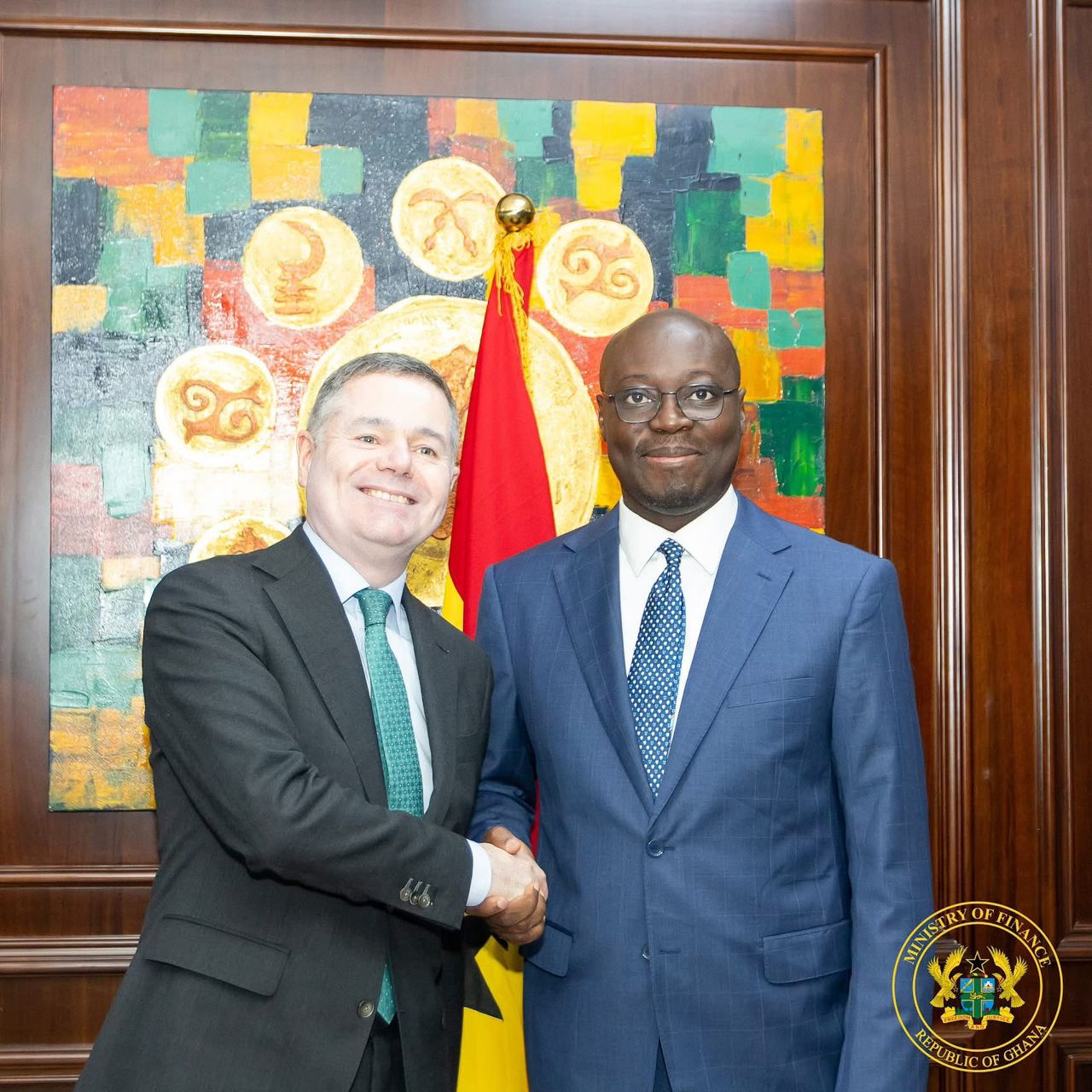
When Paschal Donohoe, the World Bank’s Managing Director and Chief Knowledge Officer, sat down with Ghana’s Finance Minister Dr. Cassiel Ato Forson in Washington last week, the conversation marked more than a routine diplomatic exchange. It signalled a significant shift in the international financial institutions’ perception of Ghana’s post-crisis trajectory.
Donohoe, a seasoned Irish finance politician who now holds one of the Bank’s most influential policy roles, offered unusually warm praise for Ghana’s fiscal stabilisation efforts. According to sources familiar with the meeting, he described the improvements in the country’s public finances as “remarkable” and characterised Ghana as an “anchor of stability for the region.”
The endorsement carries weight. Donohoe’s portfolio includes oversight of the Bank’s knowledge operations and strategic direction, placing him at the centre of debates about development effectiveness across the Global South. His choice to highlight Ghana as a model suggests the lender sees Accra’s reform programme as a template worth promoting.
For Forson, the meeting provided welcome validation after a year of tough policy choices. Since taking office, his team has pushed through expenditure cuts, revenue mobilisation measures, and a renegotiation of external debt terms under the G20 Common Framework. The IMF-backed programme remains on track, and donor confidence is slowly returning after the turbulent years of the previous administration.
Yet beneath the diplomatic cordiality, both sides acknowledge the scale of what remains undone. Donohoe pointedly commended the government’s focus on youth development and employment creation, areas where Ghana’s performance has been mixed. The country’s youthful population, one of the most dynamic on the continent, also presents one of its greatest political risks if job creation fails to keep pace.
Forson, for his part, did not shy away from the challenge. He told Donohoe that while fiscal recovery had exceeded expectations, unemployment remained the government’s most pressing concern. Public sector recruitment, he acknowledged, could not absorb the hundreds of thousands of young Ghanaians entering the labour market each year. The answer, he argued, lay in private enterprise, entrepreneurship, and skills development.
The minister’s pitch reflected a broader strategic shift within the government. After years of reliance on public sector expansion and consumption-driven growth, the Mahama administration is betting on a new model: one that leverages private investment, digital innovation, and regional trade integration to create sustainable employment. Whether the World Bank will back that vision with the scale of resources required remains an open question.
Donohoe’s assurance of continued technical and financial support was carefully worded. The Bank has signalled it will maintain its engagement, but its board will be watching closely to see whether Ghana’s reform momentum can survive the political pressures that inevitably accompany austerity.
For now, Forson has secured what matters most in Washington: credibility. In the world of multilateral finance, that currency may prove as valuable as the loans themselves.