

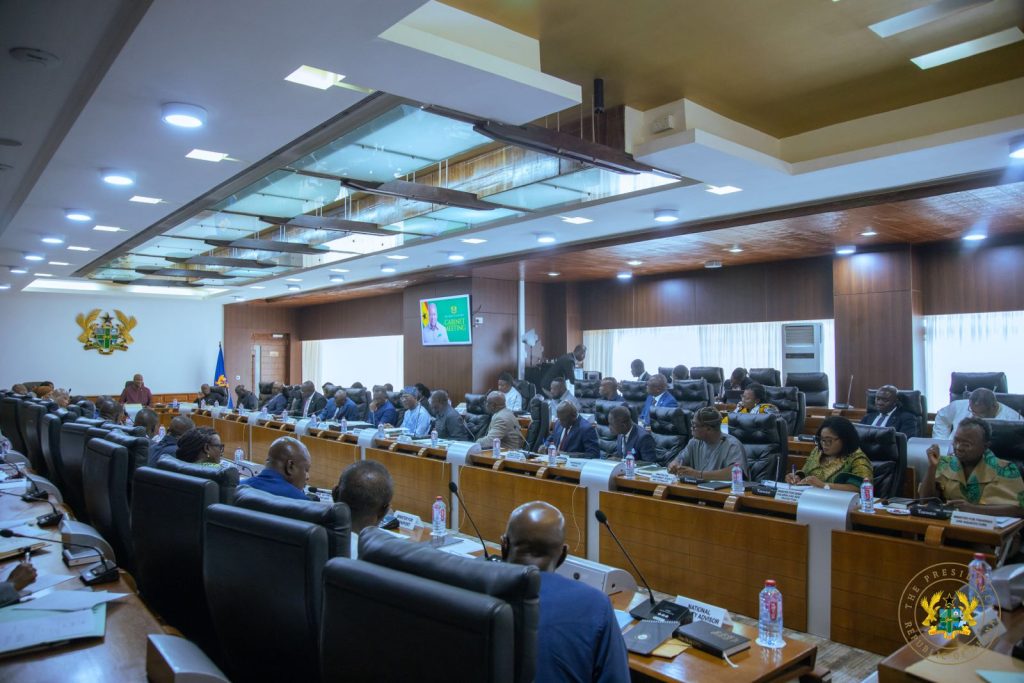
Gov’t long-awaited National Agribusiness Policy heads to Cabinet, promising to end decades of fragmented planning. The hard part translating framework into on-farm reality is only just beginning.
Trade Minister Elizabeth Ofosu-Adjare used last week’s AgroTech Fair to confirm what investors have been waiting to hear: Ghana’s first standalone National Agribusiness Policy is finally cabinet-ready.
The announcement, delivered against the backdrop of local machinery exhibits and start-up pitches, signals the clearest attempt yet to impose coherence on a sector long characterised by disjointed programmes and competing ministerial mandates.
The policy, once approved, will reposition the Ministry of Trade, Agribusiness and Industry (MoTAI) as the central driver of agricultural transformation, moving beyond its traditional focus on commerce to orchestrate a deliberate industrialisation of the food system. Ofosu-Adjare’s message was unambiguous: the era of ad hoc interventions is over.
Yet in Accra’s policy circles, the question is not whether the framework is sound it is but whether the machinery of government can deliver what the document promises. Previous initiatives, from FASDEP to Planting for Food and Jobs, have foundered not on strategy but on execution.
The new policy’s emphasis on local manufacturing, import substitution, and export orientation will live or die by the same test.
A core pillar of the policy is the promotion of Ghanaian-made agricultural machinery and technology. The minister was explicit about the administration’s “intentional” shift away from imported equipment that often proves unsuitable for local conditions or impossible to maintain once foreign technicians depart.
The AgroTech Fair showcased domestic fabricators producing planters, processors, and irrigation kit designed for Ghanaian terrain. The policy aims to create a protected market for these innovators, channelling government procurement and development finance toward local manufacturers.
This is as much an industrial strategy as an agricultural one. By stimulating demand for locally fabricated equipment, MoTAI hopes to build a manufacturing ecosystem that retains wealth within the economy while generating the skilled employment needed to anchor youth in rural areas. The logic is sound, but it requires the state to enforce procurement rules that have historically been ignored when cheaper imports become available.
Ofosu-Adjare positioned the policy within the larger canvas of the African Continental Free Trade Area, arguing that Ghana must become West Africa’s primary exporter of agricultural solutions, not just raw commodities. The logic is compelling: with the secretariat in Accra, Ghana enjoys first-mover advantage in shaping continental standards and supply chains.
But the AfCFTA is a double-edged sword. If Ghana fails to build competitive processing capacity, the agreement could simply open the door to more sophisticated agribusiness exports from Nigeria, Kenya, or South Africa. The policy’s emphasis on value addition and quality standards is designed to ensure that Ghanaian firms can hold their own in a liberalised continental market.
The Medium-Term Development Plan (2026-2029) provides the budgetary framework, but the real test will be whether the Ghana Exim Bank and other financiers can provide patient capital at the scale required. Smallholders cannot wait three years for disbursement cycles to catch up with planting seasons.
The minister dedicated significant attention to the demographic challenge: a youthful population increasingly detached from agriculture, which it associates with drudgery and poverty. The policy framework promises dedicated sessions on youth entrepreneurship, access to technology, and mentorship but these remain commitments on paper.
The transformation of agriculture from “hoe and cutlass” to a digital, entrepreneurial frontier requires more than policy statements. It requires extension services that function, land tenure systems that enable investment, and credit products that recognise the cash flow patterns of agribusiness rather than demanding monthly repayments suitable for salaried traders.
Ofosu-Adjare’s reference to connecting innovators with financial partners is critical. The greatest ideas will indeed die in the prototyping stage if working capital cannot bridge the gap between concept and commercialisation.
Cabinet approval is widely expected within weeks. The policy enjoys presidential backing, and Mahama’s Reset Agenda requires a signature achievement in economic transformation. Agribusiness, with its links to jobs, exports, and industrialisation, fits the narrative.
But approval is the beginning, not the end. The policy must now be translated into regulations, budgets, and institutional mandates. Ministries, agencies, and district assemblies must be brought into alignment.
The perennial turf wars between MoTAI, the Food and Agriculture Ministry, and Local Government will need to be managed.
For investors watching from the sidelines, the signal is cautiously positive. A coherent policy framework reduces risk. But until the machinery on display at the AgroTech Fair is working in farmers’ fields across the country, and until Ghanaian processed foods are moving in volume across African borders, the policy remains a document awaiting its test.
Ofosu-Adjare’s closing invocation of independence-era resilience captured the aspiration. Whether the apparatus of the modern Ghanaian state can match that spirit with delivery is the question that will define the policy’s legacy.