

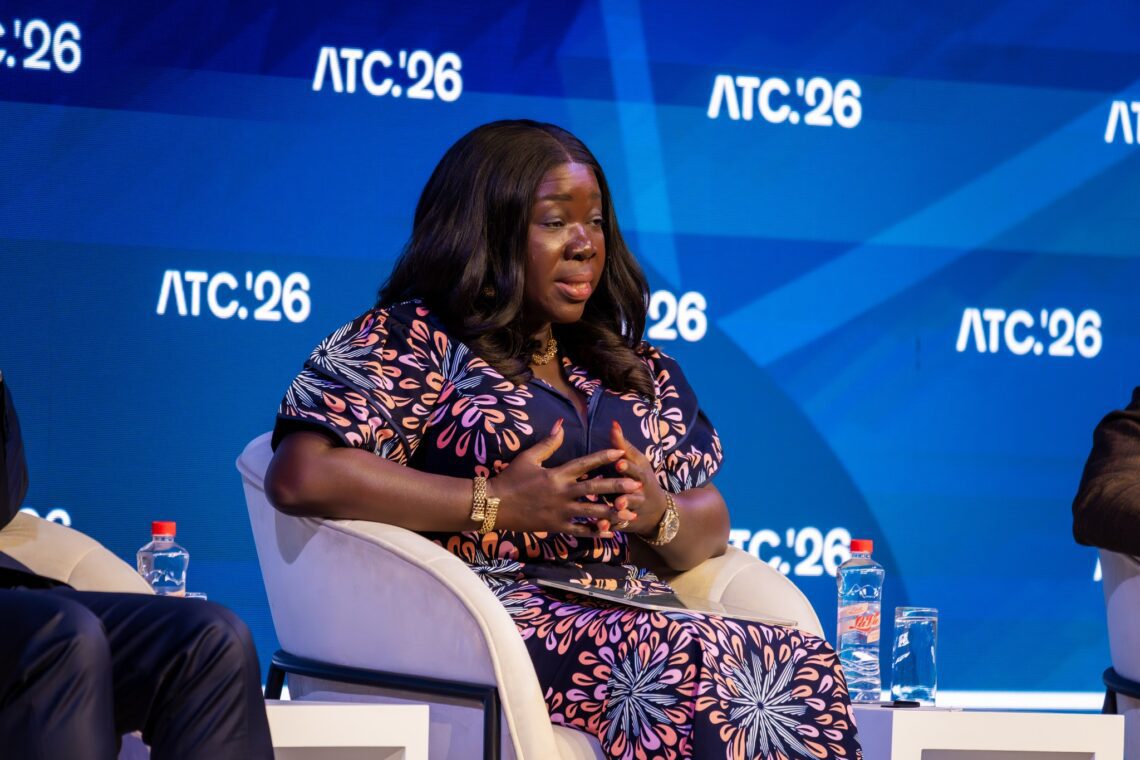
In a performance that signaled Ghana’s transition from a participant to an architect of continental commerce, the Minister for Trade, Agribusiness and Industry, Elizabeth Ofosu-Adjare, dominated the recent African Trade Conference 2026 in Cape Town.
Addressing a high-level ministerial panel and speaking later to CNBC Africa, the Minister delivered a blistering critique of the bureaucratic inertia that has historically stalled the African Continental Free Trade Area (AfCFTA). Her message to the 54 member states of the African Union was uncompromising.
“Progress does not require all 54 countries to move at once. A few can take the lead and others will follow. We must move beyond the consensus trap and focus on country-led solutions to the continent’s long-standing trade integration challenges. Ghana will no longer wait for universal consensus before moving forward with regional integration.”
The Minister’s intervention comes at a critical juncture for the government’s Accelerated Export Development strategy. As Ghana aggressively scales its domestic production under the 24-Hour Economy mandate, the need for “frictionless corridors,” across the continent has moved from a policy preference to a survival necessity.
Ofosu-Adjare effectively positioned Ghana as the vanguard of a new, pragmatic trade bloc that prioritizes bilateral results over multilateral ceremonies by advocating for a “lead-and-follow” model of integration.
A highlight of the Minister’s Cape Town mission was the “stubbornly low,” volume of intra-African trade, which currently sits at roughly 15% of total exports. Comparing this to Europe’s 60%, Ofosu-Adjare characterized the disparity not as a failure of potential, but as a failure of political will and digital infrastructure.
She argued that the framework for the AfCFTA already exists “on paper,” but the actual movement of goods is being choked by the duplication of trade documentation and the absence of cross-border digital systems.
To address this, the Minister demanded a shift toward cross-border digital infrastructure that allows for the real-time sharing of customs data.
This technological leap is essential for the Industrialization pillar, as it ensures that Made-in-Ghana products can reach markets in Southern and Eastern Africa without being held hostage at border crossings. For the Minister, the era of “paper commitments,” ended in 2025; 2026 is the year of the digital corridor.
Proving that her call for “country-led solutions,” was more than just rhetoric, Ofosu-Adjare held high-stakes bilateral discussions with her Zambian counterpart on the sidelines of the conference.
According to the Ministry of Trade, Agribusiness and Industry (MoTAI), these talks moved straight to the operational “brass tacks”: the reduction of non-tariff barriers, the harmonization of standards, and the alignment of regulatory frameworks between Accra and Lusaka.
By bypassing the broader AU bureaucracy and aligning standards with key partners like Zambia, Ghana is creating a “ready-made” trade route that other nations can eventually join.
This approach ensures that Ghanaian exporters have immediate, predictable access to the Zambian market, reducing the cost of doing business and providing a stable foundation for the Accelerated Export Development programme. Ofosu-Adjare emphasized that these direct alignments are the building blocks of a truly integrated continent.
The Cape Town engagement also served as a platform to market Ghana’s emerging status as an Agribusiness powerhouse. The Minister argued that for African nations to stop importing what they can grow, they must first stop taxing each other’s innovations, and pushed for the removal of regulatory barriers for agri-tech solutions.
This vision aligns with Agenda 2063, where Africa is seen not just as a consumer of global goods, but as a producer for itself. Hon. Ofosu-Adjare’s advocacy for “country-led solutions” included the creation of regional industrial hubs where nations share processing capabilities.
Under this model, a product grown in Ghana could be processed using technology shared with Zambia, and eventually sold in Kenya – all within a unified, digitalized, and tariff-free environment. This is the “larger African story of transformation” that the Minister is currently authoring, to meaningfully boost intra-African trade volumes.
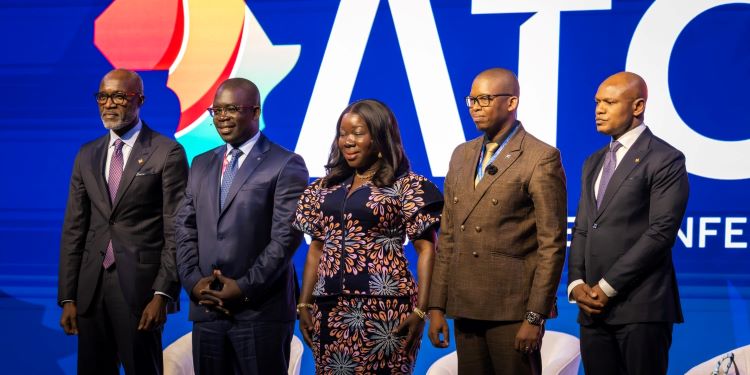
The Ministers agreed that the path forward lies in reducing duplication of trade documentation and investing in cross-border digital infrastructure.
As the African Trade Conference 2026 concluded, Ofosu-Adjare’s doctrine had clearly taken hold, signaling the start of the old model of waiting for the slowest member state to agree being replaced by a high-speed, bilateral strategy led by Ghana.
The Minister’s address on CNBC Africa served as a formal notice to the continent that Ghana has the political will, the industrial capacity, and the digital roadmap to lead, and those who are ready to move will find a willing partner in Accra.