

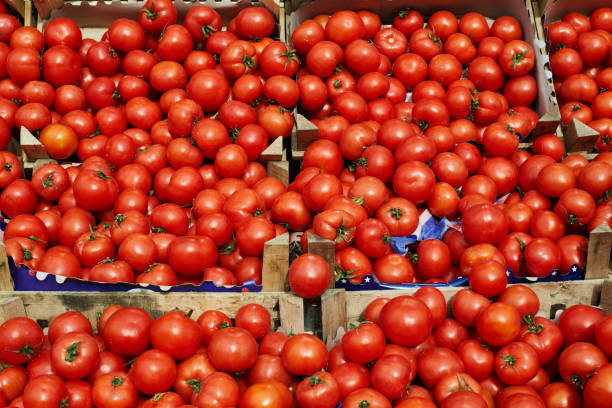
Ghana’s tomato market is facing a shake-up. Burkina Faso, a key supplier, has halted exports of fresh tomatoes, creating immediate supply gaps and sending prices soaring in local markets. But for Dr. Felix Mawuli Kamassah, CEO of Maplix Trust Ghana Limited, the disruption is more than a crisis, it is an opportunity for Ghana to rethink its agriculture and become self-sufficient.
“This is good news for the country,” Dr. Kamassah said in an interview with The High Street Journal. “So, this is a time for Ghana also to be thinking how we can be self-sufficient of tomatoes.” He pointed out that every household consumes tomatoes daily, making supply stability a national issue that requires strategic attention from policymakers and farmers alike.
Ghana’s dependence on imported tomatoes has long left the country vulnerable to external shocks. Wholesale and retail prices have already jumped sharply since the Burkina Faso export halt, highlighting the urgency of building local production capacity. Dr. Kamassah emphasized that the country produces the right tomato varieties but lacks the scale, irrigation, and coordination needed to meet national demand.
At his own farm, Dr. Kamassah is combining greenhouse cultivation with open-field nurseries, with plans to expand production to nearly 200 acres. He envisions transforming the area into a tomato hub equipped with irrigation, serving as a model for high-volume, climate-smart farming.
He believes that, with the right support, Ghana could bring substantial quantities to market within months, easing price pressures and gradually reducing reliance on imports.
“The short term is that we have to be in collaboration with the government and then the private sector,” he said, stressing that public-private partnerships are essential to scale production quickly. Collaboration, he noted, would allow policymakers, research institutions, and farmers to make informed, field-level decisions, turning small farms into high-output production centers.
Dr. Kamassah also highlighted that local growers in areas like Dawhenya and Weija are already planting nurseries in preparation for transplanting. With proper planning, irrigation, and technical support, he believes these efforts could begin to close Ghana’s tomato supply gap within a year.
In essence, the Burkina Faso tomato halt serves as a wake-up call and a catalyst. For Dr. Kamassah, Ghana has the land, knowledge, and talent; what remains is decisive action, innovation, and collaboration to ensure the country can produce enough tomatoes to meet demand, stabilize prices, and strengthen its agricultural sector for the long term.