

but Can It Keep Them Alive?
By Philip Antoh
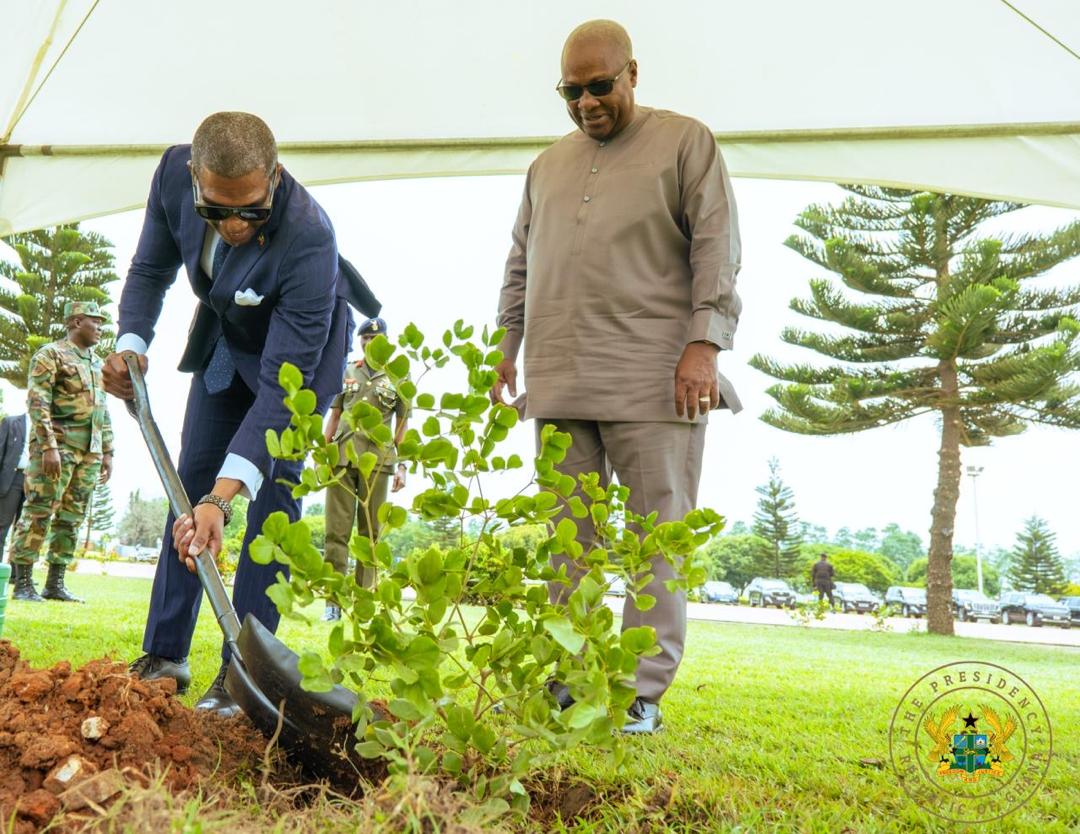
Ghana’s flagship reforestation programme, the Tree for Life Initiative, surpassed its 2025 target with over 30 million seedlings planted a logistical feat that the government is now positioning as both an environmental victory and a prototype for a new bioeconomy.
But as the focus shifts to survival rates and enforcement, the initiative faces the perennial challenge that has undone successive reforestation efforts: keeping the trees in the ground.
Lands and Natural Resources Minister Emmanuel Armah Kofi Buah used the International Day of Forests on 19 March to unveil the figures, crediting the achievement to community-led mobilisation that generated over 41,000 “green jobs”.
Speaking at the Achimota Forest in Accra, he framed the initiative as President John Mahama’s domestic answer to global climate imperatives, noting that the 2025 campaign distributed and planted seedlings across the country with the help of more than 2,000 youth “forest champions” and over 20,000 farmers.
For 2026, the government is aiming to match the 30 million target. But Buah acknowledged the harder part comes after planting. “A seedling is a promise and a mature tree is a legacy,” he said, warning that young trees must be protected from bushfires, illegal logging, and galamsey (illegal mining) threats that have historically gutted reforestation schemes.
The minister’s remarks also signalled a strategic recalibration. Where past conservation efforts emphasised preservation, the current administration is leaning into the concept of forests as financial assets.
Buah cited timber exports generating around €100 million annually and a local market for wildlife and forest products estimated at over $250 million. He pointed to carbon credit systems as an emerging revenue stream, arguing that “a standing, thriving tree is not just an ecological asset, but a financial one”.
That pitch aligns with the direction of global climate finance, which Buah observed at the COP30 summit in Belém, Brazil. The shift in tone—from conservation to monetisation—reflects a broader calculation by Accra: that international carbon markets and green investment may offer a more sustainable funding model than donor-led conservation projects.
Yet the political context is inescapable. The Tree for Life Initiative was launched by Mahama last year in Nkawie, Ashanti Region, and has since become a signature programme of his administration.
With enforcement still reliant on forestry guards and security services institutions with their own capacity constraints the real test will be whether the government can translate planting numbers into permanent forest cover before the next election cycle shifts priorities elsewhere.