

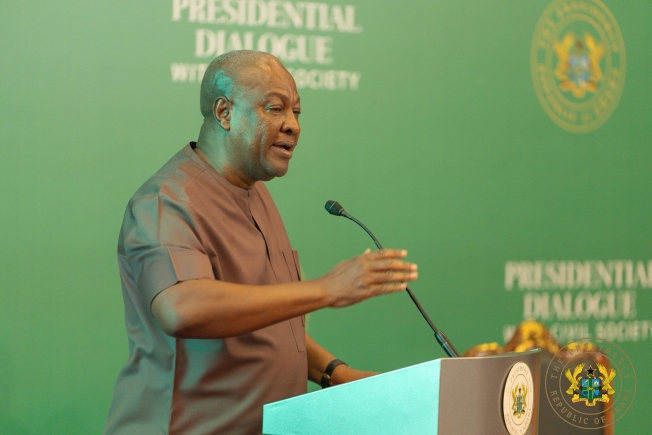
By Leo Nelson
The Government of Ghana has held a high-level engagement with Civil Society Organisations (CSOs), as part of ongoing efforts to promote inclusive governance and strengthen collaboration in national development. The meeting forms part of a broader commitment by President John Dramani Mahama to maintain regular dialogue with stakeholders and deepen participatory governance.
Opening the session, the Chief of Staff, Julius Debra welcomed participants on behalf of the President and expressed appreciation for the critical role CSOs continue to play in shaping governance and public policy. He noted that the administration remains committed to working closely with civil society as partners in advancing accountability and national progress.
He said the engagement builds on earlier meetings held on May 26, 2025, which focused on the establishment of a Governance Advisory Council, and another held in October 2025 on illegal mining (galamsey).
“These engagements are part of government’s effort to create platforms for dialogue and collective problem-solving.”
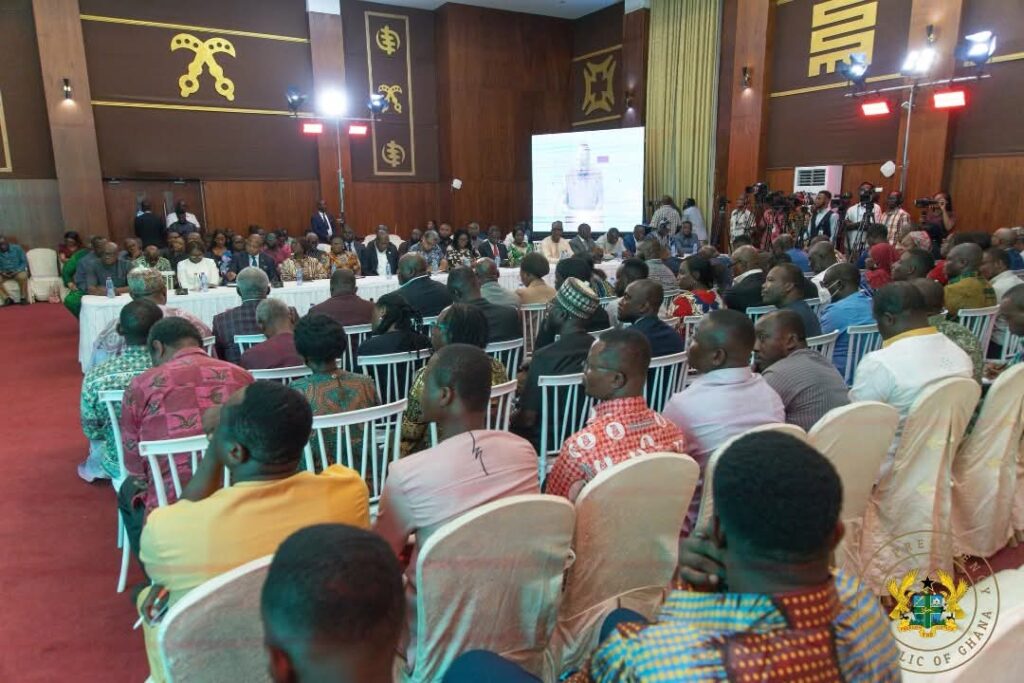
Addressing the gathering, President Mahama described the meeting as a “practical dialogue” aimed at strengthening collaboration between government and civil society. He stressed that governance must be participatory, inclusive, and responsive to the needs of citizens.
“Civil society organisations are not adversaries of government. Indeed, you are partners in nation-building.”
The President acknowledged the role of CSOs in advocacy, research, and accountability, noting that their contributions remain essential to Ghana’s democratic development. He added that national transformation cannot be achieved by government alone but requires the active participation of all sectors of society.
He also reassured participants that criticism and media scrutiny are valuable to governance. According to him, “media exposure and fair criticism are not obstacles to governance. Indeed, they are assets.”
President Mahama outlined several ongoing reforms aimed at strengthening transparency and accountability. These include plans to establish a Constitutional Review Implementation Committee to advance reforms recommended by the Constitutional Review Committee.
He also drew attention to the Public Officers’ Code of Conduct Bill currently before Parliament, which seeks to promote ethical standards, accountability, and integrity in public office.
On procurement reforms, the President indicated that government will introduce amendments to limit sole sourcing and improve transparency. He further revealed that steps are being taken to establish an Independent Value for Money Office to ensure accountability in public spending.
“We must ensure that public resources are used efficiently and transparently,” he noted, adding that civil society would be engaged in shaping these reforms.
On the economy, the President reaffirmed government’s commitment to job creation and inclusive growth through initiatives such as the 24-hour economy and export development programmes. He emphasised the need to support small and medium enterprises while addressing cost-of-living pressures and inequality.
In the social sector, he announced that the Free Primary Health Care Programme will be launched on April 15, 2026, to expand access to essential health services and remove financial barriers.
“I count on civil society organisations to support public education, monitor implementation, and provide feedback,” he said. The President also highlighted ongoing investments in education, skills development, and youth employment as part of efforts to build human capital.
Touching on human rights and inclusion, the President reaffirmed Ghana’s commitment to protecting fundamental rights and promoting social cohesion. He acknowledged ongoing national discussions on sensitive issues and stressed the importance of dialogue, democratic processes, and respect for the rule of law.
On environmental protection, he noted that government is intensifying efforts to combat illegal mining, strengthen environmental governance, and protect natural resources. He called for closer collaboration with civil society in addressing these challenges
“Civil society has been at the forefront of environmental advocacy, and we value your partnership in safeguarding our natural resources,” he stated.
In an interactive session, representatives of civil society raised concerns on a range of issues, including education, environmental protection, governance reforms, and social justice.
One participant called for clarity on the timeline for the passage of the Anti-Witchcraft Bill, while another highlighted the urgent need for teacher recruitment to address shortages in underserved communities.
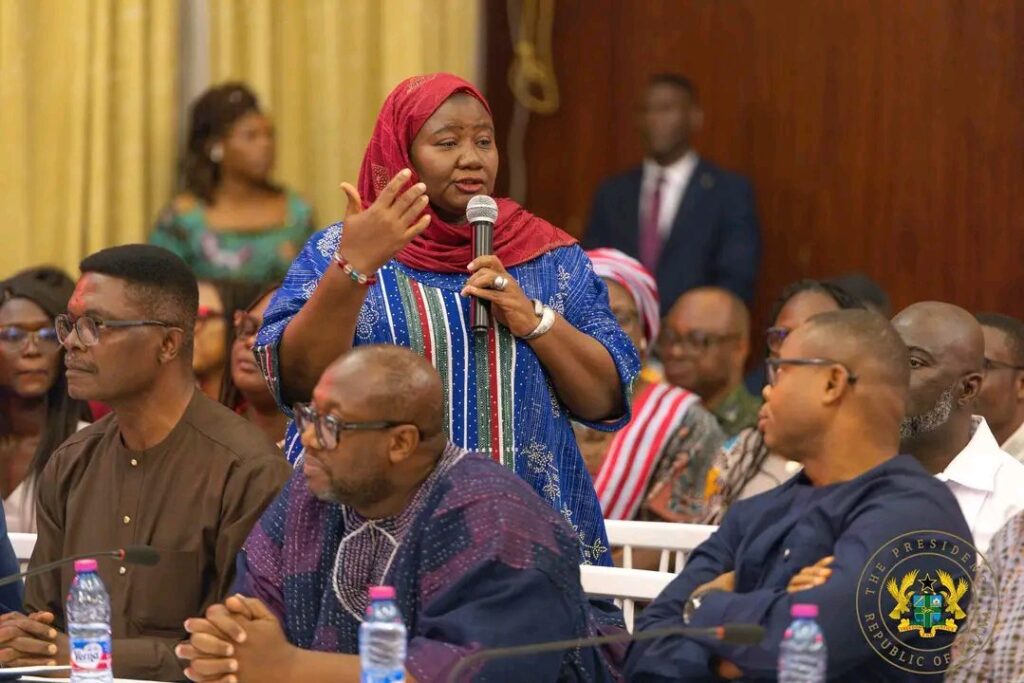
A representative from a consumer advocacy group urged government to prioritise the passage of the Consumer Protection Bill to safeguard citizens under the 24-hour economy framework.
Environmental advocates also raised concerns about illegal mining, forest protection, and water safety, calling for stronger enforcement and accountability measures.Another participant emphasised the need for increased investment in energy infrastructure to safeguard Ghana’s energy security in light of global uncertainties.
Responding to these concerns, President Mahama assured participants that government remains committed to addressing key issues raised, including teacher recruitment and legislative reforms.
He acknowledged existing challenges in the distribution of teachers and emphasised the need for equitable deployment across the country.
He also reiterated government’s intention to revisit the Anti-Witchcraft Bill and ensure that it addresses critical gaps while protecting vulnerable individuals.
The President concluded by reaffirming government’s commitment to sustained engagement with civil society, noting that the dialogue would not end with the meeting.“Together, through honest dialogue and shared purpose, we can build a fairer, more inclusive, and prosperous nation,” he said.
The meeting ended with a commitment to establish structured follow-up mechanisms, ensuring that issues raised are tracked and addressed through continuous collaboration between government and civil society.