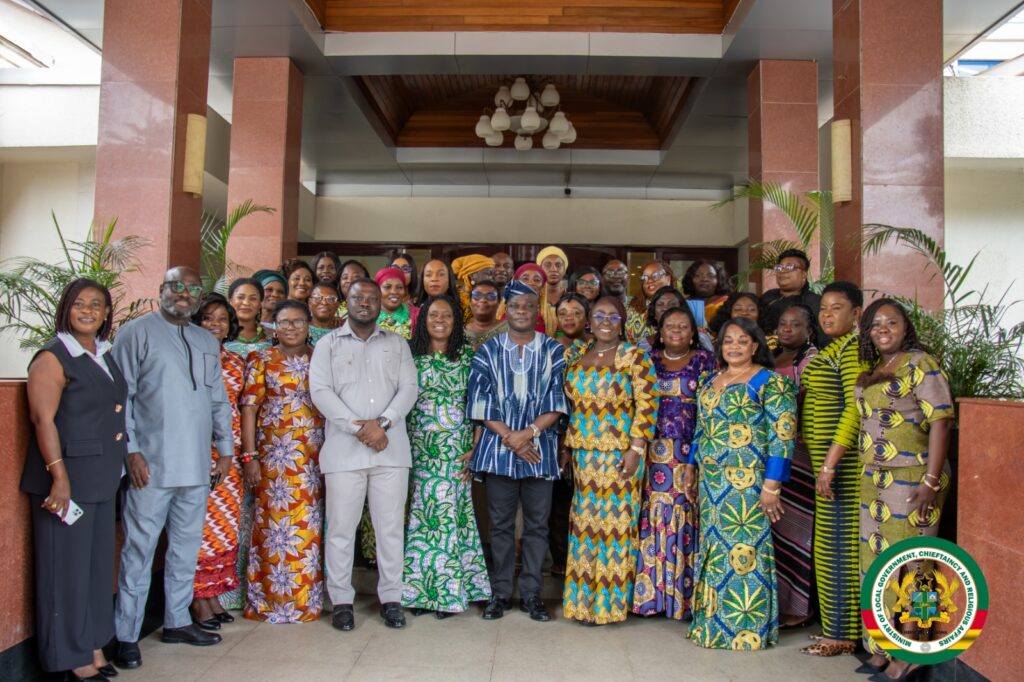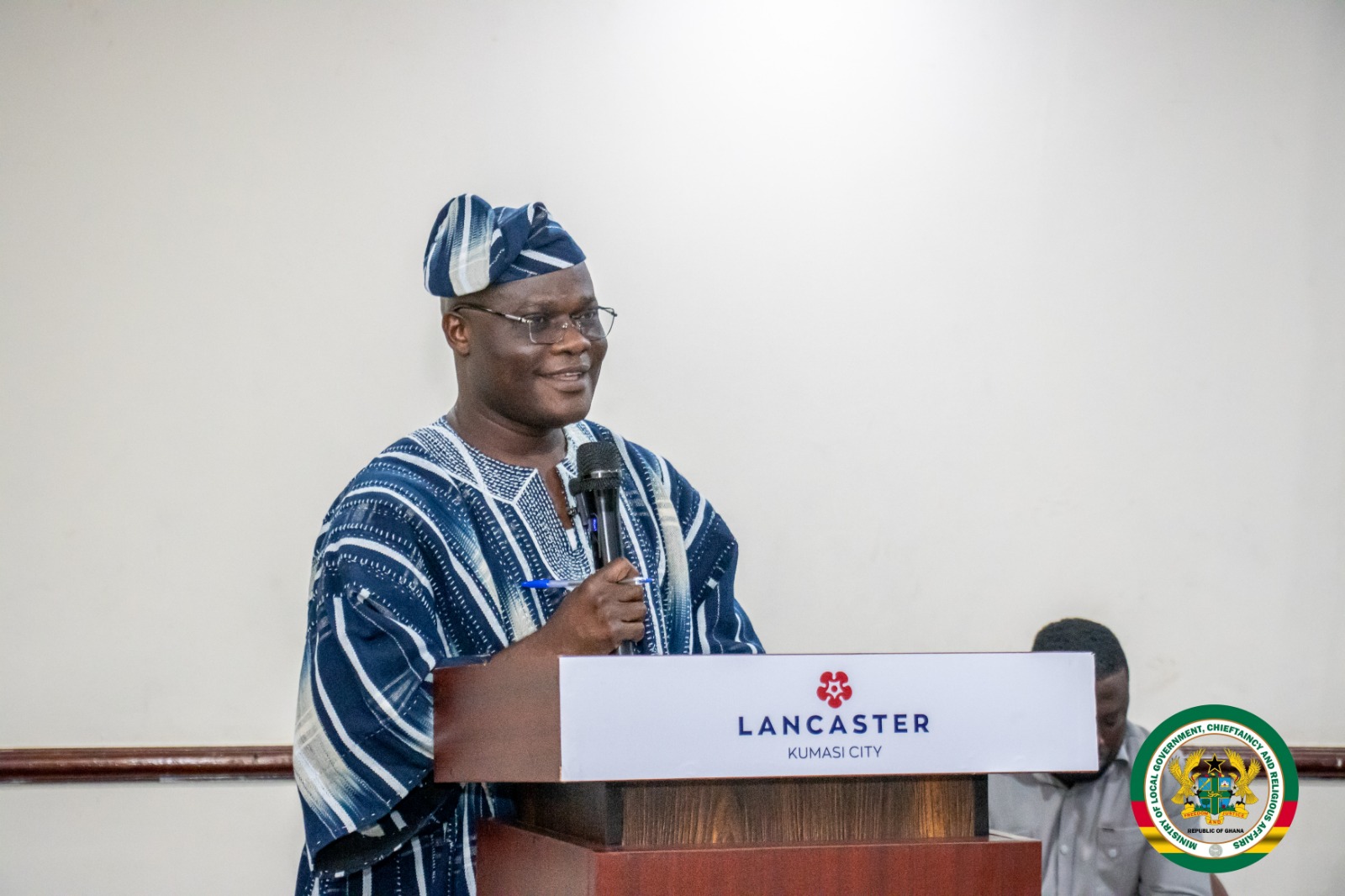
The Minister for Local Government, Chieftaincy and Religious Affairs, Ahmed Ibrahim, has highlighted the important role of women in local governance, calling female Metropolitan, Municipal, and District Chief Executives (MMDCEs) essential for creating a more inclusive, accountable, and citizen-centered system.
To support this view, he announced a new Special Orientation and Leadership Development Programme for female MMDCEs, which he described as a national effort to promote inclusive governance.
This two-day programme, taking place in Kumasi and organized with his Deputy, Rita Naa Odoley Sowah, is part of wider initiatives to boost the capabilities of women in Ghana’s decentralized governance system.
During the opening session, Mr. Ibrahim remarked that female MMDCEs are vital for driving grassroots development, enhancing responsiveness, and increasing citizen involvement.
“This is not merely a training program; it is a strategic investment in leadership quality and national progress,” he stated.
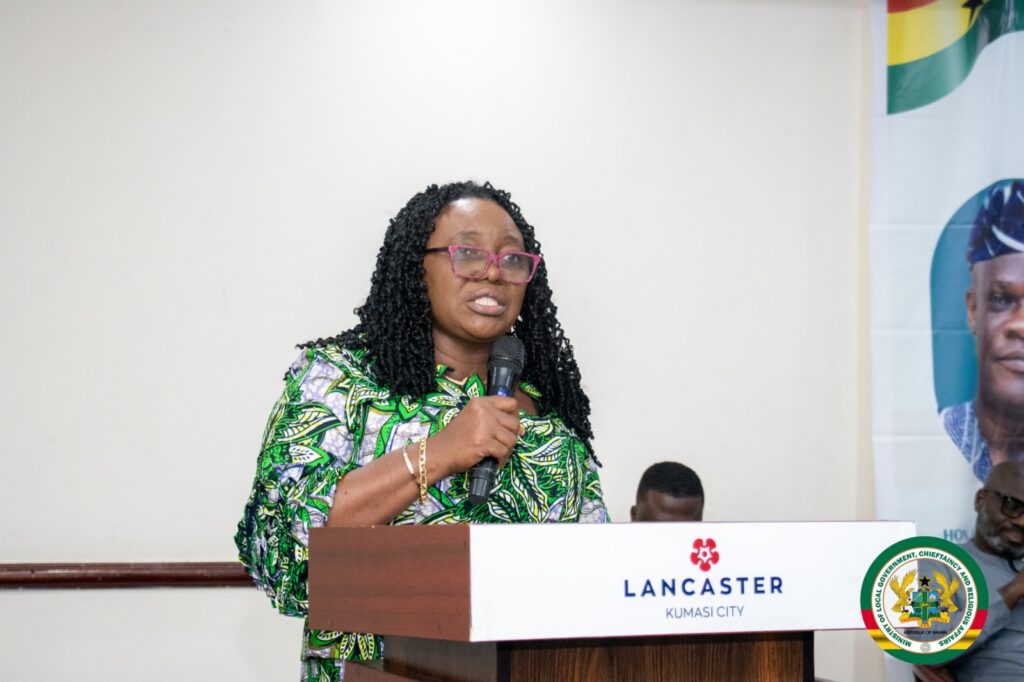
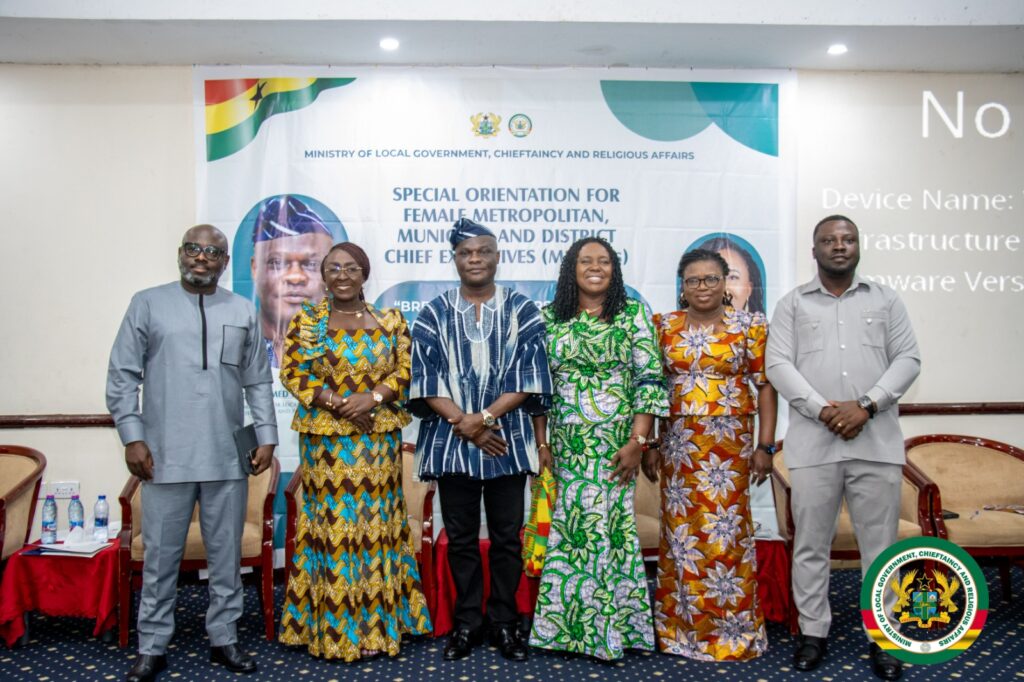
The programme, themed “Breaking Barriers, Building Legacies: Unlocking Leadership Excellence in Local Governance,” aims to address obstacles that have historically hindered women’s leadership roles.
Although women have always played significant roles as organizers, entrepreneurs, and mobilizers in their communities, their representation in formal governance remains low.
Mr. Ibrahim pointed to Ghana’s legal framework, including the Local Governance Act of 2016 and the 1992 Constitution, as the basis for MMDCE duties, and mentioned the Affirmative Action (Gender Equity) Act of 2024, which aims for 30 percent female representation by 2026 and 50 percent by 2030.
However, despite these goals, women currently hold only 30 out of 261 MMDCE positions, with Assembly-level representation just over 4%.
As the 2027 District Level Elections draw near, the Minister urged participants to enhance women’s participation through town hall meetings and other venues, while also guiding young women in schools to create a future leadership pipeline.
He called on men to support the cause of gender equality.
The program includes expert-led sessions on public financial management, procurement compliance, digital governance, ethics, conflict resolution, and local economic development, in line with the government’s 24-hour economy initiative.
Additionally, Ashanti Regional Minister Frank Amoakohene spoke at the event, expressing pride in the region’s achievements, highlighting that it has the highest number of female MMDCEs in the nation, and committed to furthering efforts to boost women’s leadership representation.
In closing, Mr. Ibrahim encouraged attendees to adopt the program’s vision, overcome obstacles, challenge boundaries, and create enduring legacies in their communities.