

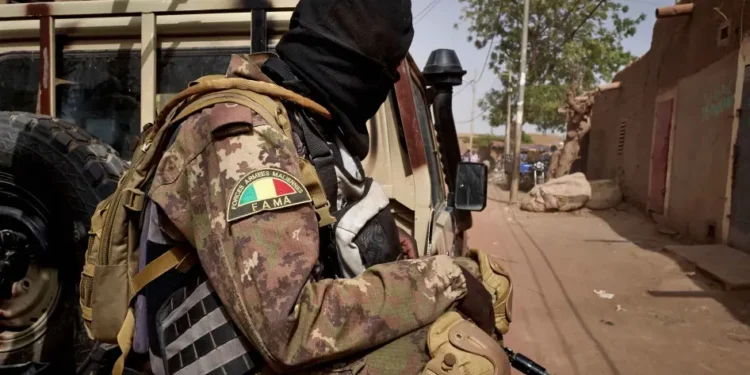
Data shows that troops in Burkina Faso and Mali have killed more civilians than jihadists, highlighting a stark and troubling dimension of the Sahel conflict.
According to a report by Human Rights Watch(HRW), government and allied forces in Burkina Faso alone have killed more than twice as many civilians as Islamist militants since 2023.
The pattern is broadly consistent with data shared with a media outlet by Armed Conflict Location & Event Data (ACLED), and it extends across the wider Sahel region. In Mali, which is also governed by a military-led administration that seized power in a coup, government forces and their allies have been responsible for three to four times as many civilian killings as jihadist groups over the past two years, according to ACLED’s data.
These figures shows a regional trend that raises serious concerns about military conduct and the broader trajectory of the conflict.
Ilaria Allegrozzi, a senior Sahel researcher at Human Rights Watch disclosed that, Burkina Faso’s security forces and allied militias “appear to be more brutal and violent” than militant groups like the local al Qaeda affiliate, Jama’at Nusrat al-Islam wal-Muslimin (JNIM).
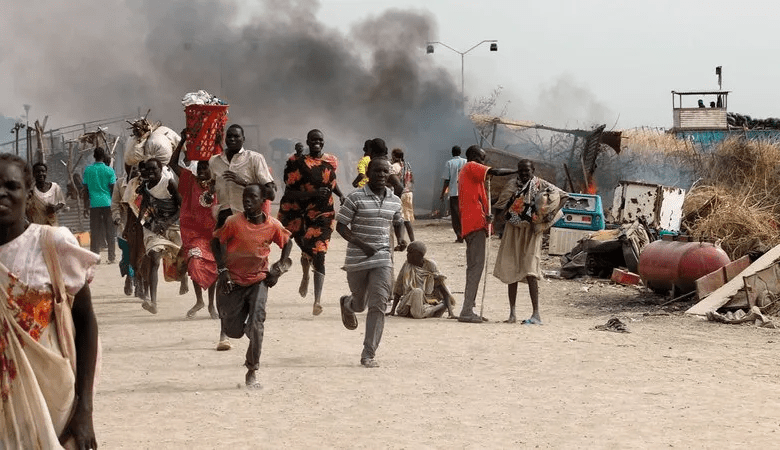
The Burkinabe forces’ behaviour is part of a regional pattern, raising concerns about military indiscipline and its consequences for counterinsurgency efforts, she added.
Violence involving jihadist groups in Burkina Faso, Mali and Niger has surged since 2021, making the Sahel region a global “terrorism hotspot”. Military-led governments have intensified operations against insurgent groups, often working alongside allied militias and external partners.
Although, Mali and Burkina Faso have previously denied allegations of extrajudicial killings, saying instead that their forces had killed “terrorists,” the data suggest a more troubling and complex reality.
Between January 2023 and August 2025, the Human Right report documents 57 incidents in which at least 1,837 civilians were killed. Of those, 33 were committed by government forces and their allies, resulting in 1,255 civilian deaths.
Burkinabe military forces and the pro-government Homeland Defence Volunteers militia in 2015, killed 523 civilians, compared to 339 killed by militant groups, including Jama’at Nusrat al-Islam wal-Muslimin and Islamic State Sahel Province.
In Mali, the disparity appears even more pronounced. The military, alongside Russian paramilitary groups Wagner and Africa Corps, killed 918 civilians in 2025, while jihadist groups killed 232, peer ACLED.
These highlight the conflict’s increasing militarisation and the growing involvement of external actors.
However, both Human Rights Watch and ACLED note that their findings are based on verified but non-exhaustive data, suggesting that the true scale of civilian casualties may be higher.
Allegations of war crimes and crimes against humanity have emerged from the ongoing conflict in Burkina Faso, where both government forces and Islamist armed groups have been accused of widespread abuses against civilians. Findings compiled by Human Rights Watch indicate that the scale and nature of violence committed by multiple actors in the conflict may meet the threshold of serious international crimes, raising urgent concerns about accountability and justice.
Government forces and allied militias, including the Volunteers for the Defence of the Homeland (VDPs), have been implicated in killings, forced displacement, and collective punishment, particularly targeting communities perceived to be linked to Islamist armed groups.
Operations such as large-scale counterinsurgency campaigns have reportedly resulted in the deaths of hundreds of civilians, with attacks often carried out in retaliation for militant activity.
Human Rights Watch found that some of these actions involved coordinated operations across military units, suggesting systematic patterns rather than isolated incidents.
At the same time, Islamist armed groups such as Jama’at Nusrat al-Islam wal-Muslimin have also committed serious abuses, including killings, abductions, sieges of towns and villages, and destruction of civilian infrastructure.
In Mali, many civilian killings have been carried out by drone strikes, according to ACLED. Drone warfare there has surged since the government began purchasing Turkish-made drones in 2022. Drone or airstrikes on civilians by Mali’s armed forces jumped from four incidents that year to 66 incidents in 2025, resulting in 155 deaths.
Civilians across different regions have described being trapped between the demands and threats of both state forces and armed groups.
Heni Nsaibia, ACLED’s senior analyst for West Africa, also emphasized the grave abuses on civilians by the Group for the Support of Islam and Muslims (JNIM).
“As state responses increasingly rely on retaliation and collective punishment, more civilians find themselves trapped in areas under jihadist control, where JNIM is consolidating its influence through coercion and strategic engagement with local populations.”
Despite repeated reports of abuses, accountability remains limited. Investigations into alleged crimes have been slow, and prosecutions of members of armed forces have equally been rare.