

By Phillip Antoh
Used clothing dealers warn that shutting down the sector would wreck livelihoods and open the door to fast fashion.
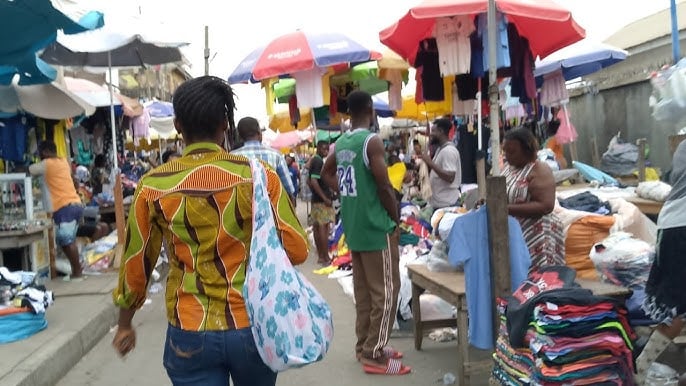
More than 2.5 million Ghanaians depend on the second-hand clothing trade known locally as ‘obroni wawu’ (dead white man’s clothes). The industry contributes an estimated $35 million annually in tax revenue to the state. Any attempt to ban it would be a direct threat to the economy.
That is the blunt warning from Marvin Owusu, an executive member of the Ghana Used Clothing Dealers Association. Speaking at the Landfills to Landmarks 2026 conference in Accra, he argued that the sector is not merely a marginal informal activity but a structural pillar of employment particularly for vulnerable women, who make up 52% of participants. Nearly 40% are young people.
The conference, which brought together stakeholders to address textile waste management, has become a battleground over competing definitions of sustainability. Environmental advocates have long pushed for restrictions on used clothing imports, citing pollution and landfill overflow.
But Owusu rejects the claim that up to 40% of imported second-hand garments end up as waste.
Citing empirical studies from 2023 by Oxford Economics, GIZ and independent researchers, he puts the actual waste figure at between two and five percent.
The problem, he argues, is definitional: “Different countries define waste differently.” Waste should mean items that cannot be reused, worn or repurposed at all. Much of what is labelled waste, he says, actually reflects pricing volatility, exchange rate fluctuations and mismatched quality expectations between exporters and importers.
Owusu emphasised that the trade has become a generational livelihood for many families, ensuring economic continuity. A ban would not only destroy that ecosystem but also “open the door for ultra-cheap fast fashion to flood Ghana” a far greater environmental menace, in his view.
Local textile manufacturers, he added, are suffering not from competition with second-hand clothes but from high production costs, especially expensive utilities and energy. Allowing both markets to coexist creates healthy competition and better consumer choice.
The association is calling for stronger collaboration on textile waste management and sustainability standards not prohibition. Whether the government listens may determine the fate of millions of livelihoods and a $35 million revenue stream.