

Human trafficking has evolved from traditional organized crime into a highly optimized, tech-driven corporation—and law enforcement must adapt to its borderless nature.
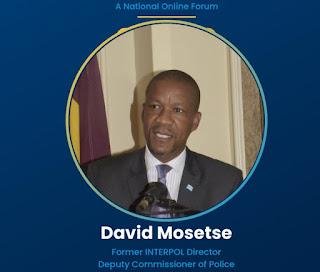
That was the stark warning delivered by David Mosetse, former INTERPOL Director and Deputy Commissioner of the Botswana Police Service, during a recent online forum marking the 2026 World Day Against Trafficking in Persons.
Titled “Trapped Behind the Scam,” the event was organized by GYAN Ghana, the Democratic Network for Action (DNA), and Transnational Mobility Pathways (TMP). It united UN representatives, government officials, civil society leaders, and survivors from Ghana and across the region to address the rapid modernization of human trafficking.
Mosetse explained that criminal syndicates are now operating with corporate-level efficiency. A common pipeline involves targeting university graduates with highly attractive overseas job offers. Once victims travel abroad, their passports are immediately confiscated. They are then imprisoned in heavily guarded compounds where they are forced to run crypto investment and romance scams under the threat of severe physical abuse, sexual violence, or being “sold” to rival syndicates if they fail to meet daily financial quotas.

According to Mosetse, artificial intelligence is the engine supercharging this exploitation. By utilizing deepfakes, cloned voices, AI-generated profile photos, and convincingly translated, legal-looking contracts, traffickers can lure victims with unprecedented persuasion and at a massive scale.
“What used to be an organized crime is now an optimized crime,” Mosetse told the forum, noting that these digital tools allow syndicates to scale their operations and cross international borders far faster than traditional police forces can track them.
To dismantle this “scam machine,” Mosetse drew on his Interpol and Botswana police experience to propose a four-pillar strategy; Instant Intelligence Sharing, Synchronized Global Raid, Choke the Financial Lifelines and Prioritize the Victim.
He said utilize networks like INTERPOL and the SADC to flag suspects and identify victims across borders in real time, eliminating bureaucratic delays., aggressively track and target cryptocurrency and mobile-money flows.
He highlighted Botswana’s Proceeds and Instruments of Organized Crime Act as a blueprint for using asset-forfeiture laws to seize traffickers’ profits., conduct joint, simultaneous operations across multiple jurisdictions so that when one scam compound is raided, the network cannot simply pack up and relocate next door. and reform judicial and investigative procedures to ensure victims are identified and rescued before they are prosecuted, providing specialized training to judges and prosecutors to stop the criminalization of survivors.
Mosetse pointed to cases in Botswana where young people were lured by fake scholarships and job prospects, only to end up in forced military service or severe exploitation. He closed with a call for a fundamental shift in how governments approach the crisis: “If criminals run it as one borderless business, we must stop policing nation-by-nation.”
Other speakers highlighted the psychological trauma victims go in the journey, the processes on integration and finally societies in which they find themselves.
Opening the recent “Trapped Behind the Scam” forum, Lamberta Bina Abusah, Co-convener for GYAN Ghana, highlighted a critical failure in the global justice system: the frequent conflation of victim and perpetrator.
Drawing on GYAN’s 15 years of advocacy against the exploitation of youth in cyber fraud, Abusah stressed that young people trapped in overseas compounds—where their passports are seized, their movements restricted, and their lives controlled by violence—are not willing criminals.
“This is human trafficking for forced criminality,” Abusah stated. “The tragedy before us is that the victims are too often mistaken for perpetrators. That misunderstanding must end. We must build systems that recognize survivors, not suspects.”
To bridge this gap between awareness and action, Abusah announced a major structural shift. Following extensive consultations with civil society partners, GYAN Ghana will launch the Ghana Civil Society Coalition Against Transnational Crime in Accra on International Youth Day, August 12, 2026. The coalition is designed to synchronize national efforts and eventually scale into a unified West African and pan-African network.
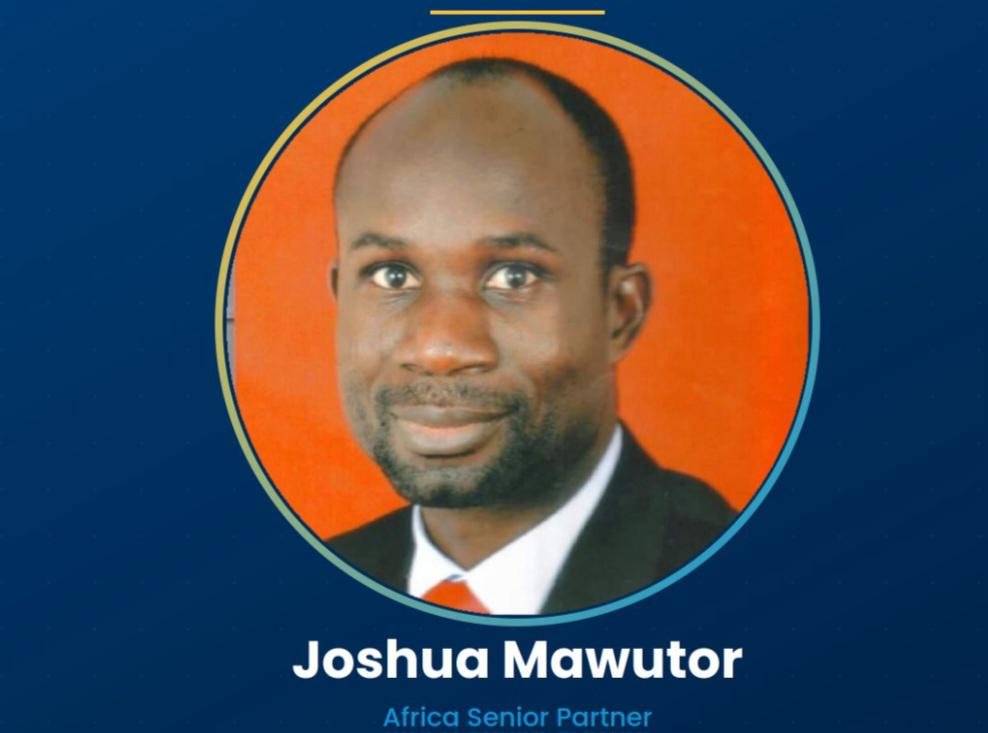
Joshua Mawutor, Africa Senior Partner at Partners Recruitment Consult, detailed exactly how vulnerable youth end up in these nightmare scenarios. He traced a clear pipeline from digital deception to physical entrapment, noting that criminal syndicates weaponize high unemployment, misinformation, and the allure of quick money to snare their targets online. Once victims travel abroad, they are completely isolated and coerced into defrauding strangers worldwide.
“Preventing exploitation before it begins means educating young people, strengthening families, schools and digital spaces, and ensuring deception finds no human victims,” Mawutor said.
Despite these insights, a sobering consensus emerged among forum participants: current law enforcement responses remain fragmented and dangerously slow. Officials identified major roadblocks, including chronic delays in mutual legal assistance, the complex challenge of properly identifying victims, and the lightning-fast movement of illicit profits through unregulated crypto channels.
However, organizers noted that the forum concluded with firm commitments to move beyond dialogue and toward measurable action. The new coalition will center its efforts on four pillars: prevention, protection, rehabilitation, and aggressive policy reform.