

By Philip Antoh
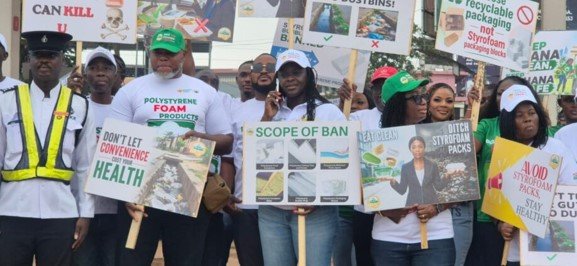
As Ghana prepares to implement a ban on polystyrene products in January 2027, the Environmental Protection Authority (EPA) has rolled out its second major public awareness campaign in Kumasi.
Led by EPA CEO Prof. Nana Ama Browne Klutse, the campaign aims to educate the public on the environmental and health risks associated with Styrofoam, clarify the scope of the ban, and highlight available sustainable alternatives.
Following the national launch at Makola in Accra, the Kumasi exercise is targeting the middle belt of the country through a series of direct stakeholder engagements.
Activities include a roadshow from Anloga Junction to the Kejetia Market, where officials will interact directly with traders, distributors, and consumers who rely heavily on polystyrene packaging.
A mini durbar will also be held at Kejetia to address public concerns and misconceptions.
The EPA stressed that this intensive public education is critical to ensuring a smooth transition and minimizing disruption to businesses ahead of the deadline.
In addition to the ban on polystyrene, the EPA is using the platform to push broader environmental reforms. On Thursday, the Authority will host a policy engagement dubbed “EPA in Focus.”
The session will provide insights into the new Environmental Protection Act, detailing the EPA’s evolving mandate, new enforcement mechanisms, and institutional transformations.
The Authority reiterated that the polystyrene ban is not just a regulatory measure, but a crucial step toward reducing plastic pollution, urging all affected businesses and consumers to begin adapting to environmentally friendly alternatives immediately.
Background
Ghana is moving toward strict bans on single-use plastics and polystyrene foam because plastic waste is choking the country’s cities and worsening seasonal floods.
Ghana tried to ban plastic bags under 20 microns thick to stop pollution, but the old rules failed because the government lacked strong enforcement tools and faced pushback from plastic makers.
The Plasticbags and water sachets problem go beyond blocking drains and cause heavy floods in cities like Accra because economically, Ghana spends close to $6 billion annually managing and cleaning up uncollected plastic waste.