

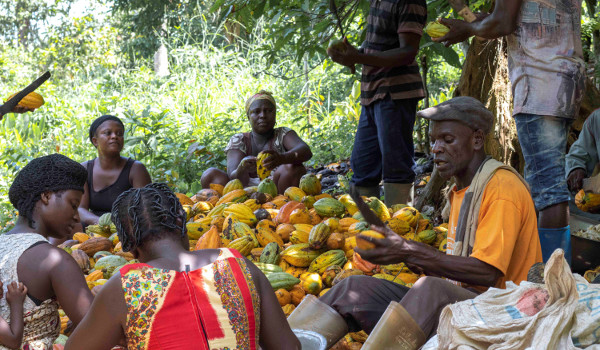
Eighty-nine years ago, Gold Coast cocoa farmers challenged the power of European trading companies attempting to monopolise their hard-earned labour. Today, they face a similar challenge, as the Government of Ghana places tough restrictions on how they can use their land for cultivating cocoa.
By Raphael Ofori-Adeniran
History, they say, repeats itself.
However, it does not always return wearing the same clothes.
Sometimes it returns wearing a different uniform, carrying a different law and professing innocuous solutions. But the underlying theme can be ominous; yet remarkably familiar, as these so-called solutions are prone to being corrupted.
In July 2026, the Ghanaian Parliament, with an overwhelming National Democratic Congress (NDC) majority, passed the Ghana Cocoa Board Bill, 2026. The controversial legislation gives cocoa farms a so-called “protected” status and bars anyone, including landowners or farmers, from converting them to other uses without approval from the market regulator, COCOBOD. The permitted alteration would be through Board-sanctioned rehabilitation.
That sounds reasonable enough, doesn’t it?
But wait…
Violators, including landowners and farmers, face heavy fines and, in specified circumstances, prison terms of up to 20 years. This constitutes one of the toughest punishments prescribed for an offence under the legislation.
On the surface, the legislation is being presented as a means of curbing the conversion of cocoa lands for illegal mining activities or repurposing them for other crops, a trend that is contributing to Ghana’s declining cocoa output. However, the implications could be far-reaching.
Supposing a malevolent government, motivated by either political overreach or corporate interests, decides to use it as a tool to seize control of land from farmers, the legal foundation already gives it that capacity.
Ghana’s cocoa industry has undergone countless evolutionary phases, but one of the most profound came in 1937, when cocoa farmers in the Gold Coast were confronted with a system of extreme economic exploitation by colonial European trading companies.
The powerful European cocoa-buying companies had entered an agreement that established purchasing conditions and virtually created a monopoly that could practically render local farmers the new plantation workers, reminiscent of the cotton fields of North America.
More than a dozen European cocoa-buying corporations had secretly signed an agreement, without the knowledge of the farmers, to fix the price of cocoa beans at around 40% below market prices.
No competition.
No bidding.
Take it or leave it!
That was the raw deal being offered to the Ghanaian cocoa farmer, who owned his land, cultivated his own crops and laboured to turn the beans into a commercial national asset.
Through the efforts of these farmers, cocoa became the backbone of the economy of the colonial government of the then Gold Coast, accounting for over 60% of exports.
To this day, cocoa remains a veritable economic powerhouse for Ghana. It accounts for about 25% of total merchandise export earnings, approximately 3.5% to 4.5% of Ghana’s overall Gross Domestic Product (GDP), and over 73% of the agricultural sector’s total export value.
However, in colonial Ghana, European-dominated trade was not content with extracting this wealth — they wanted total control.
Consequently, their exploitative trade practices frustrated the many Africans involved in the cocoa value chain. In resistance, farmers held “Cocoa Hold-ups” between 1924 and 1931, during which they refused to sell their cocoa to European firms.
In 1937, the two large firms buying cocoa in the Gold Coast, Cadbury and the United Africa Company, initiated a secret agreement regarding the terms of cocoa purchases.
Ultimately, 13 firms, comprising 94% of cocoa purchases in the Gold Coast, joined the agreement.
Their reason for opting for a European monopoly on cocoa was that African brokers were abusing their power by demanding advances from farmers and manipulating prices to secure larger profits.
It is ironic that their solution to this so-called price manipulation by African brokers was to cut out competition, undercut the market and force the farmers to virtually work for peanuts.
In August that year, the firms lobbied the colonial authorities, headed by Governor Sir Arnold Hodson, to enforce their proposal.
But the colonial head of government was cautious.
He was concerned that it would cause protests among Gold Coast residents. As the British colonial system was coming under increasing strain globally, he was wary of provoking anger among colonial subjects.
Nonetheless, the agreement became public in early October 1937 and was met with widespread anger. Farmers were enraged by the fact that, without competition, there was little to prevent them from being exploited.
Quickly, more than 5,000 cocoa farmers signed a petition opposing the agreement, and by mid-October many farmers’ associations had passed resolutions against it.
Shortly afterwards, there was a noticeable decline in cocoa sales as the hold-ups began to take place.
The hold-up was not confined to Ghana alone. It spread across West Africa. Conferences were held between October and November 1937 to organise resistance. The participants also agreed to boycott European goods.
The farmers who produced the cocoa, the brokers who served as middlemen, and chiefs who often also served as producers and brokers all participated in the resistance.
The boycott was well enforced by the leaders of the movement, to the extent that they provided financial support to poorer farmers who were beginning to become disillusioned by the strain of not selling their beans.
The coalition of chiefs, wealthy farmers and brokers provided financial support as well as secret trade channels bypassing the European firms.
The cooperation of African society also helped convince farmers to hold firm, but chiefs additionally used their traditional authority and, occasionally, intimidation to ensure compliance.
Through all of this, Governor Hodson began feeling the heat from all sides.
The British authorities eventually established the William Nowell Commission to explore resolutions to the conflict. The Commission released the Nowell Report in September 1938.
It placed considerable blame on the brokers while acknowledging legitimate grievances on both sides — among farmers and European firms.
The report recommended the end of the buyers’ agreement and concluded that the existing cocoa-marketing system was deeply dysfunctional.
Its proposed solution was essentially to organise farmers collectively so that they could market their cocoa with greater bargaining power, rather than leaving individual farmers at the mercy of powerful merchant firms and middlemen.
FARMER PROTESTS BIRTH STATE MONOPOLY
The colonial government would largely move away from this recommendation and defer to a post-war marketing system closely connected to British commercial and colonial interests, and for reasons that went beyond protecting farmers.
During World War II, the British authorities took much greater control over West African commodity marketing.
Cocoa was purchased through a controlled system and ultimately became part of Britain’s wartime supply arrangements.
The government could not risk farmer protests disrupting this trade, so it developed a centralised marketing system that eventually laid the foundations for the Cocoa Marketing Board (CMB).
The Cocoa Marketing Board, established in 1947, was eventually transformed into today’s Ghana Cocoa Board — COCOBOD — under the 1984 Ghana Cocoa Board Law.
Ironically, the newly established marketing board concentrated control over cocoa purchasing, pricing and export within the state-controlled system.
This further restricted the ability of local farmers and African commercial interests to negotiate directly in the market.
The CMB essentially eliminated cocoa farmers’ ability to negotiate directly in the market, either as a collective or as a body corporate.
By 1947, the CMB became solely responsible for marketing the Gold Coast’s cocoa and fixed the seasonal price paid to farmers.
The farmers’ resistance disrupted the colonial trading system.
But the system that emerged did not simply return control to the farmer.
In other words, the farmers’ resistance helped trigger a restructuring of the cocoa trade — but the restructuring ultimately concentrated control in the hands of the state.
Historical scholarship argues that the CMB was not simply a neutral farmer-protection mechanism, but also an instrument of state power, revenue extraction and political mobilisation that drew significant economic power away from farmers.
In his research published in the Journal of African History in 1988, titled “The Colonial Office, British Business Interests and the Reform of Cocoa Marketing in West Africa, 1937–1945”, David Meredith revealed close relationships between the Colonial Office and British firms such as the UAC and Cadbury.
He argues that the wartime scheme squeezed African and other non-British exporters out of the business. He also finds that the Colonial Office came to favour fixed buying prices below world prices, partly to build stabilisation funds and partly because the system served British Treasury interests.
David Meredith is an economic historian whose work focuses substantially on British colonial economic policy and the political economy of African commodity markets.
His research argues that the Colonial Office had close relationships with British companies, and that the wartime scheme that emerged from the 1937–1944 struggle squeezed African and non-British exporters out of the cocoa trade, establishing a statutory system of control over cocoa marketing.
With this strategy of the colonial government, Ghanaian commercial exporters of cocoa were effectively eliminated from significant parts of the trade.
Beyond Meredith, several academics have made related arguments.
Rod Alence argues that the colonial government crafted the system as a necessary step to contain social conflict and farmer resistance.
Björn Beckman, in his work Organising the Farmers: Cocoa Politics and National Development in Ghana (1976), noted that control over cocoa became intertwined with control over farmers and rural political organisation.
Kwame Arhin, in his work The Ghana Cocoa Marketing Board and the Cocoa Farmer (1983/85), argued that after independence, the institution’s purpose shifted towards national revenue and political mobilisation.
In her work Cocoa and Chaos in Ghana (1989) and “Peasant Politicisation and Economic Recuperation in Ghana”, Gwendolyn Mikell argued that persistent extraction from the rural economy contributed to farmer alienation and political instability.
THE NEW CONFRONTATION
Now, fast-forward to 2026.
The Ghanaian Parliament passed the Ghana Cocoa Board Bill, 2026, which has subsequently become law.
Among its provisions are restrictions designed to prevent the conversion, destruction or degradation of protected cocoa farms — particularly for illegal gold-mining activities.
The Government’s concern is understandable because Ghana is losing massive swathes of cocoa land to illegal mining.
COCOBOD has reported that approximately 30,000 hectares of cocoa farms had been destroyed by illegal mining by December 2024, with another 50,000 hectares considered at risk.
No serious analyst would argue that Ghana should permit galamsey to destroy its agricultural economy.
The country’s cocoa estate must definitely be protected.
But if cocoa is genuinely still a commercially attractive cash crop, why would a rational farmer want to convert a cocoa farm in the first place?
There is an uncomfortable question that Government must confront before it can reasonably expect cocoa farmers to accept increasingly stringent restrictions on what they can do with their farms.
WHO IS THE GOVERNMENT PROTECTING THE LAND FOR?
A cocoa farm is undoubtedly a national economic asset.
Ghana’s cocoa industry supports exports, generates foreign exchange, sustains rural economies and feeds an enormous domestic and international value chain.
But the cocoa farm is also private property.
It is a farmer’s livelihood.
It may be the farmer’s retirement plan, his family’s inheritance, his principal source of wealth and, in many cases, the most valuable productive asset he will ever own.
Therefore, if the farmer is being told he cannot convert it, destroy it or repurpose it for a more economically viable venture, the state should have a better appreciation of the economic calculation that could be driving a farmer to consider replacing what the state considers an economic asset.
Before the state criminalises the decision to convert a cocoa farm, it should understand the economic pressures producing that decision.
If the answer is low productivity, ageing trees, rising labour costs, inadequate access to finance, delayed payments, poor roads, disease, climate risk, insecure returns or more attractive competing uses of land, then the solution cannot simply be: “You are not allowed to convert.”
The deeper question is whether Ghana is making cocoa sufficiently productive and profitable for the farmer to want to remain in cocoa.
Because there is a danger that, in trying to save Ghana’s cocoa farms through legislation, Government could inadvertently create the conditions for another cocoa farmers’ resistance.
This time, however, farmers may increasingly see any attempt to further tighten the monopolistic stranglehold that COCOBOD already has on the sector as an economic threat rather than simply a regulatory measure.
It is important to note that the cocoa farmer is not a civil servant, an employee of COCOBOD or an unpaid custodian of a national museum.
The farmer is an entrepreneur. His farm is an economic enterprise, and must make decisions based upon costs, returns, risk and opportunity.
If the Government wants him to maintain cocoa production, then the Government must make cocoa economically compelling. It cannot simply make alternatives illegal.
Because legislation can control behaviour. It cannot manufacture economic enthusiasm.
Today, the colonial government and its trading companies are no longer the primary antagonist, as the Ghanaian state has taken control of much of the cocoa marketing architecture.
COCOBOD determines the framework within which the domestic cocoa-purchasing system operates.
The state determines the producer-price structure; it controls the export and marketing architecture; it regulates Licensed Buying Companies; it determines how cocoa takeover receipts are financed and settled.
And now Parliament has given the state even greater authority over what farmers may do with their cocoa farms.
With the new law, is Ghana replacing the status quo with another form of cocoa-sector domination?
Because if that were the case, a farmer may reasonably ask:
“If the state can determine what I can do with my land, what I receive for my cocoa and when the people who buy my cocoa receive their money, where exactly does my economic sovereignty begin?”
WHEN THE FARMER DOES HIS CALCULATIONS
Imagine an ageing 65-year-old cocoa farmer whose trees have spent their productive years and whose yields are visibly declining.
The farmer’s labour costs are increasing because of the low yield.
He needs to rehabilitate his farm, but his children are now urban dwellers with little interest in cocoa farming.
He does not have access to finance, even if he wants to brave the treacherous venture.
Yet, when he delivers the cocoa beans scraped from the very last productive years of his ageing trees, he may have to endure payment delays.
Now, assuming somewhere nearby a mining operator is offering him an amount of money that may exceed several years of cocoa income, the Government tells him that he cannot convert the land without the required authorisation.
Knowing this, the farmer’s response may eventually be: “Then I will simply stop investing time, money and energy in this farm.”
What can the Government do at that stage? Force him to farm like a slave to the state? Or seize the land from the farmer?
A COCOA HOLD-UP BREWING?
Already, the new law is exhibiting some of the hallmarks of a potential disaster.
First of all, farmer groups were not given a sufficiently broad, transparent and meaningful opportunity to examine and influence the final legislation before Parliament passed it under a Certificate of Urgency.
The Bill was introduced around 28 July and passed within the same week.
There is a legitimate question as to whether such a short period could provide enough time for broad consultation on legislation with such far-reaching implications.
The Government’s justification makes the issue even more interesting.
The Finance Committee Chairman of Parliament, Isaac Adongo, argued that the legislation needed to be in place before the 2026/27 cocoa season and September pricing window.
But a law that includes restrictions on private land use has no direct bearing on the 2026/27 trading season.
Rushing such provisions through Parliament therefore raises legitimate questions about whether sufficient time was given for stakeholder scrutiny and consultation.
Earlier, the Ghana Cooperative Cocoa Farmers and Marketing Association Limited, an umbrella body for cocoa farmer cooperatives, requested deeper consultation with farmers.
Its administrator, Moses Djan Asiedu, said farmers were concerned about farmlands that had become commercially unproductive, and whether replacing cocoa with other crops in such places could expose them to prosecution.
“We agree the tree must be protected because that is the source of our livelihood, but we have critical situations where a farmer may have to cut down a diseased farm and plant another crop that will bring him or her income,” Asiedu said.
“Government is trying to protect the cocoa farm, but it must first understand what is happening to the cocoa farmer. You cannot tell somebody that his land must remain in cocoa while the economics of cocoa are deteriorating and then expect that person to remain enthusiastic about the industry,” says Kwame Asa-Ofori, an experienced cocoa farmer and cocoa-sector expert.
Asa-Ofori, who has represented farmer groups and international cocoa and chocolate institutions, deeply understands the producer side of the equation.
“The farmer is not asking Government to allow galamsey to destroy his farm. The farmer is asking Government to make cocoa farming economically viable.”
“If you rehabilitate the farm, improve productivity, provide irrigation, give the farmer access to affordable finance, ensure that he receives his money on time and allow him to participate meaningfully in value addition, you won’t need to threaten him. The best protection for a cocoa farm is a prosperous farmer,” he says.
The farmers’ concerns echo objections raised by Minority lawmakers.
Yet COCOBOD has brushed aside the criticism.
Jerome Sam, Head of Public Relations, told local media that the Minority’s objections were politically motivated and that the Bill was drafted to help farmers.
The Minority may indeed be politically motivated, yet it is highlighting a pertinent concern that could come back to bite the Government.
The 1937 cocoa hold-up in the colonial Gold Coast started in a similar atmosphere, with colonial officers and trading companies minimising concerns raised by farmers.
This time, farmers would not even need to write petitions or stage dramatic protests.
They could simply refuse to replant or reduce maintenance of the farm and allow weeds to overrun it.
They could discourage their children from entering the sector and invest their scarce capital elsewhere rather than in the cocoa farm.
“We will not destroy our farms. But neither will we continue investing in an economic system that does not make sense.”
That is a form of non-violent economic resistance at the disposal of farmers today.
And it is potentially much harder to suppress than a conventional protest.
A COCOA FARMER IS NOT A PRISONER OF THE FARM
There is a dangerous socio-economic shift taking place here.
For generations, Government has treated cocoa as a strategic national commodity.
That is legitimate.
But somewhere along the way, the distinction between protecting a strategic industry and controlling the economic choices of the producer appears to have become blurred.
A farmer should have obligations to the nation. But the nation also has obligations to the farmer.
If Government says farmers must preserve their farms because Ghana needs cocoa, then farmers have every right to demand that the Government make preserving those farms economically worthwhile.
The real competition is not between legislation and cocoa farmers. It is between cocoa and economics. Policymakers must understand this point.
Illegal mining is attractive because it offers immediate money. And because cocoa is a long-term asset, the Government must make that long-term asset economically superior.
If a rehabilitated cocoa farm produces high yields, generates income from intercropping, has irrigation, benefits from modern agricultural technology, connects to processing and provides farmers with an increasing share of downstream value, then the farmer has little incentive to destroy it.
In other words: The most effective weapon against galamsey is not necessarily heavy fines, tough legislation or 20-year prison terms.
It is a better economic proposition.