

The African Court on Human and Peoples’ Rights is struggling to fulfill its mandate as the continent’s top judicial body for human rights, hampered by limited state participation, restrictive access rules, and poor enforcement of its rulings.
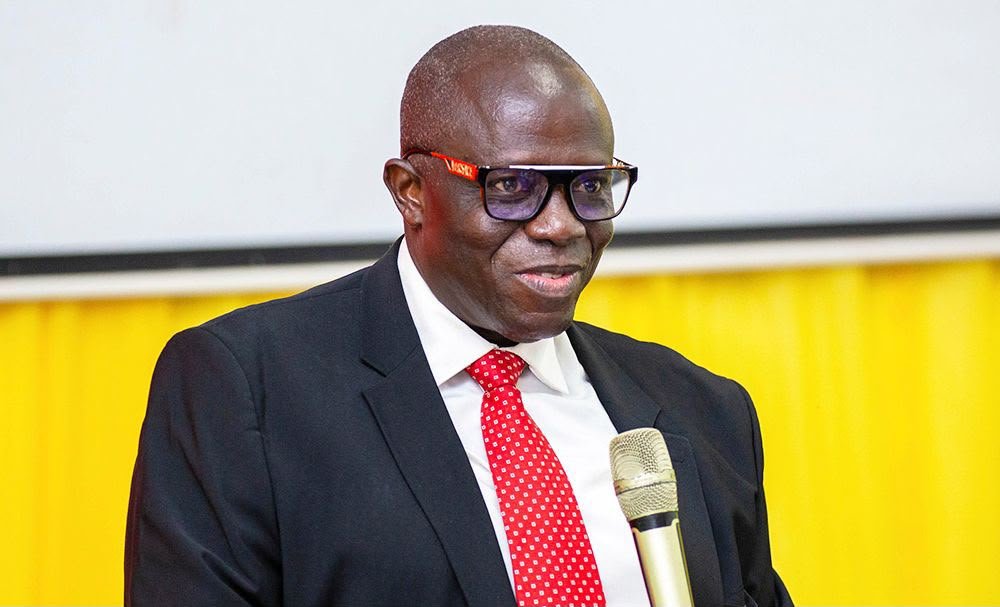
Established to complement the African Commission on Human and Peoples’ Rights, the Court’s effectiveness hinges entirely on the willingness of African nations to accept its jurisdiction, allow direct access for individuals and civil society, and comply with its decisions, according to Justice Sir Prof. Dennis Dominic Adjei of Ghana’s Supreme Court.
Speaking at a recent media workshop organized by the African Court Coalition, Justice Adjei highlighted the persistent structural and political roadblocks undermining the continental human rights system.
The Access Bottleneck: Ratification vs. Reality
While 34 of the African Union’s 55 member states have ratified the Protocol establishing the Court, Justice Adjei noted that ratification alone does not open the courtroom doors to everyday citizens or non-governmental organizations (NGOs).
Under Articles 5(3) and 34(6) of the Protocol, states must make a separate, explicit declaration accepting the Court’s competence to receive applications directly from individuals and eligible NGOs.
“Where a state has not made such a declaration, an individual or NGO cannot bring a case directly against that state under this procedure,” Justice Adjei explained.
While Ghana is among the nations that have made this declaration, others have actively rolled back their commitments. Justice Adjei pointed out that Rwanda, Tanzania, Côte d’Ivoire, and Benin have all formally withdrawn their previous declarations.
This creates a troubling loophole: a country can remain a party to the Court’s Protocol while simultaneously stripping individuals and NGOs of the right to bring cases directly before it. In such instances, complainants must rely on indirect channels, such as referrals from the African Commission, to reach the Court.
The Enforcement Deficit Beyond access, Justice Adjei identified the implementation of the Court’s judgments as a critical failing. Although Article 30 of the Protocol legally binds states to comply with judgments within the Court’s stipulated timeframes, the reality on the ground is often different.
“The issue, therefore, is not simply whether the Court has the legal authority to issue a judgment,” Justice Adjei stated. “It is also whether the state concerned takes the necessary steps to give effect to that judgment at the national level.”
As an international tribunal, the African Court lacks the ordinary enforcement powers of a domestic court. Consequently, the impact of its rulings relies heavily on national institutions executing them. While the Court monitors compliance and reports to AU policy organs, ultimate execution remains in the hands of sovereign states.
The Limits of Provisional Measures This enforcement gap also extends to provisional measures. Under Article 27(2) of the Protocol, the Court can issue urgent orders in cases of extreme gravity to prevent irreparable harm before delivering a final judgment—similar to interim injunctions in domestic courts.
The Court continues to utilize this power, notably issuing provisional-measure rulings in cases involving Tunisia in July 2026. However, because these measures operate within the framework of international law, their ability to actually protect rights while proceedings are ongoing depends entirely on the state respecting the Court’s authority and implementing the orders promptly.
A Crisis of Continental Commitment Ultimately, the hurdles facing the African Court extend far beyond the raw number of ratifications. The fundamental question is whether African states are prepared to grant the Court the practical authority it needs to fulfill its human rights mandate.
A continental court can issue judgments, order reparations, and adopt provisional measures, but its protective capacity is severely diminished when access is restricted and decisions are ignored. The credibility of Africa’s human rights architecture, therefore, rests not just on the Court’s legal interpretations, but on the political will of states to accept its jurisdiction, respect its orders, and translate its rulings into tangible justice for victims of human rights abuses.