

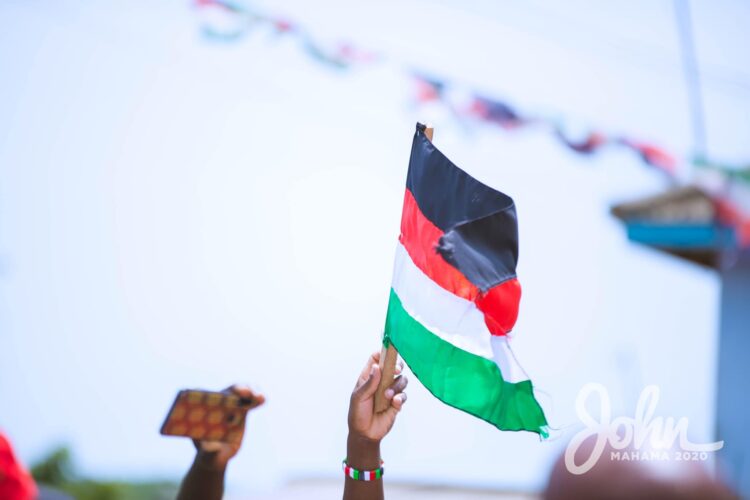
The National Democratic Congress (NDC) is living no stone unturned when it comes to discipline and orderliness as part of it on-going reorganization agenda.
The governing party has ordered its members and aspirants to take down oversized campaign posters and banners within five days, as the party tightens rules governing its ongoing reorganisation exercise.
In a statement released on Friday, October 9, and signed by General Secretary Fifi Fiavi Kwetey, the party announced that the Functional Executive Committee (FEC) had imposed a size limit of five feet in width by eight feet in height for all campaign posters and banners.
The directive, according to the statement, followed a FEC meeting on Tuesday, October 6, where the leadership expressed concern over what it described as the growing display of oversized campaign materials in various parts of the country.
As part of the new measures, campaign posters and banners are to be mounted only at approved locations — constituency offices, regional offices, and election grounds. The party warned that the display of such materials at any other location would not be tolerated.
The NDC stressed that the move is aimed at enforcing discipline and ensuring fairness among aspirants jostling for positions within the party during the reorganisation process.
“The restrictions are intended to maintain order and provide a level playing field for all aspirants,” the statement indicated.
The party also justified the directive on moral grounds, noting that as the governing party, it must set a good example for the Ghanaian people.
“FEC is further conscious that, as the party in government, the NDC must lead by example through modesty and restraint and must avoid any display of extravagance or perception of it that is inconsistent with the values we espouse and the expectations of the Ghanaian people,” the statement read.
The FEC cautioned that any aspirant who deliberately flouts the directive will face disciplinary action.
The latest move underscores the party’s determination to instill order and accountability as it charts a new course in its reorganisation agenda.
By Gifty Boateng