

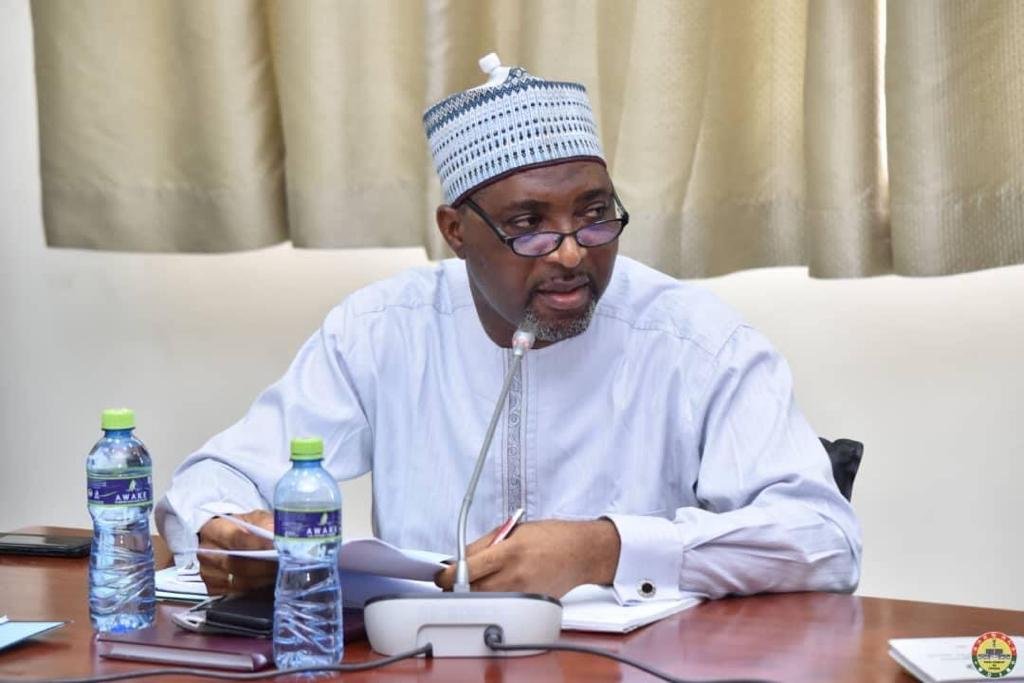
Muntaka’s Revelation Exposes Ghana’s Hidden Cocaine Stockpiles
By Gifty Boateng
A bombshell revelation by Interior Minister Hon. Muntaka Mohammed Mubarak that an informant demanded a staggering US$20 million in exchange for intelligence on a major cocaine consignment has reignited fears that Ghana is sitting on stockpiles of the deadly white powder hidden in plain sight.
The New Republic can confirm that the jaw-dropping demand has sent shockwaves through security circles, with insiders warning that the very existence of such a consignment points to a chilling reality: Ghana may still be housing tonnes of cocaine brought in during the permissive years of 2023 and 2024.
As this newspaper has already reported, concerns over laxity in port security have been directly linked to the Akufo-Addo government’s controversial policy of removing the Narcotics Control Commission (NACOC) from the list of agencies deployed to Ghana’s ports.
That fateful decision, critics say, threw the doors wide open for major drug cartels to use Ghana as a vulnerable corridor bringing cocaine into the country for storage and subsequent trafficking to other destinations.
Now, the chickens may be coming home to roost.
Following the Mahama government’s assumption of office, cartels that had established operations in Ghana are said to have become increasingly jittery, triggering a desperate scramble to relocate to safer destinations.
That panic, sources say, could explain the unusually large drug consignments intercepted in recent times.
On Monday, October 12, 2026, Interior Minister Muntaka Mubarak appeared to lend further weight to these fears when he dropped the US$20 million bombshell on Joy FM’s Super Morning Show.
According to the minister, an informant with information about a major drug consignment recently approached NACOC and demanded the astronomical sum in exchange for intelligence that could lead to the seizure of the drugs.
“What is the budget of the whole Narcotics Control Commission that somebody, an informant, is making this kind of demand?” Muntaka fumed.
The minister described the demand as unreasonable, given the commission’s limited budget, and said the case illustrated how difficult it is for security agencies to obtain intelligence from the public.
He said the government was prepared to pay informants whose information proved credible, but insisted their demands must be reasonable and within the financial capacity of the institutions involved.
Since taking office at the Interior Ministry, Muntaka said, several people had approached him with information about suspected illegal activities, with some requesting money in return. He explained that where an agreement had been reached to pay for information, the state had to honour its commitment if the information proved reliable.
But the US$20 million demand is not the only scandal rocking the drug enforcement establishment.
The New Republic can report that weaknesses in the enforcement of anti-drug trafficking laws may be compounded by the alleged involvement of officials who assist traffickers in evading arrest.
In one chilling case, nine kilogrammes of cocaine with an estimated street value of between US1.4 million were reportedly intercepted in Brussels after being trafficked through Accra International Airport.
The consignment allegedly passed through airport security checks with the assistance of an aviation security officer identified as Frank Danquah.
Danquah is alleged to have helped the drug carrier, a Guinea-Bissauan national identified as Seco Umaru Djau, evade detection at the airport, enabling him to carry the drugs in a backpack aboard a Brussels Airlines flight from Ghana to Belgium, where he was reportedly arrested.
Danquah, who is said to be a member of the opposition New Patriotic Party (NPP) in the Dome/Kwabenya constituency, has reportedly gone missing and remains at large.
The developments have reignited calls for a thorough audit of Ghana’s ports and airports, with security analysts warning that unless urgent action is taken, the country risks becoming a permanent narco-state.
President John Mahama has already moved to reverse the Akufo-Addo government’s 2018 policy that removed NACOC from port surveillance, ordering the commission’s reinstatement to joint container inspection duties on September 17, 2026.
But the question on every Ghanaian’s lips remains: how much cocaine is already sitting in warehouses, homes, and hideouts across the country and who is protecting it?
The US$20 million informant may know the answer. But for now, he is not talking.