

1,970 Chanfangs Destroyed.
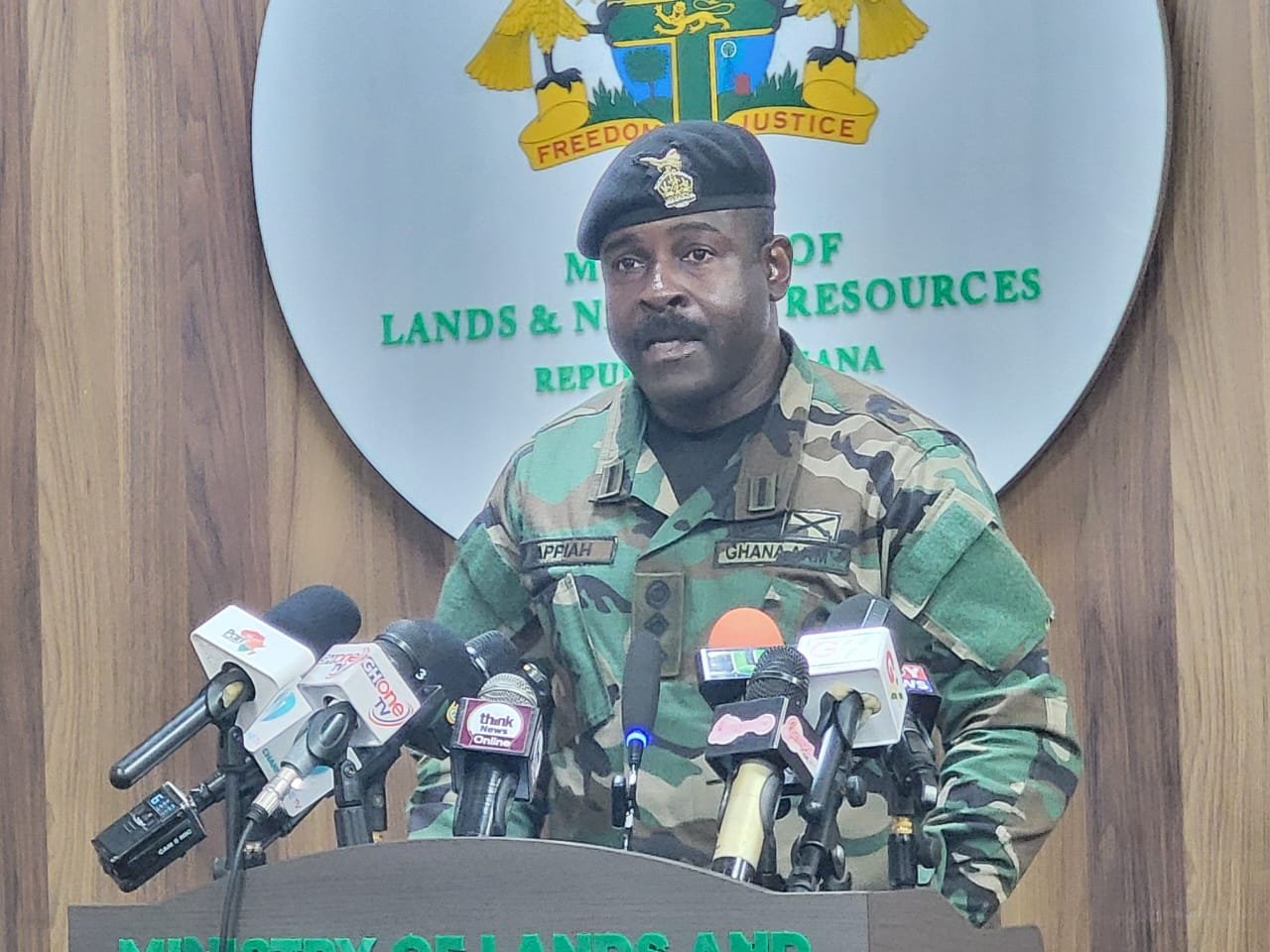
The newly appointed Director of Operations of the National Anti-Illegal Mining Operations (NAIMOs), Colonel Kofi Sam Appiah, has served notice that his outfit will go all out against illegal miners, vowing to make the illicit trade so costly and risky that it loses its appeal entirely.
Col. Appiah, who took over from his predecessor, Col. Buah, said his immediate priority is to ramp up enforcement and consolidate the gains already achieved in the fight against galamsey.
He made these remarks on Thursday during the inaugural edition of “the Progress Series,” a platform established to provide regular updates on NAIMOs’ field operations.
Source-to-Estuary Strategy
Outlining his vision, the Operations Director disclosed that upon assuming office, he rolled out an operational design anchored on protecting Ghana’s strategic watersheds and river systems from their sources all the way to the sea.
“Protecting headwaters, disrupting mining along river corridors, and safeguarding downstream communities are interconnected tasks. This approach focuses our efforts on the conditions needed for lasting environmental security,” he explained.
impressive Scorecard
Painting a picture of the outfit’s achievements so far, Col. Appiah revealed that NAIMOs task forces have recovered 74 firearms and 551 rounds of ammunition, alongside seizures of excavators, water pumps, vehicles, and other machinery used to fuel illegal mining.
In addition, some 1,970 chanfang machines and 863 makeshift structures have been destroyed — a move he said has significantly crippled illegal mining capacity and dismantled the infrastructure that sustains it.
Suspects arrested during operations, he noted, have been handed over to the appropriate authorities for investigation and prosecution, stressing that NAIMOs also carries the duty of preserving evidence to support the justice process and guarantee credible deterrence.
According to him, these interventions have degraded the ability of illegal operators to occupy sensitive zones, shuttle equipment around, and resume production — though he was quick to add that sustained follow-up operations are essential to convert disruption into lasting control.
Col. Appiah said the desired end state includes substantially reduced illegal mining in priority areas, effective control of illegal miners and their heavy equipment, disrupted criminal networks, and enduring monitoring and protection arrangements — with measurable environmental improvement remaining the ultimate test of success.
738 Operations in Four Months
Shedding light on operational progress, the Director disclosed that between 13 June and 30 September, NAIMOs carried out 738 operational activities, covering a cumulative distance of 50,662 kilometres. These included combined reconnaissance missions, mobile and riverine patrols, raids, special operations, and community engagement.
“Forward deployments strengthened our ability to maintain pressure near major hotspots and respond to emerging activity,” he said.
He added that joint operations have extended NAIMOs’ reach across the Western, Western North, Central, Eastern, and Ashanti Regions, the Bono and Ahafo operational area, as well as the Savannah and Northern operational area.
Operation Watershield: Locking Down the Rivers
Touching on the next phase of Operation Watershield, Col. Appiah said the focus will shift toward securing territory after clearance, insisting that illegal operators must never be allowed to sneak back once an intensive operation ends.
On the Ankobra River, he revealed plans — in close coordination with the Ghana Navy — to deploy a dedicated riverine unit following the Special Boat Squadron operations. The unit’s mandate will be to sustain patrols, deter the return of chanfang operators, and consolidate gains from the clearance effort.
“Along the Offin, our planned operations will combine ground and riverine action to disrupt illegal mining, dominate priority river sections, and prevent reoccupation. The Offin is part of the wider Pra basin, so protecting it is important to downstream water security,” he stated, adding that reconnaissance and intelligence gathered so far will guide the concentration of effort.
He further pledged to sustain pressure on the Birim and pursue coordinated action across other priority river systems, stressing that protecting one stretch of a river must go hand in hand with securing connected tributaries and source areas so criminal activity is not merely displaced elsewhere within the same basin.
Operation Green Shield: Atewa in Focus
Col. Appiah also unveiled Operation Green Shield, NAIMOs’ planned forest protection intervention in the Atewa Forest Reserve, aimed at disrupting illegal mining in priority zones, denying renewed access, and creating conditions for the reserve’s sustained protection.
The operation will unfold in three stages: clear and disrupt; hold and stabilise; and transition and handover. Specially trained personnel will lead forest operations, followed by sustained patrols and surveillance to keep illegal miners out.
The end goal, he explained, is a reserve where priority hotspots have been cleared and stabilised, with routine protection progressively handed over to Forestry Commission guards — a reflection of NAIMOs’ guiding principle of enabling permanent, agency-led protection of forest reserves, watersheds, and river systems.
Gratitude and a Stern Warning
The Operations Director expressed appreciation to the media for standing with NAIMOs throughout the journey, and thanked President John Mahama for the confidence reposed in him. He also lauded the Ministry of Lands and Natural Resources for committing logistical support and funding to sustain operations.
Col. Appiah cautioned, however, that the fight will now intensify against the money men behind galamsey.
“Our operational focus must continue to target the financiers, equipment suppliers, and facilitators who sustain illegal mining. Intelligence, field enforcement, and investigations must support one another,” he said.
Sending a blunt message to recalcitrant miners, the fiery commander declared: “To those engaged in illegal mining, the direction is clear. Mining in our rivers, forests, farms, and plantations must stop. Individuals and groups who continue to pollute our rivers, degrade our forests, and decimate critical national infrastructure, including roads, will be dealt with decisively.”