

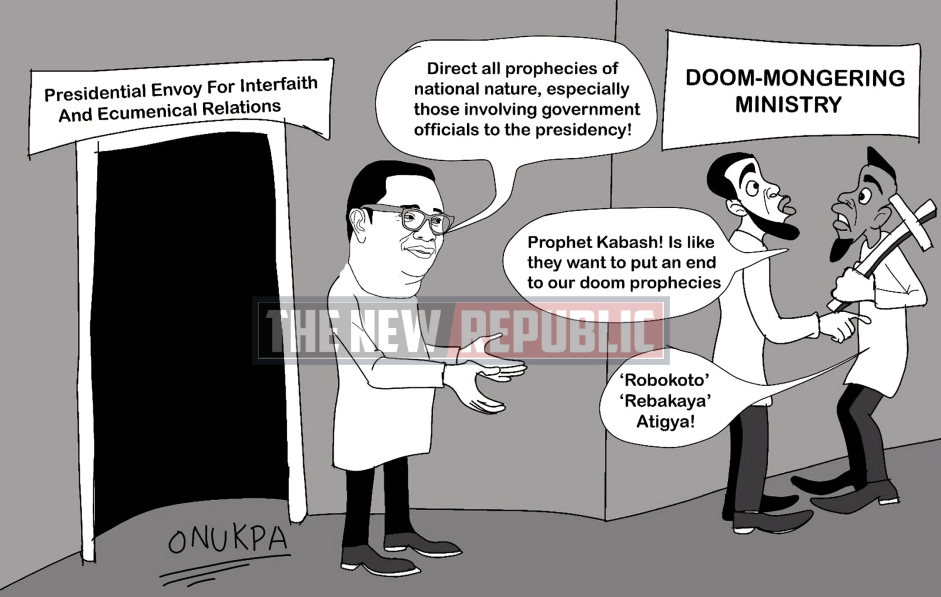
A seismic rift has erupted within Ghana’s spiritual community, sparked by a controversial new directive from Presidential Envoy Elvis Afriyie Ankrah.
The mandate, which orders spiritual leaders to submit sensitive prophecies about the nation and its leaders for vetting, is meant to douse the flames of fear often fanned by public pronouncements. But instead of bringing peace, it has exposed a deep and fiery divide among the clergy.
A Biblical Test or a Dangerous Gamble?
Afriyie Ankrah insists his directive is not a muzzle on spiritual expression but a necessary tool for national security. Citing scriptures like 1 Thessalonians 5:20-21 and 1 John 4:1, he argues that testing prophecies is not only biblical but essential for a mature faith community.
“The Bible actually encourages review… All things are lawful, but not all things are beneficial,” he explained, framing the move as a call to order in a chaotic prophetic landscape.
The directive follows a string of unsettling public prophecies, including one about a recent helicopter crash, which many believe fueled public anxiety.
Catholics Cautious: Prophecy is About ‘Heart Change’
For the Ghana Catholic Bishops’ Conference, the directive is a double-edged sword. While acknowledging its good intentions, Secretary-General Reverend Father Clement Akwasi Adjei expressed serious reservations.
“This is beneficial for them, but for us Catholics, it is not ideal because many who call themselves prophets in Ghana have trivialized prophecy to merely predicting events like deaths,” Father Adjei told The New Republic.
He stated that the Catholic understanding of prophecy is a message that inspires a “change of heart” and should be delivered privately, not shouted from the rooftops to instill fear. He also dismissed the common excuse that public figures are unreachable, calling it a flimsy justification for fear-mongering.
‘Beware the Charlatans,’ Prophet Warns
Prophet Dr. Nana Amankwah of Life City Chapel issued a stark warning to the government: be vigilant against charlatans and frauds. He fears the new system could become a hunting ground for individuals looking to exploit officials for money and gifts.
“The issue lies in determining who qualifies as a true prophet,” he stated, highlighting the lack of a physical yardstick for authenticity. He stressed that a true prophet’s worth is measured by their character and consistency, not their ability to make bold predictions.
A Path to Collaboration?
In stark contrast, Bishop Stephen Akwasi Appiah of Kingdom Life Chapel International sees the directive as a welcome and positive development.
He views it as a chance for prophets and state officials to collaborate, not clash, to prevent national disasters. He urged his fellow prophets to deliver their messages with wisdom and respect, ensuring their prophecies guide rather than terrify.
As Ghana’s religious and political leaders navigate this treacherous intersection of faith and governance, the debate over this new directive is only just beginning.
By Philip Antoh