

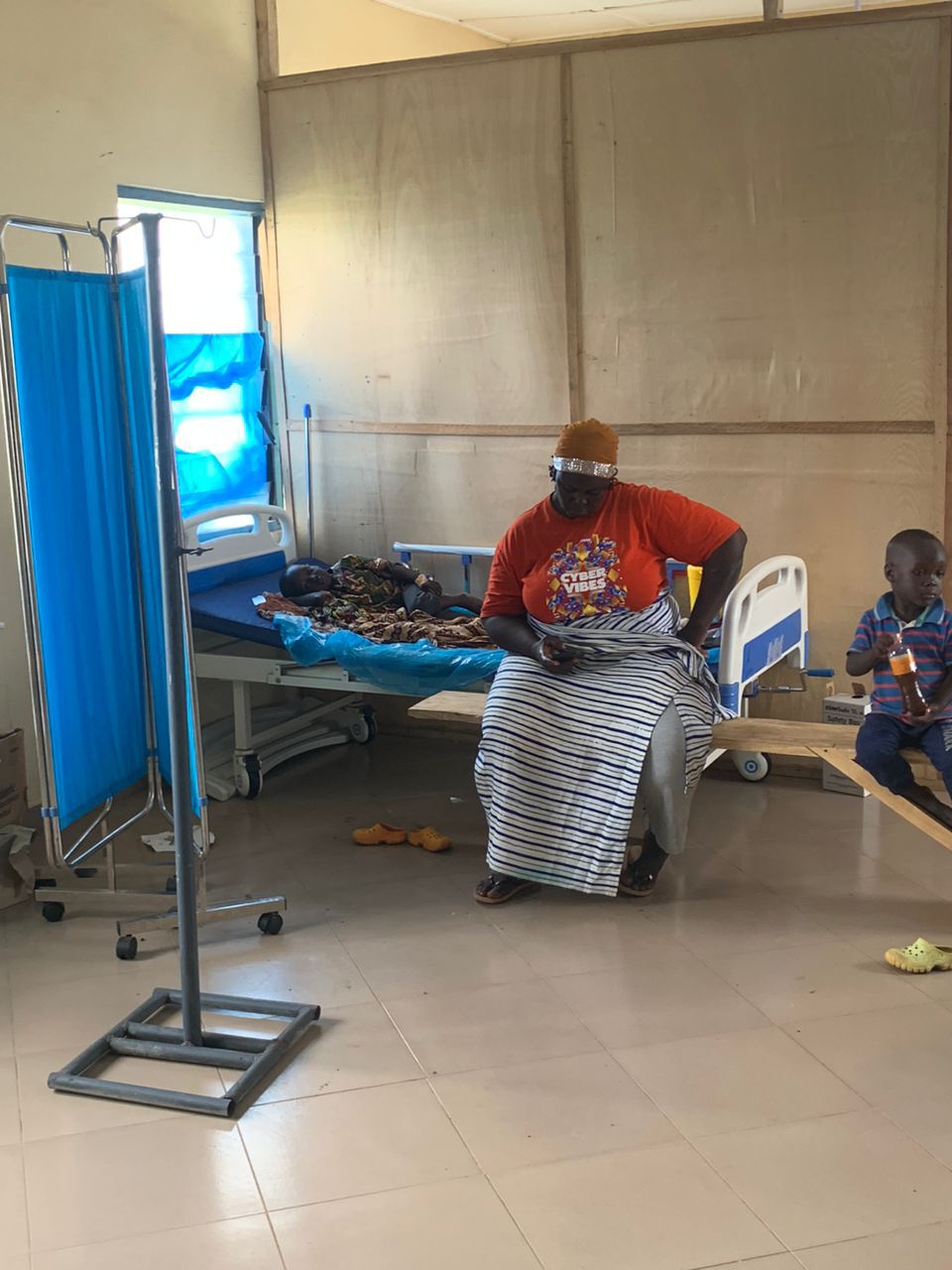
In the heart of Ghana’s Northeast Region, the Langbinsi Health Centre stands as a critical lifeline for thousands of residents across surrounding communities. Yet, despite its vital role, the facility is crippled by severe shortages, leaving patients and healthcare workers in a relentless battle for survival.
The health centre, which serves as the primary point of care for many, operates with shockingly inadequate resources. The wards, meant to offer comfort and recovery, are instead scenes of distress. In one ward, only two worn-out beds are available, forcing patients to share or lie on the floor. Others are turned away due to lack of space.
For pregnant women, the conditions are even more dire. After delivery, new mothers have no proper toilet facilities or running water, compromising hygiene and increasing the risk of infections.
“It breaks my heart to see women who have just given birth struggling without basic sanitation,” says Kadiri, a senior nurse at the facility. “We do our best, but how can we provide quality care without water or proper toilets?”
No Ambulance, No Ultrasound—Lives at Risk
Maternal healthcare is among the most pressing challenges. The centre lacks an ultrasound machine, making it difficult to monitor high-risk pregnancies. When complications arise, patients must be referred to distant hospitals—a journey made even more dangerous by the absence of an ambulance.
“We’ve lost mothers and newborns because we couldn’t detect complications early or transport them quickly,” Kadiri explains. “An ambulance and an ultrasound machine would make a world of difference.”
The staff at Langbinsi Health Centre work tirelessly under these harsh conditions, but their efforts are not enough without essential resources. Kadiri’s plea is simple yet urgent:
“We need an ambulance, water, toilet facilities, beds, and an ultrasound machine. With just these basics, we can save more lives.”
As Ghana strives toward better healthcare for all, facilities like Langbinsi Health Centre serve as a stark reminder of the work still left to be done. Without immediate action, the most vulnerable will continue to pay the price.
By BANYEMIKATANA FADILA