

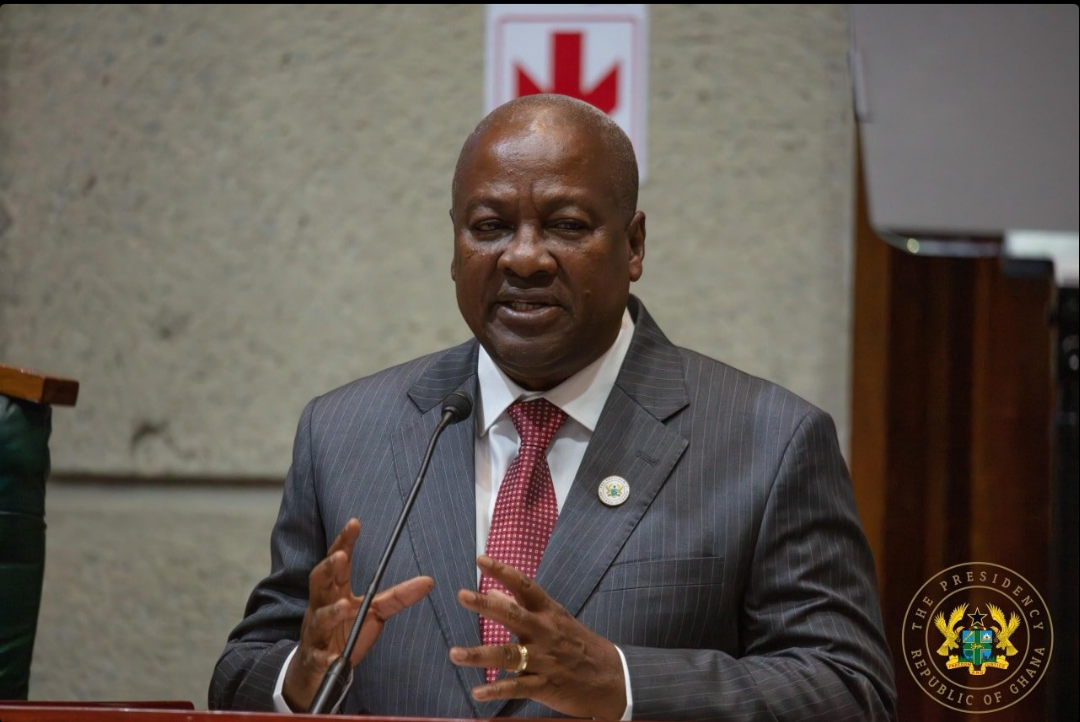
Ghana’s President, John Dramani Mahama has called on African leaders and institutions to pursue collective action to end what he described as the continent’s triple dependency, warning that continued reliance on external actors threatens Africa’s sovereignty and long term development.
He made the call in a historic address to the Parliament of Zambia in Lusaka as part of his three-day state visit, using the platform to outline a shared African agenda for economic emancipation and global reform.
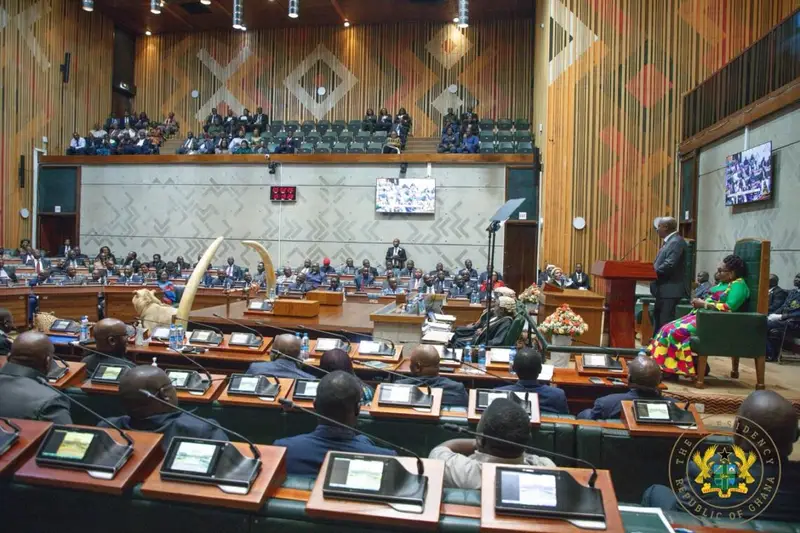
Addressing the House, President Mahama expressed deep appreciation for the opportunity to speak before Zambia’s lawmakers and conveyed fraternal greetings from the government and people of Ghana.
He thanked the Zambian authorities for the warm hospitality extended to him and his delegation, noting that the visit reaffirmed the enduring bonds between the two countries.
He traced these ties to the liberation era, recalling the partnership between Ghana’s first President, Dr Kwame Nkrumah, and Zambia’s founding leader, Dr Kenneth Kaunda, whose shared Pan African vision helped shape the political destiny of the continent.
President Mahama said Ghana’s historic support for Zambia’s liberation struggle remains a proud chapter in African history, pointing to institutions such as the Kwame Nkrumah Ideological Institute in Winneba where many freedom fighters were influenced by Pan Africanist ideals.
He said the friendship between Ghana and Zambia today continues to rest on mutual respect, democratic values and a shared commitment to peace, development and African dignity.
Translating Historic Solidarity into Tangible Economic Benefits
Turning to the present, President Mahama said the responsibility of the current generation of leaders is to translate historic solidarity into tangible economic and social benefits for citizens.
He noted that while Africa’s founding leaders won political independence, today’s challenge is to secure economic transformation and prosperity in a rapidly changing global environment.
According to him, the global context has become more complex, with declining humanitarian assistance, shrinking official development aid, rising defence spending and increasing strain on multilateral systems.
Against this backdrop, President Mahama warned that Africa faces what he termed a pandemic of unfulfilled potential. He said millions of young people across the continent remain unemployed, health systems are fragile and many economies continue to extract wealth without building domestic capacity.
This situation, he argued, requires African leaders to confront reality with transparency and pragmatism. President Mahama recalled that only days earlier he had addressed global leaders in Davos, where he spoke about the Accra Reset Initiative and the urgent need for Africa to redefine its development path.
He said too many African countries remain trapped in a condition he described as triple dependency. This includes dependence on external actors for security decisions, reliance on donors to fund health and education systems, and dependence on exporting critical minerals while capturing little value from them.
Adopting Accra Reset to Reshape Global Partnership
He argued that such dependency undermines genuine sovereignty and limits Africa’s ability to chart its own future. According to President Mahama, the Accra Reset Initiative is not about rejecting global partnerships but about reshaping them.
The Ghanaian leader said the initiative advocates forging new partnerships that transform global systems which have historically disadvantaged Africa and much of the global south. He called for unity of action, self reliance and the strategic use of Africa’s comparative advantages to drive industrial growth and economic transformation.
President Mahama also called for reforms in global governance, including greater African representation in institutions such as the United Nations Security Council. He said Africa must demand a realignment of global financial systems that have perpetuated cycles of poverty and debt.
While emphasizing the importance of collective action at the continental level, President Mahama stressed that progress also depends on how countries act domestically.
Leadership, he said, is central to achieving the goals of the Accra Reset. He told the Zambian Parliament that Ghana has begun taking concrete steps to change its national narrative since his return to office a year ago.
Ghana’s Reset Agenda
According to him, his administration has been guided by a pragmatic reset agenda focused on economic recovery, macroeconomic stability, job creation and inclusive growth. This agenda, he said, is anchored in fiscal discipline, productive investment, good governance and strengthened regional cooperation.
President Mahama said his government has prioritised execution over excuses. He outlined measures taken to reduce the size of government to 58 ministers and deputy ministers, including regional ministers, as part of efforts to improve efficiency.
He said Ghana is digitalising public services to fight corruption and investing in skills development, particularly in digital, green and industrial sectors, adding that debt restructuring efforts were undertaken not simply to service loans but to free resources for investment in people.
Highlighting progress made under the reset agenda, President Mahama said Ghana’s economic indicators have improved significantly. He noted that inflation declined from over 23 percent at the end of 2024 to 3.8 percent by January 2026. Currency stability has also been restored, with the Ghanaian currency appreciating by 32 percent and ranking among the top-performing currencies globally in 2025.
He said Ghana successfully renegotiated its debt obligations on terms that safeguard national sovereignty and ensure sustainability, and is steadily exiting the International Monetary Fund programme as a partner rather than a supplicant. President Mahama stressed that these gains extend beyond Ghana’s borders and contribute to regional confidence and integration.
Mahama described Zambia as a natural partner, pointing to complementarities between the two economies in mining, agriculture, energy and manufacturing. According to him, these sectors offer strong potential for joint ventures, value chain development and expanded bilateral trade.
The Ghanaian leader concluded by urging African nations to rekindle the spirit of cooperation that defined the liberation struggle and apply it to the current quest for economic transformation, adding that the next battle for Africa is not political independence but shared prosperity, dignity, and self-determination in a changing world.