

By Nelson Ayivor
President John Dramani Mahama has declared that Africa’s economic rise should be understood as a contribution to global stability rather than a challenge to the existing world order.
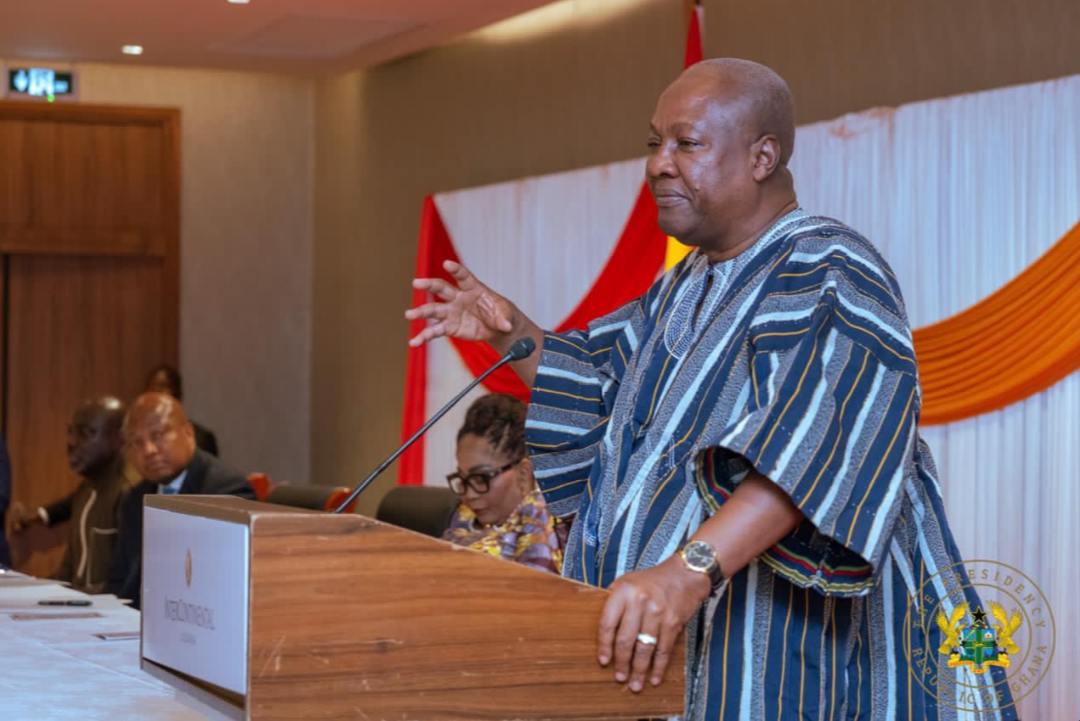
Speaking during his closing remarks at the Accra Reset side event dubbed Addis Reckoning on the margins of the African Union Summit in Addis Ababa, the President said Africa’s prosperity would ultimately strengthen shared global growth.
Responding to remarks from European representatives, President Mahama endorsed the view that Africa’s growth benefits partners beyond the continent. He agreed that when Africa prospers, global demand expands, investment opportunities increase, and economic stability is reinforced.
“And so we want to thank Baroness Chapman for those kind words. El Hadji spoke on behalf of our stakeholders. And we are happy that they are sacrificing their time and effort to join this great movement continent to create prosperity for Africa.”
He emphasised that Africa’s development aspirations should therefore be seen as complementary to global prosperity, not as a zero sum competition. According to him, a stronger Africa contributes positively to the world economy by expanding markets, fostering innovation, and supporting shared growth.
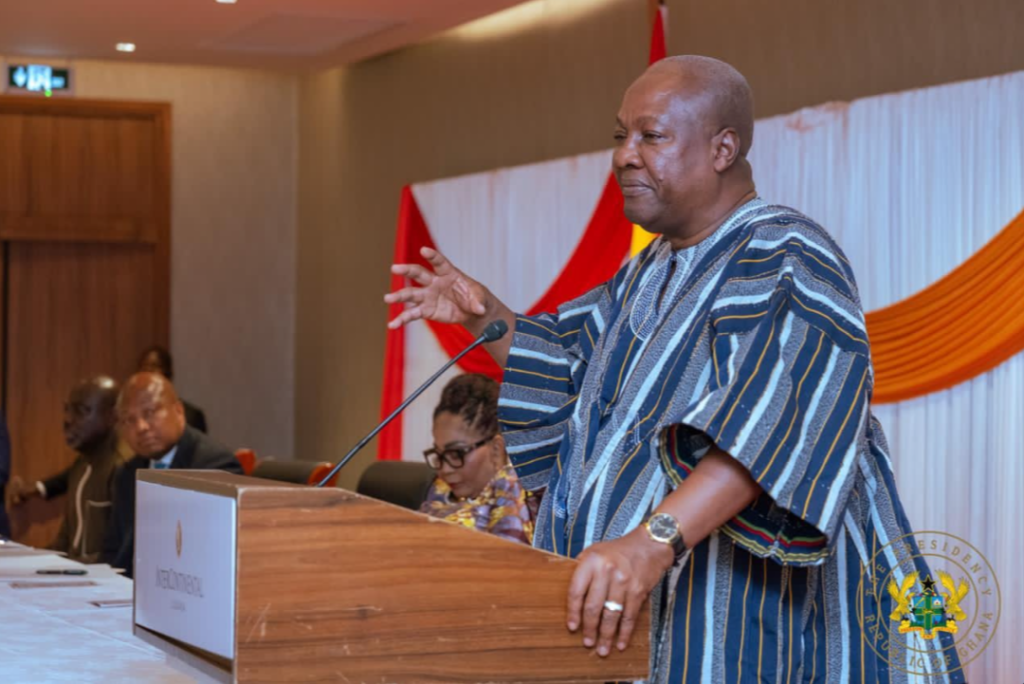
Addressing an audience of African leaders, development partners, private sector executives, and multilateral representatives, President Mahama framed the Accra Reset as a response to deep structural imbalances that have shaped Africa’s relationship with the global economy.
He stressed that the Accra Reset initiative is rooted in cooperation, shared value, and mutual benefit among African nations rather than confrontation or isolation.
President Mahama began by expressing gratitude to those who played key roles in shaping the Accra Reset vision, paying particular tribute to former Nigerian President Olusegun Obasanjo for his early support. He recalled informal consultations that helped transform the idea from discussion into a continental platform for action.
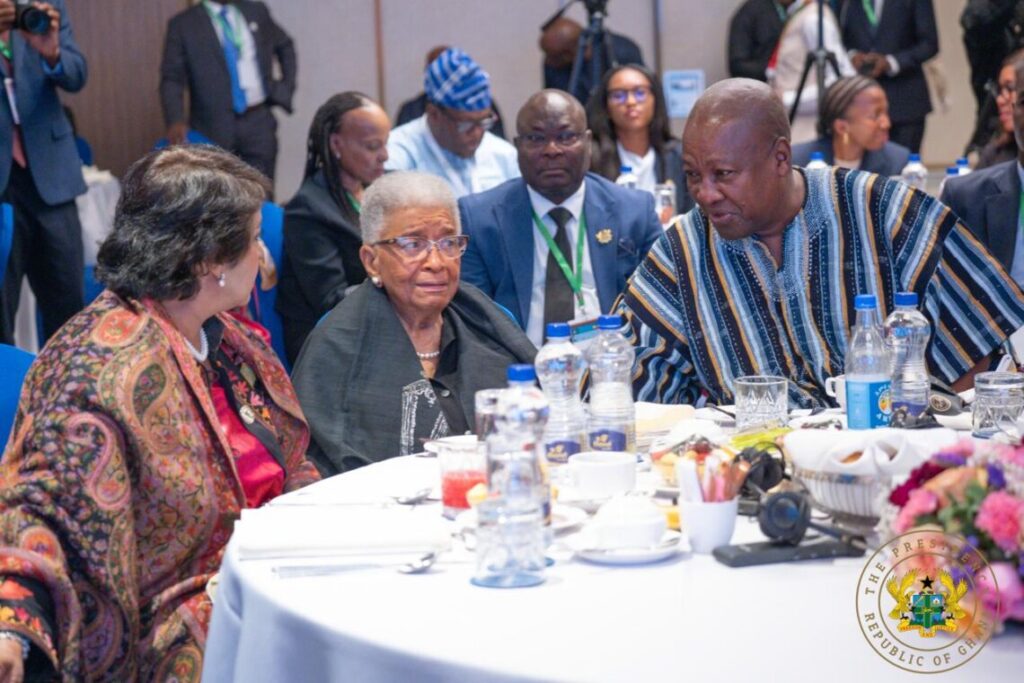
He also acknowledged the presence of former Liberian President Ellen Johnson-Sirleaf, noting her continued leadership in Africa’s governance and reform conversations.
According to President Mahama, the Accra Reset reflects collective leadership exercised ahead of certainty, with leaders willing to invest political capital in long term transformation.
Resource Sovereignty and Ethical Supply Chains
A major focus of the closing remarks was Africa’s natural resource governance, with special attention to the Democratic Republic of Congo. President Mahama described the country as central to discussions on resource sovereignty, given its role in supplying critical minerals to global technology industries.
He argued that credible certification systems for minerals are essential to ensure that extraction benefits local populations rather than fueling conflict. President Mahama noted that global demand for minerals such as coltan and tantalum has often overshadowed humanitarian concerns, urging the international community to confront this contradiction honestly.
According to him, Africa’s push for resource sovereignty is not about restricting access but about ensuring fairness, transparency, and long term value for producing countries and their people.
Trade, Payments, and Continental Integration
President Mahama also highlighted progress and remaining challenges in Africa’s trade integration agenda. He questioned why African small and medium enterprises are often forced to convert local currencies into third-party currencies to trade within the continent, describing the practice as inefficient and costly.
“One of the issues he raised was, why as an SME in Accra or Ghana, I want to export my goods to my compatriots in Kenya, and yet I must take my local currency and change it into some third-party currency, and then it’s changed again to pay my colleague SME in Kenya.”
He said the Pan African Payment and Settlement System represents a timely solution, enabling businesses to trade across borders while receiving payments in domestic currencies. Accelerating such reforms, he argued, would give practical meaning to the African Continental Free Trade Area and lower barriers for African entrepreneurs.
On logistics and transport, the President struck a cautiously optimistic tone. He acknowledged past difficulties in moving goods and people across the continent but noted visible improvements in air connectivity, cargo services, and regional shipping.
President Mahama cited growing aviation links in West Africa and expanded maritime distribution along the coast as signs that infrastructure is beginning to catch up with trade ambitions.
He added that private sector led initiatives, including proposed ferry services along the West African corridor, could further ease the movement of goods and strengthen regional supply chains.
Urgency, Action, and Pan African Spirit
In his concluding reflections, Mahama echoed calls from participants for faster implementation of agreed frameworks. He warned against excessive delays and urged leaders to act with urgency, even if progress begins with a coalition of willing states.
Drawing inspiration from the legacy of Kwame Nkrumah, Mahama said the Pan African vision remains relevant in today’s fragmented global environment. He concluded by reiterating that Africa’s prosperity is not a threat to the world but a stabilising force that can help consolidate global prosperity if matched with decisive action.