

By Nelson Ayivor
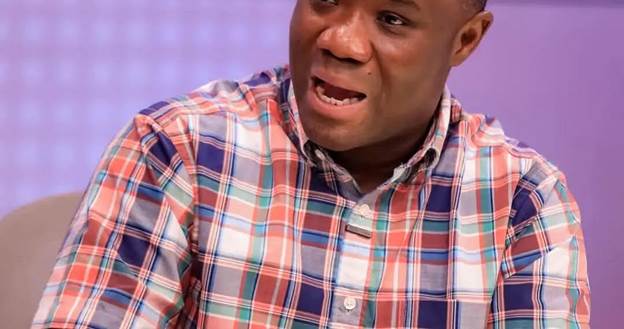
The government’s defence of its security retooling agenda has intensified, with Minister for Government Communications Felix Kwakye Ofosu, delivering a firm rebuttal to what he describes as an “obvious lie” told by the Damongo MP Samuel Abu Jinapor, regarding the alleged $1.2 billion cost of new presidential jets and military equipment.
His response, grounded in detailed figures and strong political critique, unfolded before his broader assessment of Dr. Mahamudu Bawumia’s record, which he argues remains too weak to be “taken to the political market.”
Kwakye Ofosu’s dismissal of the $1.2 billion claim was anchored in what he says are verifiable budgetary allocations and multi-year planning, insisting that the government’s approach, under President John Dramani Mahama, spans a structured retooling effort from 2025 through 2029, making Abu Jinapor’s figure both factually incorrect and politically motivated.
According to him, the actual cost of the items being procured in 2025 does not come close to the amount alleged by the Damongo legislator. He pointed directly to the pricing of the equipment already announced, arguing that nothing in the budget supports the claim of a billion-dollar expenditure.
“But as we can see, the four helicopters and the two jets plus the 19 armoured personnel carriers and the two vessels I’m talking about all won’t amount to 300 million, talk less of 1.2 billion. In fact, I can give you the price of the four helicopters – It is 125.9 million euros for those, I’m sure it will be around 130 million dollars if you do the conversion.”
Kwakye Ofosu emphasised that the government is executing a responsible, phased programme meant to restore the operational capacity of the Ghana Armed Forces and other essential security agencies.
He argued that this long-term plan is central to ensuring internal and external security readiness and should not be framed as extravagant, careless spending. In pushing back against the Damongo MP, he said the claim had no factual basis and was merely designed to stir public anger.
Kwakye Ofosu further questioned why anyone would oppose an effort to retool the military when the needs of the security services have long been acknowledged across political divides. He noted that “investment in security is as essential as investment in education, health or infrastructure,” insisting that dismissing it as a misplaced priority lacks logic.
“So the claim that we are spending 1.2 billion dollars is false. And it is intended to carry displeasure for the government by an opposition party that is desperate to score some political points. What Abu Jinapor said was false.”
He recalled how the Majority Leader Mahama Ayariga publicly challenged and corrected the claim on the floor of Parliament, pointing out that Jinapor later attempted to justify his position with what he described as “bizarre extrapolations.”
Kwakye Ofosu maintained that nothing prevents Ghana from spending $300 million, $400 million or even $500 million to retool the armed forces if such investment becomes necessary stressing that global examples demonstrate that nations routinely allocate significant resources to defence as part of their duty to protect their citizens. He cited the US aircraft carrier USS Gerald R. Ford to underline how even countries with social and economic challenges still prioritise military readiness in their budgets.
“Are there not people who need accommodation, people who need to go to school, and people who need health bills sorted in America? But it is the duty of the government to protect the people of America, just as it is the duty of Ghana to protect the citizens.”
Moving beyond the retooling debate, the minister launched a broader critique aimed at former Vice President Dr. Mahamudu Bawumia.
Linking national economic management to political accountability, Kwakye Ofosu argued that Dr. Bawumia’s record remains indefensible and does not provide a convincing basis for his continuing presidential ambitions.
He said Ghanaians remember the economic outcomes under Bawumia’s leadership and remain unconvinced by attempts to repackage his stewardship. “If your record does not resonate with the people, you cannot take it to the political market,” he declared.
The minister insisted that Dr. Bawumia oversaw policies that left citizens disappointed, adding that the NPP’s 2024 defeat should have been a clear signal that the public had lost confidence in his leadership.
According to him, the shifting explanations and campaign messages associated with Dr. Bawumia reflect a struggle to escape the economic realities of his tenure.
Kwakye Ofosu concluded that the NPP must confront its own governance record rather than attempting to revive Bawumia’s political prospects. In his view, the former Vice President’s performance continues to undermine any effort to present him as a credible figure for the 2028 elections, making such a task “difficult, if not impossible.”