

By Leo Nelson
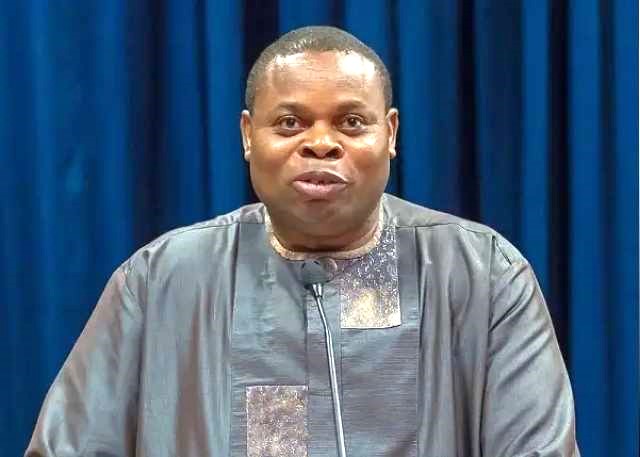
The founding president of policy think-tank IMANI, Franklin Cudjoe, has poured cold water on opposition hopes that an escalation of the conflict between the United States, Israel, and Iran would trigger a economic crisis for Ghana. In a robust intervention, Cudjoe argues that the fundamentals of Nana Akufo-Addo’s economy are now robust enough to withstand external shocks that would have crippled the administration of his predecessor, John Mahama.
Cudjoe’s analysis directly challenges the narrative that Ghana remains acutely vulnerable to geopolitical tremors.
He contends that the severe dislocation caused by the Russian invasion of Ukraine in 2022 was less an indictment of global volatility and more a damning exposure of pre-existing structural weaknesses under the previous government. “Unless the war prolongs beyond a year,” he stated, “Ghana might not be that terribly hit as happened under the last government.”
Cudjoe draws a stark contrast between the economic landscape of 2022 and today. He reminds readers that the former finance minister, Ken Ofori-Atta, was forced to admit that the Ukraine war merely exacerbated deep-seated domestic fragilities. At that time, the economy was reeling from inflation peaking at 54%, interest rates hovering near 45%, and a foreign exchange system in virtual collapse.
Today, the IMANI chief points to a radically transformed picture. He cites inflation now below 4%, a significant compression of the debt-to-GDP ratio from 62% to 45% last year, and commercial bank lending rates averaging under 20%.
Perhaps most strikingly, he highlights the cedi’s appreciation of approximately 30% against major currencies a turnaround he attributes to enforced fiscal discipline and the ongoing extended credit facility programme with the International Monetary Fund.
“Most of our underlying economic conditions are not that terrifyingly crazy,” he insists, urging against lazy parallels with the 2022 crisis.
Despite his sanguine outlook on the macro-economy, Cudjoe is not blind to the primary vector of risk: energy supplies. While current stocks, pegged by the National Petroleum Authority at roughly five weeks, provide a buffer, he warns this is insufficient for a protracted conflict.
His prescription is characteristically pro-market. He advocates for a significant overhaul of the downstream sector, calling for deeper private sector involvement in the management of the ailing Tema Oil Refinery (TOR) and the Bulk Oil Storage and Transportation Company (BOST).
More radically, he floats the idea of a sovereign-directed crude set-aside. This would involve taking a portion of Ghana’s equity or royalty crude from the Jubilee Field and mandating its local refining for domestic consumption, a move that would simultaneously bolster energy security and reduce import dependence.