

Front Desk
In his first major administrative salvo since assuming the finance portfolio, Dr. Cassiel Ato Forson has moved to plug gaping holes in the national revenue net, ordering a sweeping ban on the transit of nine strategic commodities through Ghana’s land borders.
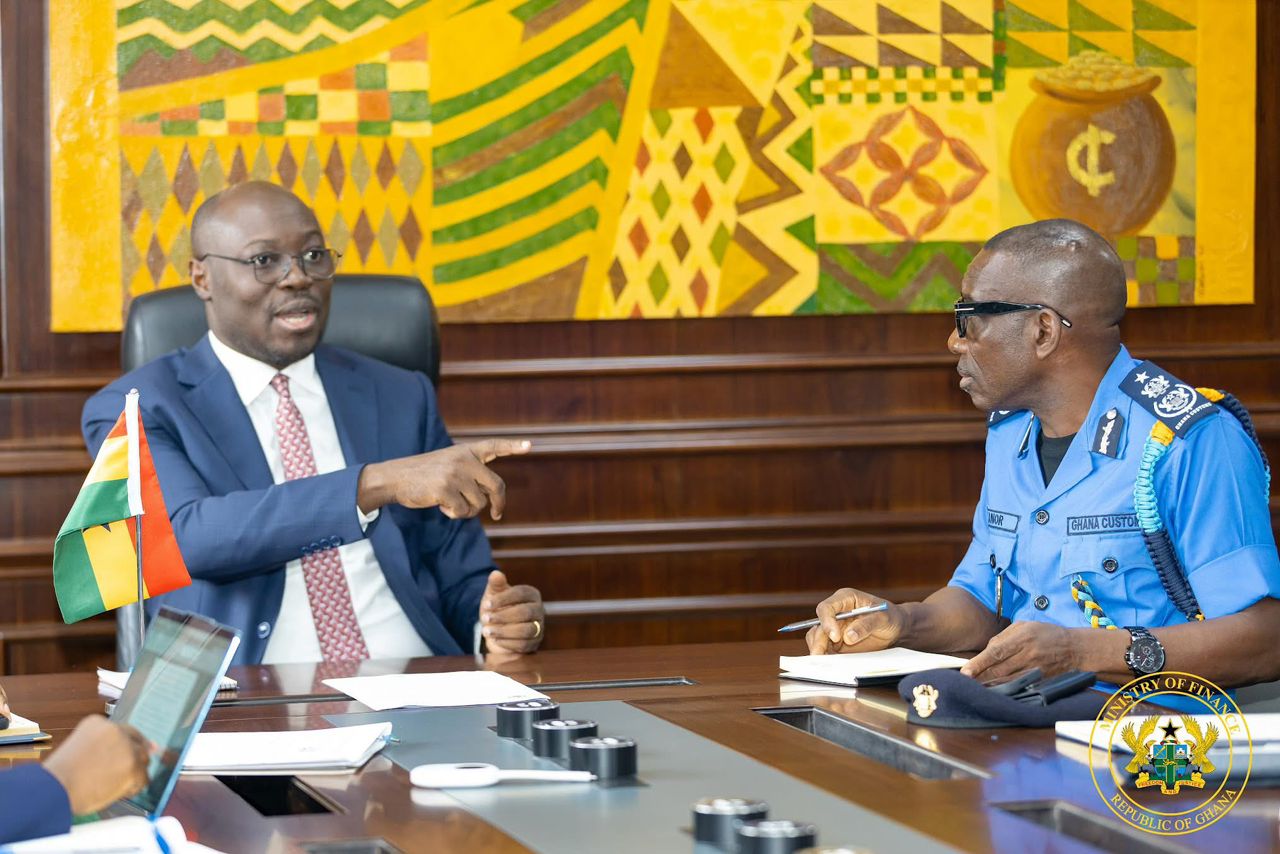
The directive, issued following a closed-door meeting with Customs boss Aaron Akanor, signals a hardline shift in fiscal enforcement and a direct challenge to long-established informal trade networks.
The move, effective immediately, targets a list of politically sensitive and high-volume goods: cooking oil, rice, sugar, frozen products, textiles, flour, canned tomatoes, pasta, and pharmaceutical products.
By forcing these items to be routed exclusively through the country’s seaports, the minister is effectively dismantling the lucrative, and often opaque, land transit regime that has long characterised West African trade corridors.
Officially, the Treasury is framing the crackdown as a necessary surgical strike against revenue leakage. Unofficially, it is a major escalation against the well-documented phenomenon of diversion, where goods destined for neighbouring landlocked countries Burkina Faso, Mali, Niger are dumped onto the Ghanaian market without ever facing the full weight of port duties.
With neighbours to the north in political and economic turmoil, the pressure on Ghana’s borders has intensified, making the collection of accurate duties a near-impossible task.
Industry insiders will note the symbolic heft of the list. These are not niche products; they are the staples of regional trade and the lifeblood of cross-border smuggling.
By banning their overland transit, Forson is betting that the higher compliance costs and scrutiny at the ports will outweigh the incentives for evasion.
Complementing the ban is a bureaucratic re-centralisation that will raise eyebrows in the shipping fraternity. The minister has ordered the immediate re-centralisation of the Customs Technical Services Bureau (CTSB).
This effectively creates a one-stop shop for valuation, stripping away the discretion that often exists at peripheral border posts. Crucially, the directive mandates the integration of intelligence from the ‘Publican AI system’ a digital tool designed to benchmark import values into this new, streamlined command structure.
For President Akufo-Addo’s administration, which has struggled to meet revenue targets amid a punishing economic crisis, the optics are clear: the government is chasing every cedi. For Ato Forson, it is a chance to demonstrate fiscal discipline early in his tenure.
However, the directive is not without political landmines. By disrupting the flow of goods through land borders, the minister risks alienating powerful trading constituencies and middlemen who thrive in the grey spaces between Togo, Burkina Faso, and Ghana.
Furthermore, it places a heavy burden of expectation on the ports and the Customs hierarchy to ensure that the ‘seaport-only’ route does not simply become a new bottleneck for corruption.
Compliance, as always, will be the true test. The minister has directed Akanor and his management team to ensure ‘strict enforcement,’ but in the labyrinthine world of Ghanaian customs, the directive is merely the opening move in a high-stakes game of cat and mouse with well-entrenched interests.