

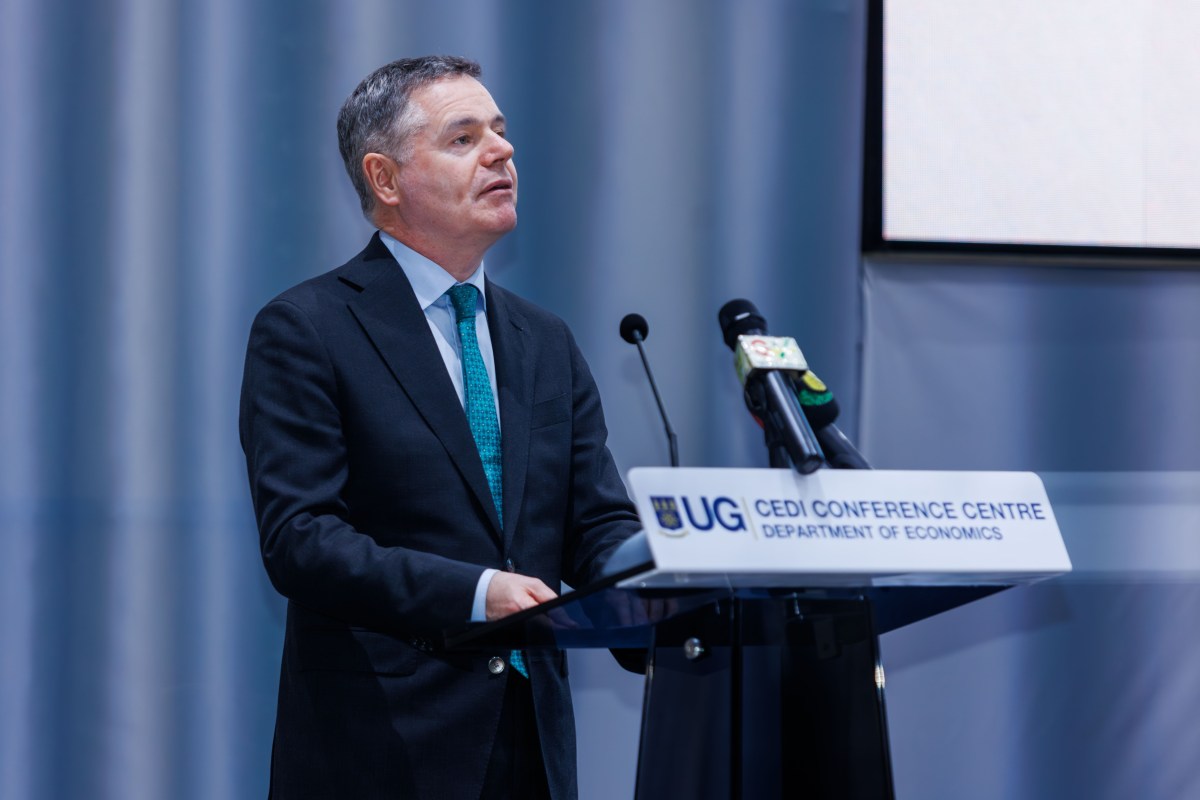
Students and young graduates across Africa must confront a stark reality: education alone is no longer enough to secure jobs in an increasingly complex and competitive labour market.
This was the central message from Paschal Donohoe, Managing Director and Chief Knowledge Officer of the World Bank Group, during a direct address to students at the University of Ghana, Legon, as part of the Vice Chancellor’s Occasional Lecture Series.
The lecture series addresses the urgent global challenge of ensuring that education leads to meaningful economic opportunity , particularly for young people entering rapidly evolving labor markets.
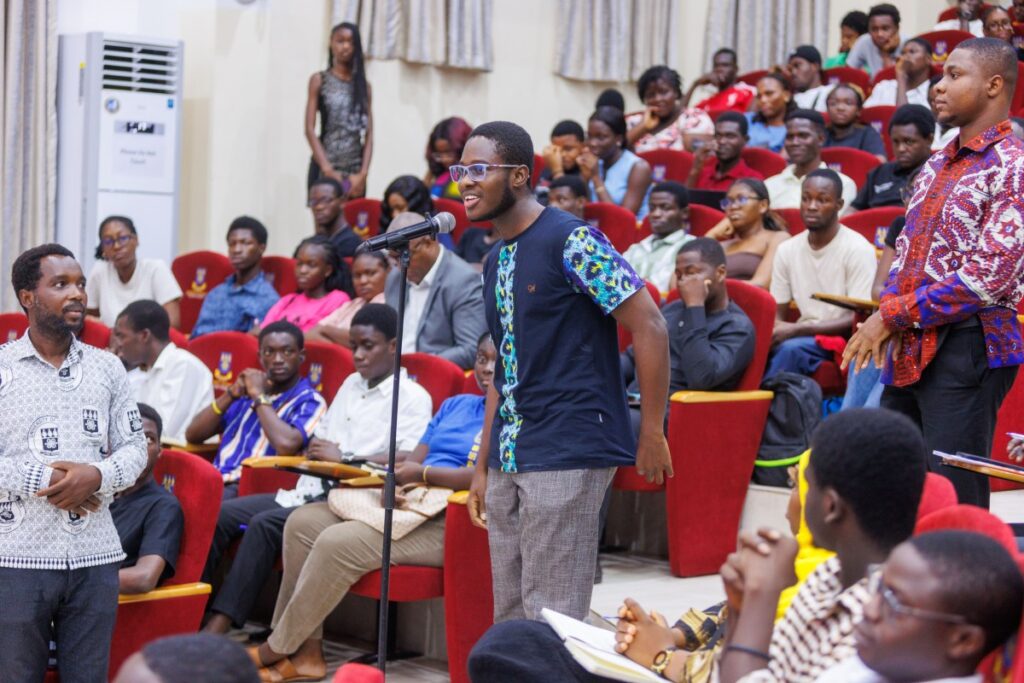
Speaking candidly on the topic ‘Building Skills, Creating Jobs and Empowering Africa’s Future,’ Mr Donohoe described today’s African youth as “among the most educated cohort” in the continent’s history, but warned that the transition from school to work is becoming increasingly difficult.
He outlined what he termed a “graduate insertion challenge,” driven by four key gaps.
First is a persistent mismatch between what students are taught and what employers actually need, noting that academic curricula often lag behind rapidly evolving economies.
Second is the experience gap, where graduates are required to have practical exposure before being given the opportunity to gain it.
Third is an aspirational disconnect, with many young people targeting formal sector jobs that are growing slowly, while overlooking emerging opportunities in high-growth areas such as agribusiness, digital services and green energy.
The fourth, and most critical, he stressed, is the weakness in foundational thinking skills including structured reasoning, analytical writing and quantitative literacy which underpin adaptability in a changing job market.
“When those foundations are strong, a changing economy is navigable. When they are weak, even a degree offers limited protection,” he cautioned.
A Message of Responsibility, Not Discouragement
Despite the challenges, Mr Donohoe pointed out that the situation was not insurmountable, urging students to see themselves as part of the solution rather than victims of circumstance.
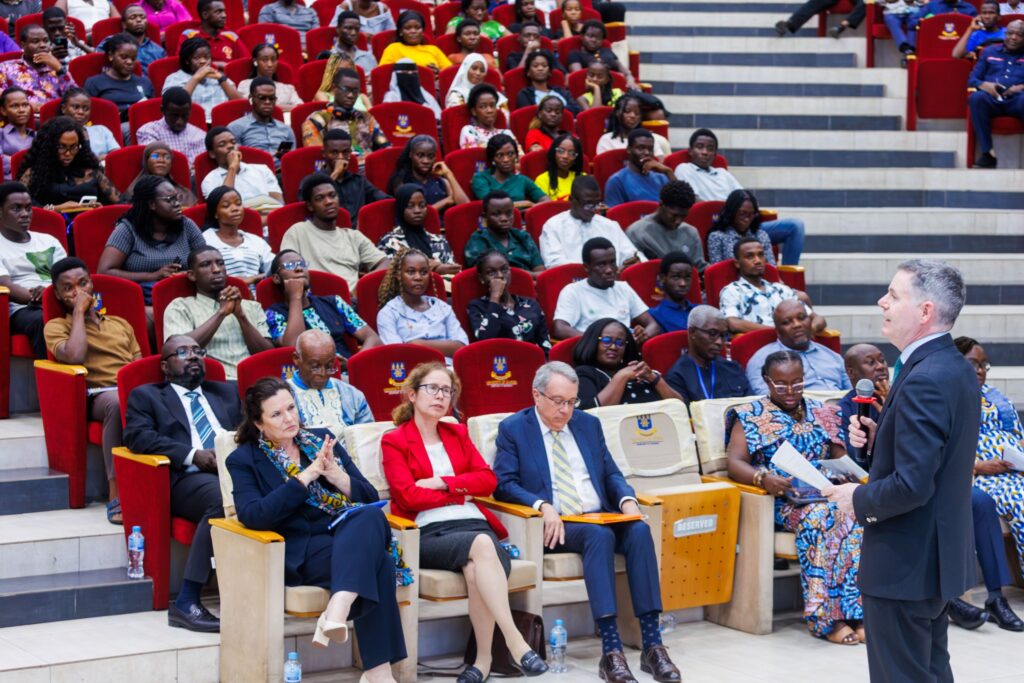
He underscored the need for continuous learning beyond graduation, describing a university degree as only a starting point.
“The skills that will determine your trajectory are built continuously, not conferred at graduation,” he said.
He further advised students to position themselves as “bridge-builders” — individuals who can combine technical expertise with human judgment and apply knowledge across disciplines.
Rethinking Career Paths
Mr Donohoe challenged graduates to rethink traditional career expectations, warning against waiting for “perfect” formal jobs.
Instead, he pointed to expanding opportunities in sectors that are reshaping Africa’s economic future, including climate adaptation, the digital economy and the creative industries.
“Africa’s most dynamic opportunities are often in sectors and roles that do not yet have established hiring pipelines,” he noted, encouraging young people to build their own career paths rather than follow predefined ones.
Holding Institutions Accountable
The World Bank Boss also placed responsibility on universities, urging students to actively engage their institutions to ensure training remains relevant.
According to him, universities must strengthen partnerships with industry, expand internship opportunities and track graduate outcomes to remain aligned with labour market demands.
Students, he added, have a role to play in demanding these standards and contributing to institutional transformation.
A Broader Call to Action
While his remarks were directed at students, Mr Donohoe extended a challenge to policymakers and academic leaders, stressing that the solutions to youth unemployment are well known.
He noted industry-linked training, strong foundational education, effective labor market information systems and private sector involvement as critical pillars.
“The question is not what to do. It is whether we have the sustained political will and institutional capacity to do it at scale,” he said.
His message ultimately framed Africa’s youth employment challenge not as a crisis of access to education, but as a test of relevance, adaptability and alignment with the demands of a rapidly evolving global economy.