

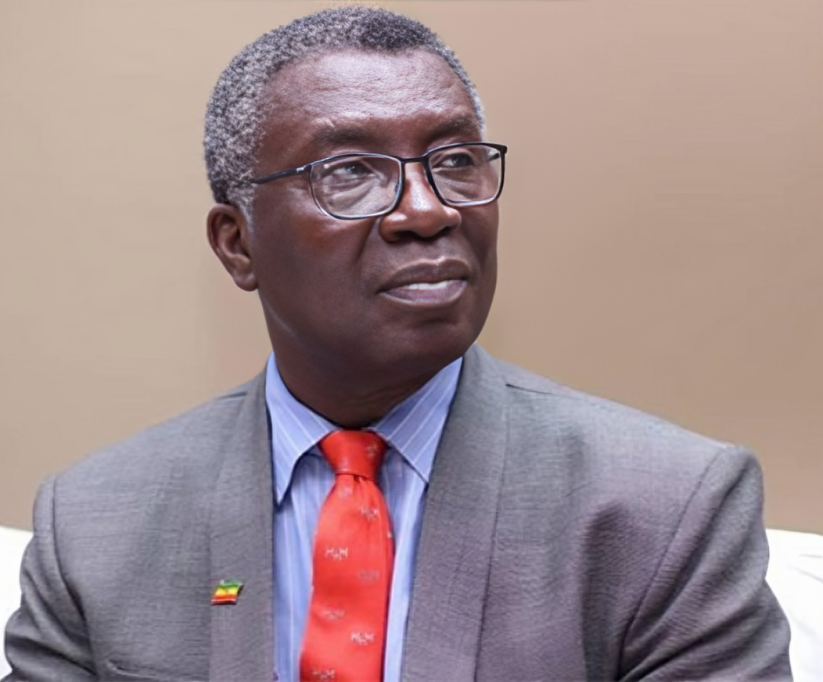
Frimpong-Boateng remarks Draws Daggers
By Prince Ahenkorah
The ruling New Patriotic Party (NPP) has moved to expel one of its most respected founding fathers, Professor Kwabena Frimpong-Boateng, after he publicly described the party as “fake” and alleged that its 2023 presidential primary was rigged.
The move, seen by insiders as an attempt to silence a prominent internal critic, has laid bare the profound ideological and generational fractures threatening the party’s cohesion as it licks its wounds from the 2024 electoral defeat.
In a terse statement dated January 13, 2026, General Secretary Justin Kodua Frimpong announced the party had “invoked the relevant provisions of its Constitution” to commence expulsion proceedings.
This followed a Channel One TV interview where the celebrated cardiologist and former Minister for Environment, Science, and Technology declared, “The present NPP is not NPP. It is fake.”
The decision to pursue expulsion is widely interpreted as a strategic purge. Prof. Frimpong-Boateng has evolved from a party icon into its most inconvenient truth-teller, first through his explosive but suppressed 2021 report on illegal mining (galamsey), which implicated high-ranking party officials, and now through his scathing critique of internal democratic decay.
“This is not merely about disciplinary action; it is a symbolic sacrifice of an old guard purist to consolidate the control of the current establishment,” a senior party insider, who spoke on condition of anonymity, told The New Republic. “They are making an example of him to deter other would-be dissenters.”
The professor’s allegations cut to the heart of the party’s current identity crisis. He claimed the process that elected Dr. Mahamudu Bawumia as 2024 flagbearer was “marred by manipulation, bribery, and intimidation of delegates,” labelling it “the beginning of corruption.” While he later clarified his critique was not personal against the “very nice” Dr. Bawumia, he insisted that “being nice alone is not enough to lead Nkrumah’s Ghana.”
The NPP’s statement offered a categorical denial, asserting the primary was “free, fair, transparent, and credible.” It described the professor’s conduct as “highly reprehensible and inimical to the values, unity, and integrity of the party.”
National Organizer Henry Nana Boakye (Nana B) underscored this hardline stance, stating the former Minister “must face accountability.” This swift, severe response suggests a leadership determined to project unity and discipline, even at the cost of alienating its historical base.
However, political analysts warn of reputational blowback. Dr. Kwame Asah-Asante, a Political Science lecturer at the University of Ghana, cautioned the NPP to “handle the controversy… strictly within the framework of the rule of law to avoid perceptions of victimization or gagging.”
The expulsion proceedings against Prof. Frimpong-Boateng represent more than an internal disciplinary matter. They are a critical manoeuvre in the NPP’s fraught post-2024 election struggle for redefinition.
By removing a figure who embodies the party’s founding ideological commitment and who directly challenges the legitimacy of its current leadership the NPP executive may be attempting to clear the deck for a new, less contentious narrative.
Yet, this strategy carries significant risk. It could deepen disillusionment among the party’s traditional intelligentsia and grassroots purists, who see the professor as a principled martyr. It also provides potent ammunition to political opponents who can frame the NPP as authoritarian and intolerant of criticism.
As the party gears up for the next electoral cycle, silencing of Frimpong-Boateng may quell a vocal critic in the short term, but it is unlikely to heal the fundamental rift between its founding ideals and its contemporary political machinery.
The coming disciplinary hearing will not just judge a man; it will signal whether the NPP prioritizes internal conformity over the messy, democratic dissent that once defined it.