

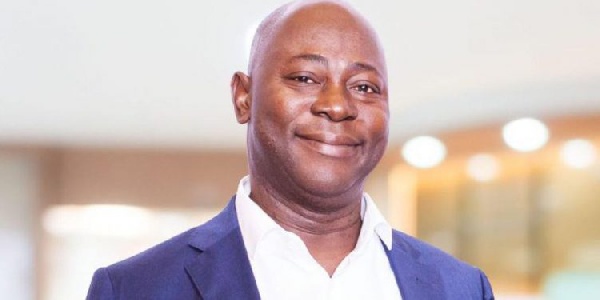
Accra’s Ringway Estates boys’ quarters may seem an unlikely cradle for a unicorn, but that’s where Moses Baiden, then 24, bootstrapped Margins Group in 1990 with $100 and a Toshiba laptop bought on London summer-job savings.
Three and a half decades later, the firm dominates ID card tech across Africa and beyond, its Ghanacard platform registering 15.7mn people in a single year 90% of Ghana’s adults and churning out 250,000 cards daily.
Baiden’s ascent defies Africa’s chronic capital shortages and infrastructural drag, which he likens to “hard soil” stifling seeds.
Success hinges not on ownership but partnerships, notably a 13-year pact with Ghana’s National Identification Authority (NIA) hailed as the country’s gold-standard public-private tie-up, built on transparency and national priorities.
Foreign delegations now flock to Accra, benchmarking the Ghanacard as continental digital governance.
Yet Margins’ footprint sprawls further. It wired the Driver and Vehicle Licensing Authority (DVLA) to the Ghanacard, boosting road safety and policing. The National Health Insurance scheme runs on its fraud-proof claims system.
Ghost payrolls face excision via its pending tools for the Controller and Accountant-General. Crucially, Margins built Ghana’s border controls the only such platform engineered locally by an African firm. “Ghanaians use our tech daily without knowing,” Baiden quipped at yesterday’s Accra media briefing.
Payment cards follow: Visa, Mastercard, UnionPay, even European variants, personalized in-branch or via managed services for banks.
Operations span eight countries, with outposts in Portugal, Copenhagen, Silicon Valley, and The Gambia where national ID production ramps up alongside fresh contracts. This global reach stems from 30 years of reinvestment, alliances, and adaptation, from laminators to networked ERP in the 1990s.
Skepticism lingered early. As Baiden pitched sub-Saharan Africa’s first card factory, a Ghanaian official fretted: “Build it here, and won’t security collapse?” European partners shrugged it off; Baiden saw mindset as the real barrier to industrialisation. “No manufacturing, no wealth,” he insists.
Mentors turbocharged the pivot: Danish partner Peter Blom, Swiss expert Dr. Wolfensperger, Korean industrialist Young Pioung Kim. By 1997, Margins laminated passports hacking Korean tech overnight for hot-melt wins.
It scaled to voter cards, bank IDs, military badges, airports, then national platforms, anticipating Africa’s 1.4bn population needing service-linked identities.
Baiden credits Ghanaian coders blending with global talent, toiling 12-14 hours daily sans shortcuts. NIA Chair Moses Afetsi Positive lauds it for slashing waste and ghost names, fortifying cyber defenses in a digital economy.
As Ghana eyes tech sovereignty, Margins exemplifies what grit and graft can yield though Baiden warns: factories demand knowledge, not just kit.