

By Leo Nelson
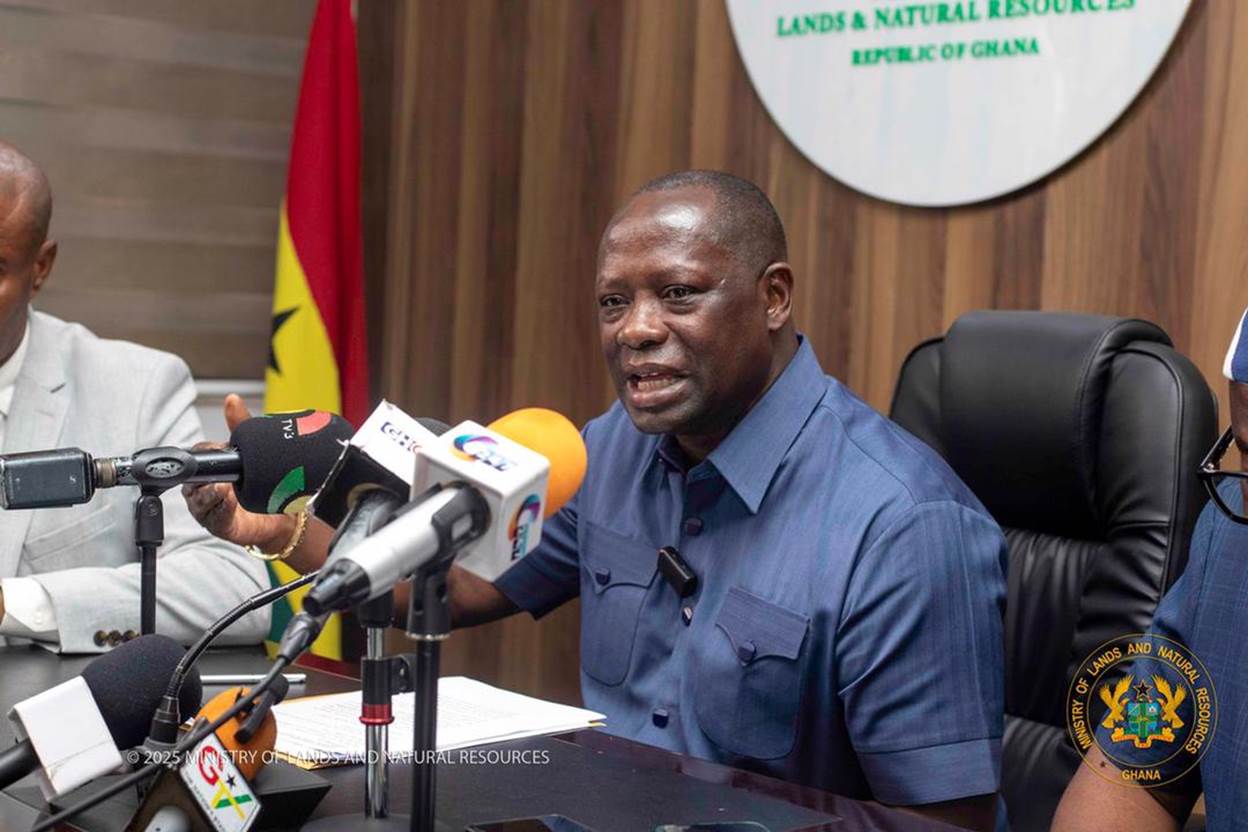
The Minister for Lands and Natural Resources, Emmanuel Armah-Kofi Buah, has called for a united national approach in tackling illegal mining, insisting that the fight against galamsey must rise above partisan politics.
Speaking at the launch of the Patriotic Journalists Against Galamsey (PAJAG), the Minister stressed that the issue threatens the very survival of the country. He warned that politicising the fight weakens national resolve and undermines efforts to protect Ghana’s natural resources.
According to him, illegal mining is no longer just an environmental issue but a national emergency that demands urgent and collective action. The Minister raised serious concerns about the destruction of Ghana’s water bodies and forest reserves, describing the situation as alarming.
He noted that major rivers across the country have been heavily polluted, making water treatment increasingly difficult. Beyond water pollution, large portions of forest reserves have also been degraded. Reports indicate that about 16 percent of Ghana’s land reserves have already been adversely affected by illegal mining activities.
Additionally, thousands of hectares of land have been destroyed nationwide, with reclamation costs running into millions of dollars. The Minister cautioned that if urgent steps are not taken, the country risks losing its ecological balance and compromising future livelihoods.
Journalists Tasked to Lead Public Awareness
A central theme of the PAJAG launch was the role of the media in addressing the galamsey menace. The Minister urged journalists to remain objective and fearless in their reporting, emphasising their influence in shaping national discourse.
He noted that consistent and factual reporting can help sustain public attention on the issue while holding authorities and offenders accountable. The formation of PAJAG is expected to strengthen advocacy and mobilise citizens against illegal mining.
The Minister also highlighted the importance of collaboration between the media, civil society organisations, and government institutions in addressing the crisis.
Government efforts to combat galamsey have increasingly focused on enforcement and structural reforms. The establishment of the National Anti-Illegal Mining Operations Secretariat (NAIMOS) has improved coordination in anti-galamsey operations across the country.
Recent strategies include the deployment of permanent anti-galamsey task forces to mining hotspots, a shift aimed at preventing illegal miners from returning after periodic raids.
Authorities have also carried out large-scale arrests, with over 1,300 suspects apprehended, while numerous illegal mining sites have been seized. The Minister reiterated that enforcement will continue alongside policy reforms to tighten regulations and eliminate loopholes within the mining sector.
Government’s Efforts on Restoration Underway
Beyond enforcement, the government is prioritising land restoration as part of a long-term solution to the crisis. A nationwide land reclamation programme is expected to take full effect in 2026, targeting degraded lands and polluted rivers.
Already, hundreds of hectares of mined-out land have been successfully reclaimed, demonstrating progress in restoring affected ecosystems. The Ministry has indicated that rivers such as the Pra, Birim, and Ankobra will be key focus areas in upcoming restoration projects.
These efforts form part of a broader strategy to reverse environmental damage while ensuring sustainable use of natural resources. Despite ongoing efforts, the Minister acknowledged that the fight against galamsey will take time and sustained commitment.
He emphasised that the government is treating the issue with urgency, describing it as an emergency requiring round-the-clock attention. He called on all stakeholders, including traditional leaders, communities, and the private sector, to support the campaign and prioritise national interest over personal or political gains.
The launch of PAJAG marks a renewed push to involve the media more actively in the fight, reinforcing the idea that solving the galamsey problem requires collective responsibility.