

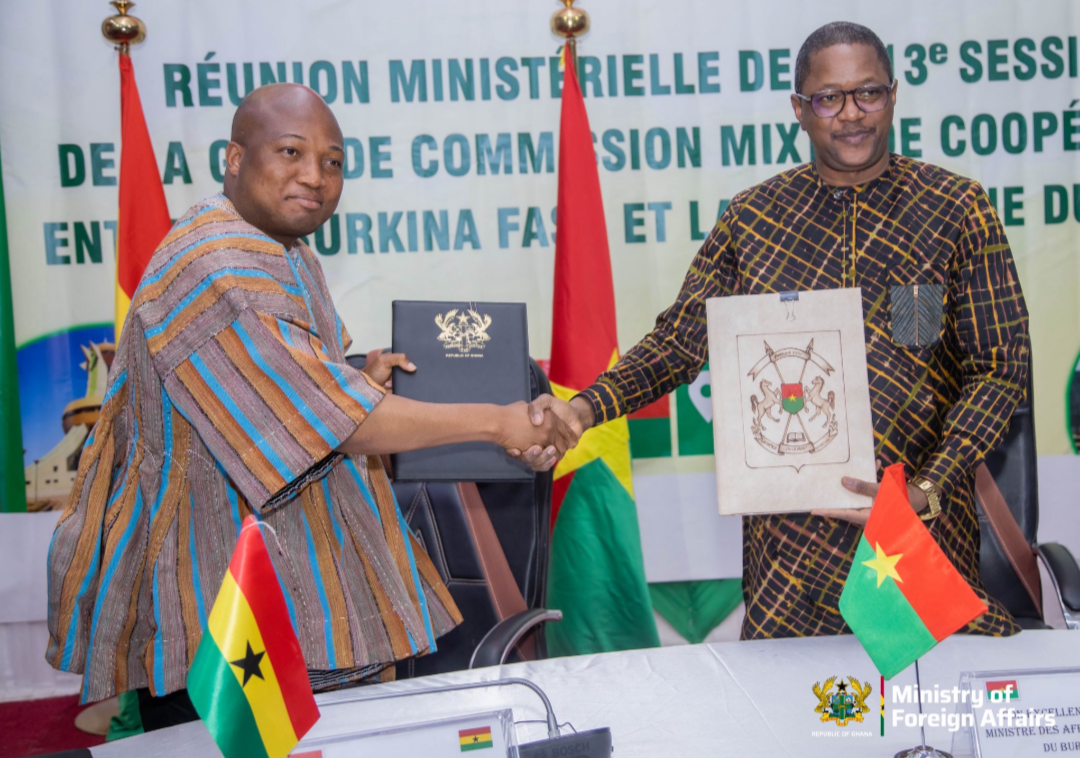
Ghana and Burkina Faso have taken a significant step toward deepening bilateral cooperation following the signing of seven major agreements aimed at strengthening security, cross border governance, disaster management, and regional integration.
The agreements were concluded at the end of a two day official visit by Ghana’s Minister for Foreign Affairs, Samuel Okudzeto Ablakwa, to Burkina Faso, marking a renewed phase of engagement between the two neighbouring countries.
The signed agreements span multiple sectors critical to regional integration and governance. They include arrangements on the mutual recognition of national driver’s licenses and on transport and road transit, measures expected to facilitate cross-border movement and trade.
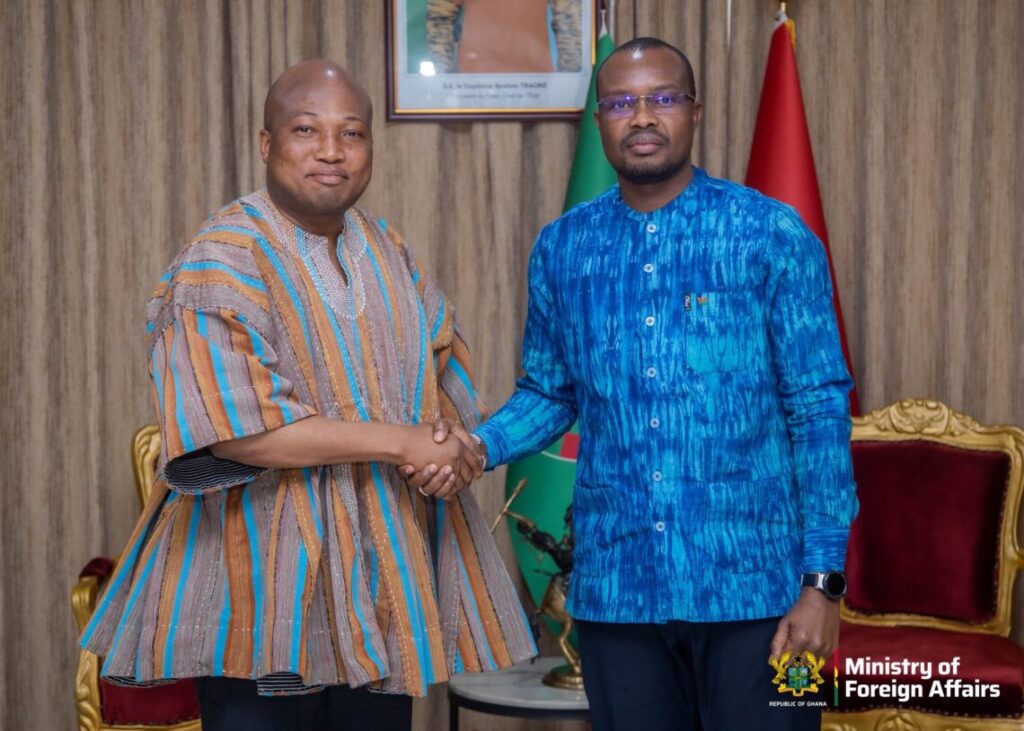
A framework agreement on cross-border cooperation was also adopted to strengthen collaboration between border communities and authorities. Additional memoranda of understanding establish periodic consultation frameworks between border administrative authorities and create a joint commission to reaffirm and manage the border between the two countries.
These measures aim to reduce disputes, improve coordination, and enhance local governance in border areas. Further agreements focus on cooperation in disaster prevention and humanitarian response, as well as joint efforts to combat illicit cultivation, production, and trafficking of narcotic drugs and psychotropic substances.
Together, the agreements reflect a comprehensive approach to shared challenges that cut across security, mobility, humanitarian concerns, and law enforcement. Confirming the outcome of the meetings, the Foreign Affairs Minister described the engagements as candid, productive, and forward-looking.
He said discussions with the Prime Minister of Burkina Faso, Rimtalba Jean Emmanuel Ouédraogo, were substantive and deeply honest, reflecting a shared commitment to mutual respect and cooperation.
He added that talks with his Burkinabè counterpart, Karamoko Jean Marie Traoré, were equally meaningful and focused on practical outcomes that would benefit citizens of both countries.
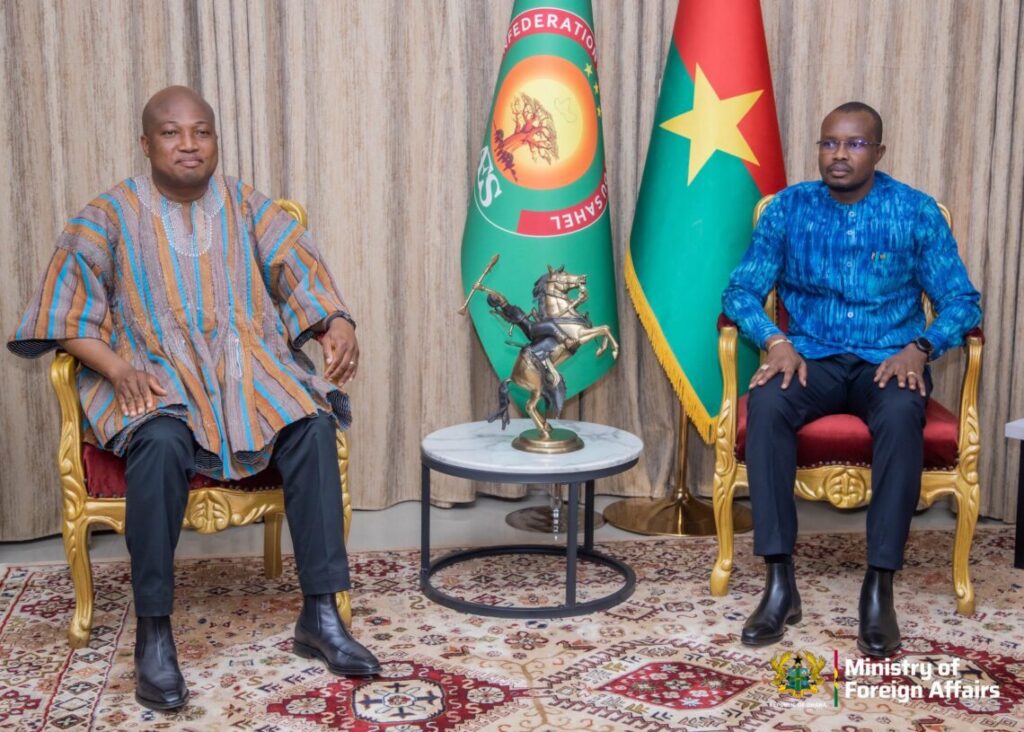
According to the Minister, both governments agreed to further deepen what he described as exceptionally cordial relations built on trust, shared history, and common regional challenges. The meetings reaffirmed the importance of sustained dialogue in navigating security threats, economic pressures, and humanitarian risks confronting West Africa.
Security Cooperation and Counter Terrorism Focus
A central theme of the discussions was security cooperation, particularly in response to the growing threat of terrorism and violent extremism in the sub-region. Ghana and Burkina Faso jointly condemned recent terror attacks and expressed sympathy to families and communities affected by the violence.
The two sides agreed that isolated national responses were insufficient to deal with transnational security threats. As a result, they committed to the design and adoption of a new joint security framework aimed at neutralizing terrorism and violent extremism along their shared borders.
The framework is expected to enhance intelligence sharing, improve coordination between security agencies, and strengthen border surveillance. Officials believe this approach will reduce vulnerabilities in border communities and help prevent the spillover of insecurity into relatively stable areas.
The Foreign Affairs Minister stressed that security cooperation remains critical to safeguarding development gains and maintaining social cohesion in both countries. He noted that stability in one country directly affects the other, making collective action not only desirable but necessary.
Disaster Management and Bagré Dam Concerns
Beyond security, disaster management featured prominently in the bilateral talks. Ghana and Burkina Faso agreed to establish a new partnership focused on preventing and managing disasters and humanitarian crises.
This cooperation is particularly significant in addressing the perennial spillage of the Bagré Dam, which has repeatedly caused flooding and displacement in downstream communities in northern Ghana. The partnership is expected to improve early warning systems, enhance information sharing, and strengthen coordinated response mechanisms.
Ghanaian officials have long called for structured engagement with Burkina Faso on the dam spillage issue, which has had devastating social and economic consequences for affected communities. The new agreement signals a shared recognition of the need for proactive and cooperative solutions rather than reactive measures.
Revival of Permanent Joint Commission for Cooperation
A notable outcome of the visit was the reactivation of the Permanent Joint Commission for Cooperation, known as the PJCC, between Ghana and Burkina Faso. The commission had been dormant for six years, limiting structured engagement on bilateral issues.
Its revival follows earlier meetings between John Dramani Mahama and Ibrahim Traoré held in January and March of the previous year. The reactivated PJCC provides an institutional platform for sustained dialogue, policy coordination, and monitoring of agreements.
Officials from both sides described the latest session of the commission as extremely successful, culminating in the signing of the seven cooperation agreements. At the conclusion of the visit, the Ghanaian Foreign Affairs Minister expressed appreciation to the government and people of Burkina Faso for their warm hospitality and openness during the discussions.
He emphasized that the outcomes of the meetings demonstrate the strength of relations between Ghana and Burkina Faso and the shared determination to translate diplomatic goodwill into tangible benefits for citizens.
The agreements now await implementation, with both governments expected to establish technical committees and timelines to ensure that commitments are translated into action. Observers say the success of the renewed partnership will depend on sustained political will and effective coordination at both national and local levels.