

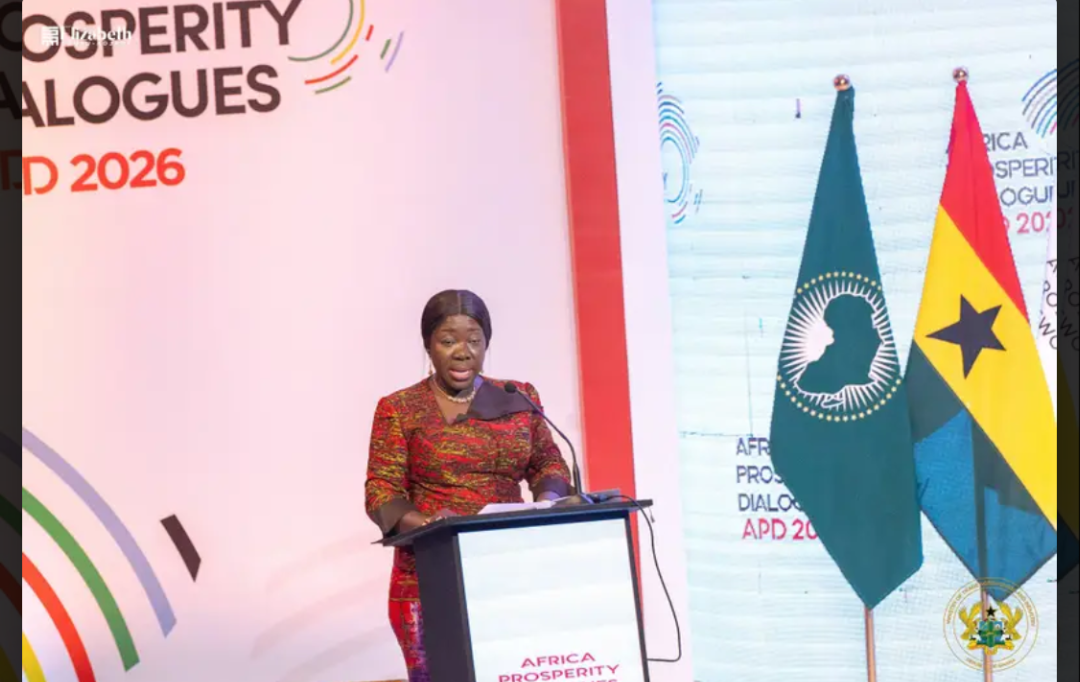
Ghana has officially signaled a shift in its industrial strategy, placing women, youth, and small enterprises at the epicenter of the African Continental Free Trade Area (AfCFTA).
Delivering a high-stakes keynote at the Africa Prosperity Dialogue (APD) 2026, the Minister for Trade, Agribusiness and Industry, Elizabeth Ofosu-Adjare, declared that the era of “ambition without action,” is over. For the Mahama administration, the single market is not merely a diplomatic trophy but a tool to be wielded for inclusive industrialization.
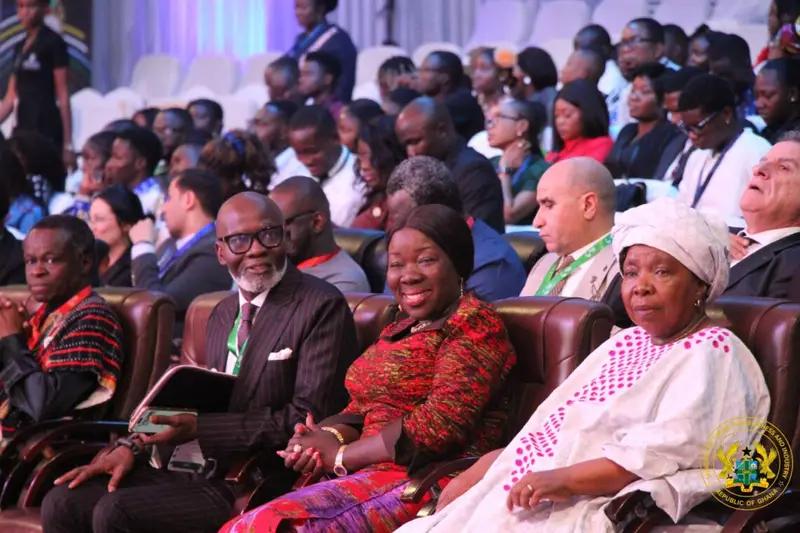
The dialogue, held at the Accra International Conference Centre, served as a platform for the Minister to outline how Ghana is translating AfCFTA protocols into tangible wealth.
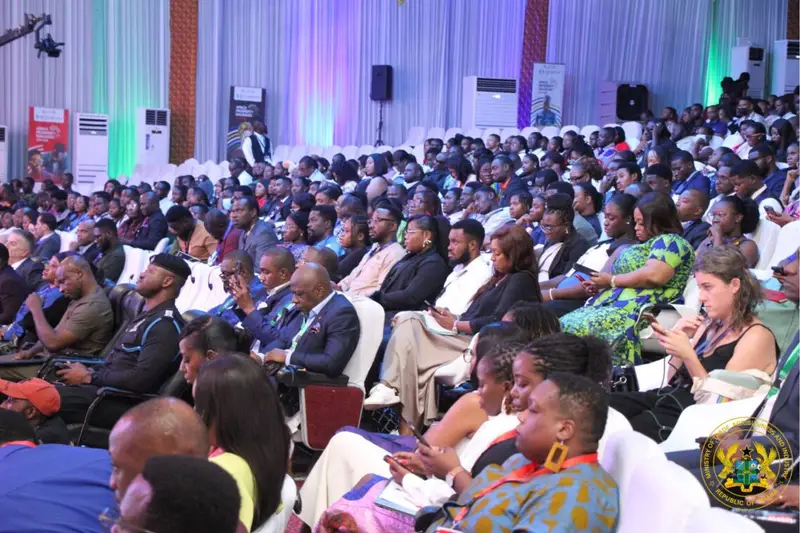
With Accra hosting the AfCFTA Secretariat, the Minister noted that Ghana carries a unique responsibility to lead by example, particularly in ensuring that the Protocol on Women and Youth in Trade moves from a legal text to a functional reality for cross-border traders.
“MSMEs account for over 90 per cent of businesses and the majority of employment across Africa. In Ghana, women lead nearly half of these enterprises, while our youthful population represents an unparalleled source of innovation and productivity. Empowering them is not optional – it is an economic imperative.”
A central theme of the Minister’s address was the structural transformation of the Ghanaian economy. She noted that the Ministry of Trade Agribusiness and Industry’s (MoTAI) mandate has been expanded to include Agribusiness, a move designed to bridge the historical disconnect between the farm gate and the factory floor.
Through the Feed the Industry Programme, the government is aggressively tackling raw material supply constraints, ensuring that Ghanaian manufacturers have the steady inputs required to compete in a continental market.
This refocusing is part of a broader “Export Expansion,” agenda. Minister Ofosu-Adjare highlighted that since trading commenced under AfCFTA in 2021, Ghana has been a primary participant in the Guided Trade Initiative.
However, she maintained that the next phase of growth depends on “value addition,” – shifting away from exporting raw cocoa and gold and moving toward processed cocoa derivatives and light manufacturing.
Next Generation of Industrialists
The numbers presented by the Trade Minister paint a picture of a massive state-led mobilization effort. Ofosu-Adjare revealed that under the current administration, over 155,000 entrepreneurs have received technical training, and 2,800 businesses have been formally sensitized on the complex export procedures of the single market.
According to her, this “skilling-up is critical to overcoming the non-tariff barriers that often discourage SMEs from venturing across borders.”
Furthermore, the Ghana Economic Transformation Project, backed by the World Bank, has been activated to provide much-needed financing to women- and youth-led enterprises.
Minister Ofosu-Adjare argued that access to finance remains the “final frontier,” for African trade; without innovative financing mechanisms, the innovative spirit of Africa’s youth – who found 65% of the continent’s start-ups – will remain untapped. This aligned with President John Dramani Mahama’s call for strategic Financing for Africa’s industrialization.
Security as a Catalyst for Trade
In a strategic alignment of domestic policy and trade, the Minister for the Interior, Mohammed Muntaka Mubarak contributed a vital perspective on the dialogue.
He argued that economic integration is impossible without a sophisticated security apparatus. The challenge for 2026 is creating “smart borders,” – using technology and intelligence-led management to facilitate the free movement of legitimate goods while clamping down on illicit trade and terrorism.
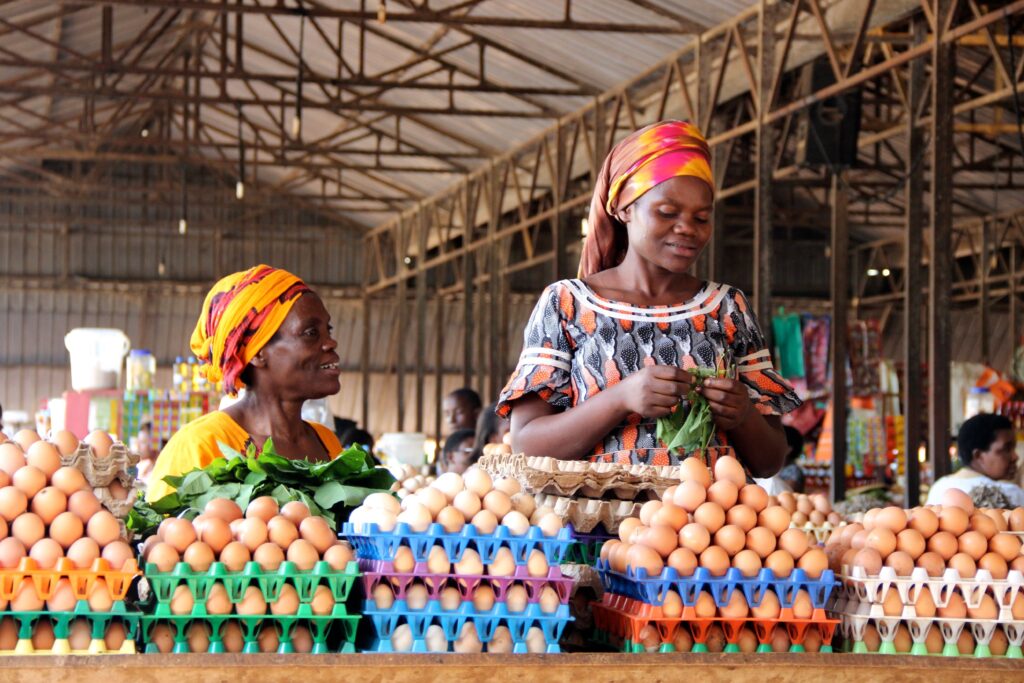
For women in cross-border trade, security is often an operational issue. Muntaka added that the Ministry of the Interior is now working to strengthen joint border operations and data sharing to reduce the harassment and administrative delays that disproportionately affect smaller traders.
“Without security, trade cannot flourish, and without orderly mobility, integration cannot succeed,” the Interior Minister added, noting that the goal is to ensure that free movement is not just a policy on paper but a safe, efficient reality on the ground.
To close the gap between potential and prosperity, Minister Ofosu-Adjare identified four non-negotiable priorities for the coming year.
First is the full operationalization of all AfCFTA protocols. Second is a massive investment in digital and physical infrastructure to lower the cost of logistics. Third is the creation of innovative financing for the youth, and fourth is the strengthening of public-private partnerships to scale regional value chains.
The CEO of the Africa Prosperity Network, Sidig Faroug El Toum, echoed these sentiments, noting that women already own approximately 58% of enterprises on the continent. The APD 2026 was positioned as the turning point where the private sector and financiers finally align their resources with these demographic realities.