

By Nelson Ayivor
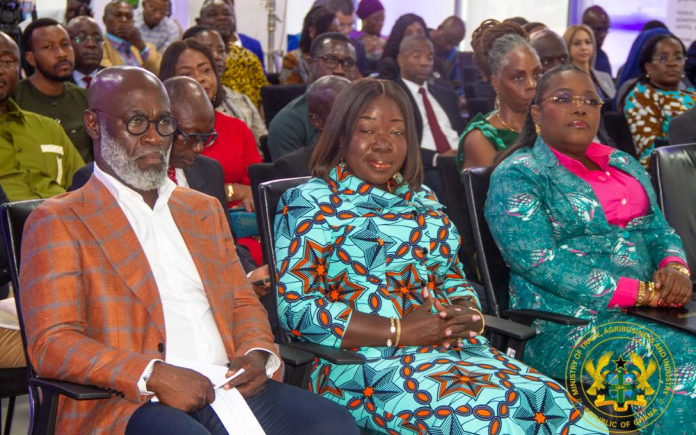
In a decisive move to reshape its economic landscape, Ghana’s Ministry of Trade, Agribusiness and Industry (MoTAI) inaugurated the Africa Trade Summit 2026 in Accra with a strong emphasis on industrialization and intra-African trade.
The summit convened an assembly of government officials, private sector leaders, and key stakeholders, all united in their commitment to moving beyond the continent’s reliance on raw commodities.
Under the patronage of President John Dramani Mahama, the summit was heralded as a pivotal step toward Africa’s economic transformation. In her keynote address, Trade Minister Elizabeth Ofosu-Adjare articulated a vision for sustainable growth driven by collaborative action among governments, investors, and the private sector. She underscored Ghana’s proactive approach through strategic policy initiatives and significant infrastructure investments.
Ofosu-Adjare elaborated on the government’s ambitious 24-Hour Economy initiative, positioning it as a cornerstone of Ghana’s developmental strategy.
This initiative aims to enhance national productivity, generate employment opportunities, and boost Ghana’s competitiveness within the African Continental Free Trade Area (AfCFTA).
Central to her address was the theme of value addition and extension, critical pillars for the nation’s industrial ambition. The Minister noted advances in processing sectors such as cocoa, cashew, shea, palm oil, coconut, and cassava, along with pivotal infrastructure developments like the completion of Phases 1 and 2 of the Tema Port Expansion Project and ongoing upgrades at Takoradi Port.
These strides, she emphasized, not only bolster Ghana’s capacity to facilitate trade under the AfCFTA but also foster broader economic integration across the continent.
Appealing for support from development partners and financial institutions, Ofosu-Adjare advocated for long-term financing to empower Africa’s industrial growth. She asserted that the continent’s ability to enhance its value chains hinges on access to patient capital capable of sustaining long-term endeavors.
Deputy Chief of Staff Nana Oye Bampoe Addo, representing the Chief of Staff, outlined a series of fiscal measures designed to alleviate economic pressure and stimulate growth across sectors.
The announcement included plans to repeal the controversial E-Levy, along with the Betting Tax and COVID-19 Levy, all of which aim to create a more conducive business environment.
Additionally, she detailed a robust $30.8 billion infrastructure program and expanded support for local industries and agricultural value chains, framing these initiatives as essential to reinforcing Ghana’s economic backbone.
Bampoe Addo asserted that these reforms align closely with President Mahama’s overarching vision for industrialization, value addition, and regional integration.
One of the summit’s standout moments came from Sir Sam Jonah, Chairman of the Africa Trade Chamber Advisory Board, who delivered a clarion call for African nations to embrace daring reforms that prioritize manufacturing and reduce the continent’s dependency on raw commodity exports.
His pointed remarks highlighted a pervasive discontent among African industrialists regarding a persistent economic model that exports raw materials while importing finished goods, which he warned diminishes the continent’s potential.
“Every time we ship our raw materials and import finished products, we export jobs and import unemployment,” he stated emphatically. “We cannot industrialize if we continue to nourish others’ factories instead of nurturing our own.”
Sir Sam Jonah’s compelling argument was that true transformation would not arise from conference discussions but rather from tangible business activities, functioning factories, and investors willing to take calculated, long-term risks.
He challenged African leaders to draw inspiration from the successes of Asia’s industrial powerhouses, questioning, “If Singapore, with no natural resources, could build industries from scratch, what excuse do we have with all the wealth that we possess?”
His counsel urged African nations to abandon passive admiration for Asian achievements, advocating instead for a disciplined and visionary approach that integrates private sector partnerships and regional collaboration.
Completing the program, Madam Benedicta Lasi, founder of the African Trade Chamber, provided an outlook for the 2026 Summit and Awards, promising participants a well-structured and impactful three-day event focused on transforming Africa into a resilient and competitive economic bloc.